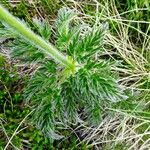
Anemone alpina
Alpine Pasqueflower · Alpine anemone · Alpine Pasque-flower · Lily-of-the-field
Description
Source: leafsnapPulsatilla alpina, the alpine pasqueflower or alpine anemone, is a species of flowering plant in the family Ranunculaceae, native to the mountain ranges of central and southern Europe, from central Spain to Croatia. It is an herbaceous perennial growing to 15–30 cm (6–12 in) tall by 20 cm (8 in) wide, and can be found at altitudes of 1,200–2,700 m (3,900–8,900 ft).
Care Guide
💧 Water
Once your Anemone alpina are established, water them regularly to keep the soil consistently moist. The soil should be moist but not soaking wet, as overwatering can cause root rot. Deadhead as needed. Anemone alpina do not require thinning, or deadheading, to encourage new growth. Anemone alpina don't like a lot of water on their foliage. It likes a moist environment without accumulated water. It is recommended that you place your finger into the soil to feel how moist it is. Water thoroughly if the soil is dry. If your Anemone alpina is in a pot, water slowly and stop watering when excess water flows out of the drain hole at the bottom of the pot. Remember to pour out any excess water from flower pot's saucer, or put a few pebbles in the saucer to ensure good drainage.
☀️ Light Full sun
The alpine pasque-flower is a sun-loving, perennial, herbaceous plant native to open habitats and commonly found in meadows and grasslands. It prefers full sun but can also tolerate partial sun conditions.
🌡️ Temperature 0–32.2°C
💨 Humidity
🪴 Soil 6-7
🌱 Fertilizer
For Alpine pasque-flower, the primary time to apply fertilizer is in early spring while the flowers are developing. The correct fertilizer promotes better blooms and helps Alpine pasque-flower produce attractive flowers. Fertilizing in early spring ensures strong flowering during the season and supplies energy for dormant growth stages.
🪴 Pot & Repot
✂️ Pruning
🌿 Propagating
🐛 Diseases & pets
☠️ Toxicity
Anemone alpina flowers and seed are toxic and are not to be eaten.
Characteristics
- Plant Type
- Herb
- Life Cycle
- Perennial
- Genus
- Anemone
- Family
- Ranunculaceae
- Hardiness Zone
- 3-7
- Mature Height
- 20 cm to 40 cm
- Mature Spread
- 15 cm to 30 cm
- Leaf Color
- Green, Dark Green
- Leaf Type
- Semi-evergreen
- Flower Color
- White
- Flower Size
- 4.06 cm to 6.35 cm
- Bloom Time
- Early spring, Mid spring
- Planting Time
- Spring, Summer
- Harvest Time
- Late spring, Early summer
- Native Area
- Germany, Austria, Switzerland, France, Albania, Croatia, Slovenia, Serbia