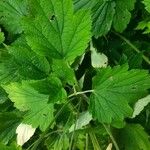
Anemone hupehensis
Japanese Anemone · Chinese anemone · Grape Leaf Anemone · Japanese Windflower · Japanese Thimbleweed
Description
Source: leafsnapAnemone hupehensis, commonly known as the Chinese anemone or Japanese anemone, is a herbaceous perennial plant belonging to the buttercup family. Native to China and Japan, it has become a popular garden plant globally due to its attractive flowers and ease of cultivation. The plant can grow up to 1.2 meters tall and features dark green, deeply lobed leaves with toothed edges. In late summer or early autumn, the flowers, which are pink or white and 5-8 cm in diameter, bloom on long stems above the foliage. Each stem can produce multiple flowers. Anemone hupehensis thrives in moist but well-drained soil and can flourish in both partial shade and full sun. It requires relatively low maintenance and can be propagated by division in spring or autumn. Often used as a border plant, ground cover, or as part of mixed perennial beds, the Chinese anemone is appreciated for its long-lasting blooms and attractive foliage. It also attracts pollinators like bees and butterflies to the garden. While generally safe for humans when handled properly, all parts of Anemone hupehensis contain toxins that can cause skin irritation and can be harmful if ingested by pets such as cats and dogs.
Care Guide
💧 Water Every 3 days
Anemone hupehensis does well in moderate humidity and has adaptations that allow it to tolerate drought. It requires watering every 1 to 2 weeks and is best grown outdoors to take advantage of natural rainfall. Being a deciduous plant, it sheds its leaves during dry seasons to conserve water.
☀️ Light Partial sun
Anemone hupehensis occurs naturally in habitats like forest understories or rocky sites, where it grows in natural shade. It prefers partial sun but can tolerate full sun or full shade, showing its versatile, hardy nature.
What are the sunlight requirements for Anemone hupehensis?
Anemone hupehensis, also known by its botanical name, Anemone hupehensis, thrives under specific sunlight conditions to ensure its growth and happiness. For it to flourish, providing full sun, which amounts to above 6 hours of sunlight daily, is essential. However, it can also adapt to partial sun, defined as about 3-6 hours of sunlight. It's important to observe the movement of sunlight throughout your garden, choosing locations that offer an optimal balance of light and shade that caters to the needs of your Anemone hupehensis.
🌡️ Temperature 5–32.2°C
Anemone hupehensis can tolerate a wide range of temperatures, although its distribution may still be restricted by specific combinations of moisture and heat. It does best in warm summers with sufficient rainfall or watering. Extended periods of cloudy, rainy weather or prolonged high temperatures can increase the plant's risk of dying. In winter, adequate protection from the cold can boost its chances of survival.
💨 Humidity normal (40-60%)
This plant will thrive in moderate humidity, which is probably the level in your home. However, misting it a few times a week can be very beneficial. Make sure the room has good ventilation.
🪴 Soil 6-7
🌱 Fertilizer
The primary time to feed Anemone hupehensis is in early spring, when the flowers are developing. Using the appropriate fertilizer promotes better blooms and helps Anemone hupehensis produce attractive flowers. Fertilizing in early spring helps secure strong flowers throughout the season and provides energy for periods of dormant growth.
🪴 Pot & Repot
✂️ Pruning
Anemone hupehensis is a resilient perennial known for its daisy-like flowers. To ensure healthy growth and vibrant blooms, it is important to prune the plant from early to late spring to remove any dead stems. Make sure to use clean tools to prevent infection, improve air circulation, reduce the risk of disease, and encourage prolonged blooming.
🌿 Propagating
🐛 Diseases & pets
☠️ Toxicity
Japanese anemones and other cultivars are potentially harmful to people and pets. All parts of the plant contain protoanemonin, a toxin that can cause mild toxicity symptoms when ingested in large amounts. Similarly, the juice, sap, and hairs of the plants can induce dermatitis and skin irritation.
Characteristics
- Plant Type
- Herb
- Life Cycle
- Perennial
- Genus
- Anemone
- Family
- Ranunculaceae
- Hardiness Zone
- 4-8
- Mature Height
- 91 cm
- Mature Spread
- 61 cm
- Leaf Color
- Dark Green
- Leaf Type
- Deciduous
- Flower Size
- 5.08 cm to 7.62 cm
- Bloom Time
- Late summer, Early fall, Mid fall
- Planting Time
- Spring, Autumn
- Harvest Time
- Mid fall, Late fall