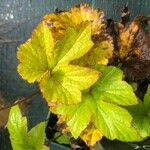
Anemone vitifolia
Description
Source: leafsnapEriocapitella vitifolia, a species of flowering plant in the buttercup family Ranunculaceae, is native to Asia. The specific epithet vitifolia means "vine-leaved, with leaves resembling those of Vitis", the genus of grapevines, and so the plant is commonly called the grape-leaved anemone or grape-leaved windflower. In Chinese, a common name is ye mian hua, which means "wild cotton".
🌳 While the grape-leaf anemone is mainly admired for its striking autumn display, when its foliage turns a vivid golden color, it also quietly feeds bees by supplying nectar. As a perennial, the plant not only has an attractive appearance but also contributes modestly to bee nourishment, increasing its ecological value.
🎭 Life and anticipation
Care Guide
💧 Water
☀️ Light Partial sun
The grape-leaf anemone usually does well in places that receive a mix of sun and shade over the course of the day, though it can tolerate extended periods of sunlight. Native to areas with plentiful tree cover, it is accustomed to both filtered light and strong rays. Too little light can inhibit growth, while too much can lead to leaf scorch.
🌡️ Temperature 5–35°C
Grape leaf anemone naturally grows in temperate regions where temperatures range from 5 to 35 ℃ (41 to 95 ℉). It favors cooler conditions during summer and warmer ones in winter. For winter, it is recommended to maintain temperatures between 5 and 15 ℃ (41 and 59 ℉).
💨 Humidity
🪴 Soil 6-7
🌱 Fertilizer
Usually one fertilizer application in spring is enough for Grape leaf anemone, though repeated feedings can maximize growth. Apply fertilizer about every month to a month and a half. Fertilization improves the leaves' appearance and function, encouraging even color and a healthy texture. It also promotes root development and nutrient uptake for the plant's long-term health.
🪴 Pot & Repot
✂️ Pruning
🌿 Propagating
🐛 Diseases & pets
☠️ Toxicity
Characteristics
- Plant Type
- Herb
- Life Cycle
- Perennial
- Genus
- Anemone
- Family
- Ranunculaceae
- Hardiness Zone
- 5-9
- Mature Height
- 61 cm to 91 cm
- Mature Spread
- 49 cm
- Leaf Color
- Green
- Leaf Type
- Deciduous
- Flower Color
- White
- Flower Size
- 3.05 cm to 4.32 cm
- Bloom Time
- Mid summer
- Planting Time
- Spring
- Harvest Time
- Late summer, Early fall
- Native Area
- Nepal, India, Myanmar, Bhutan, Philippines, Pakistan, China