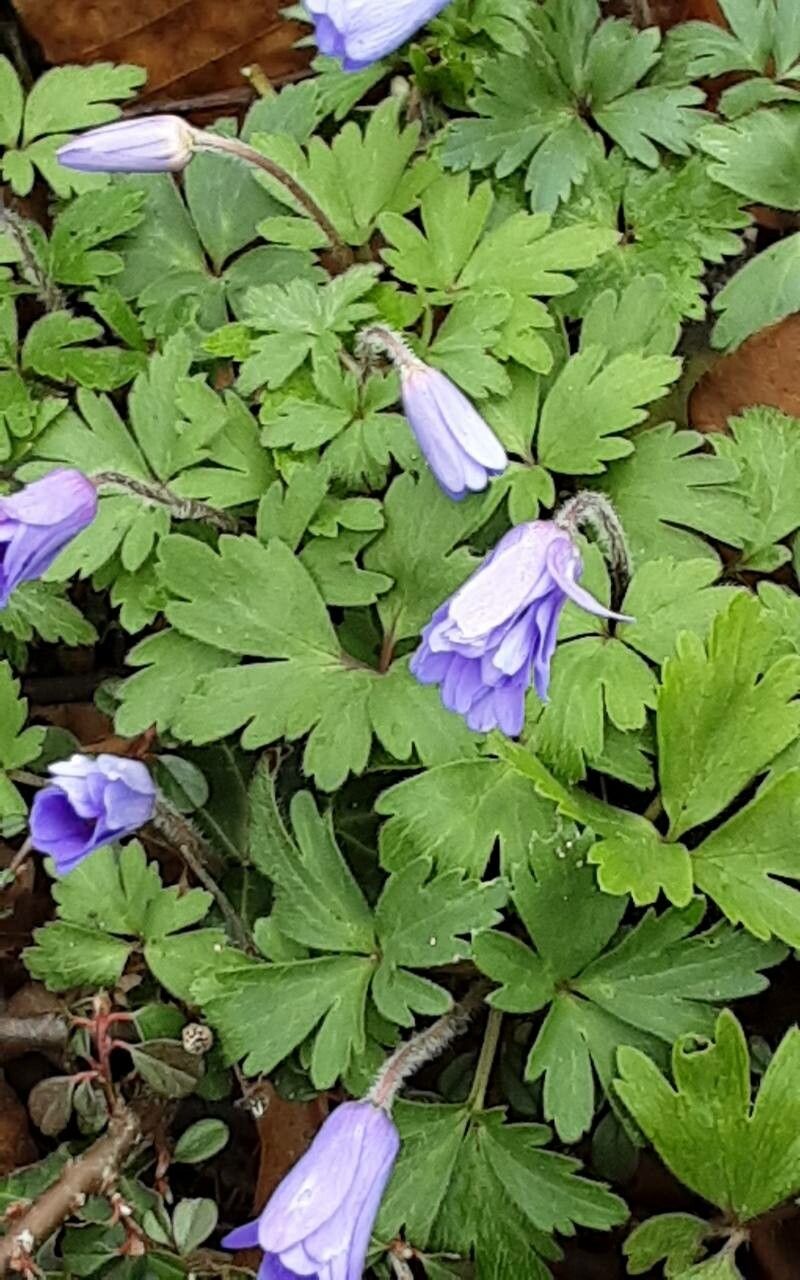
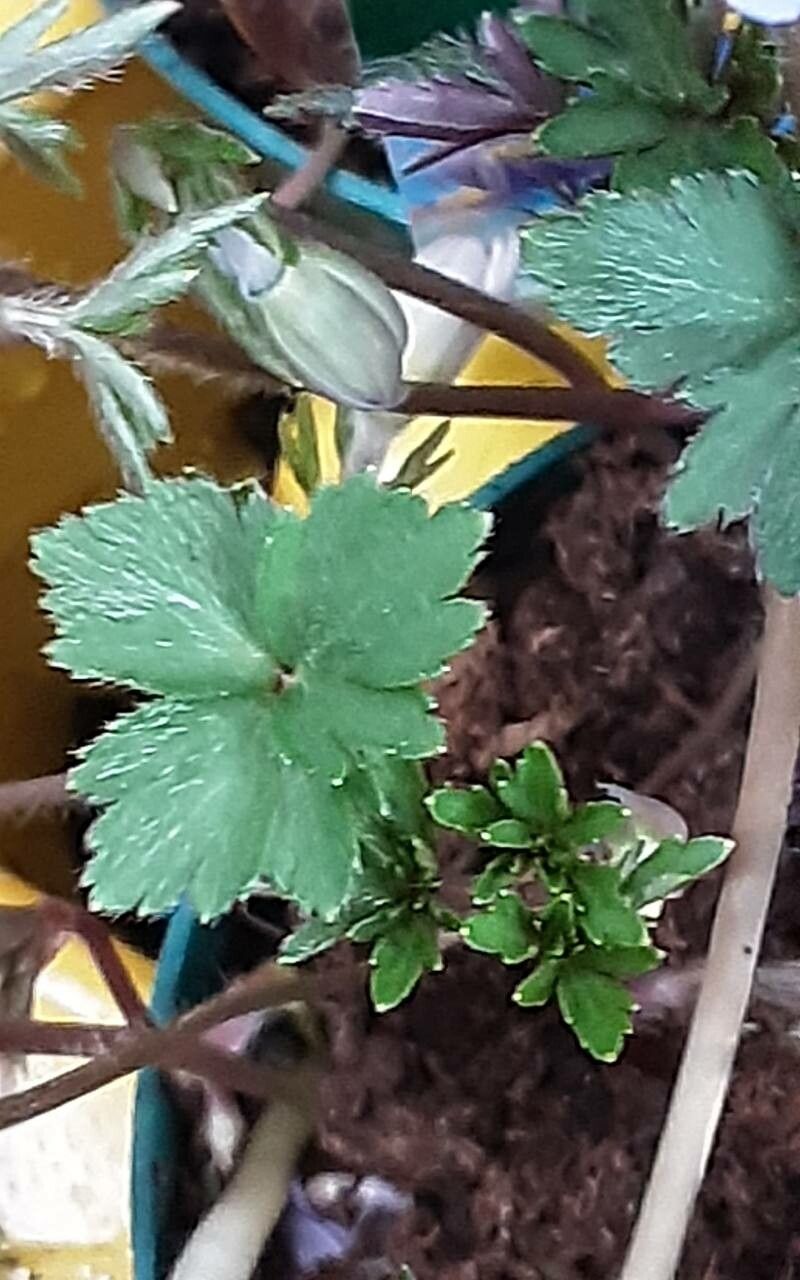
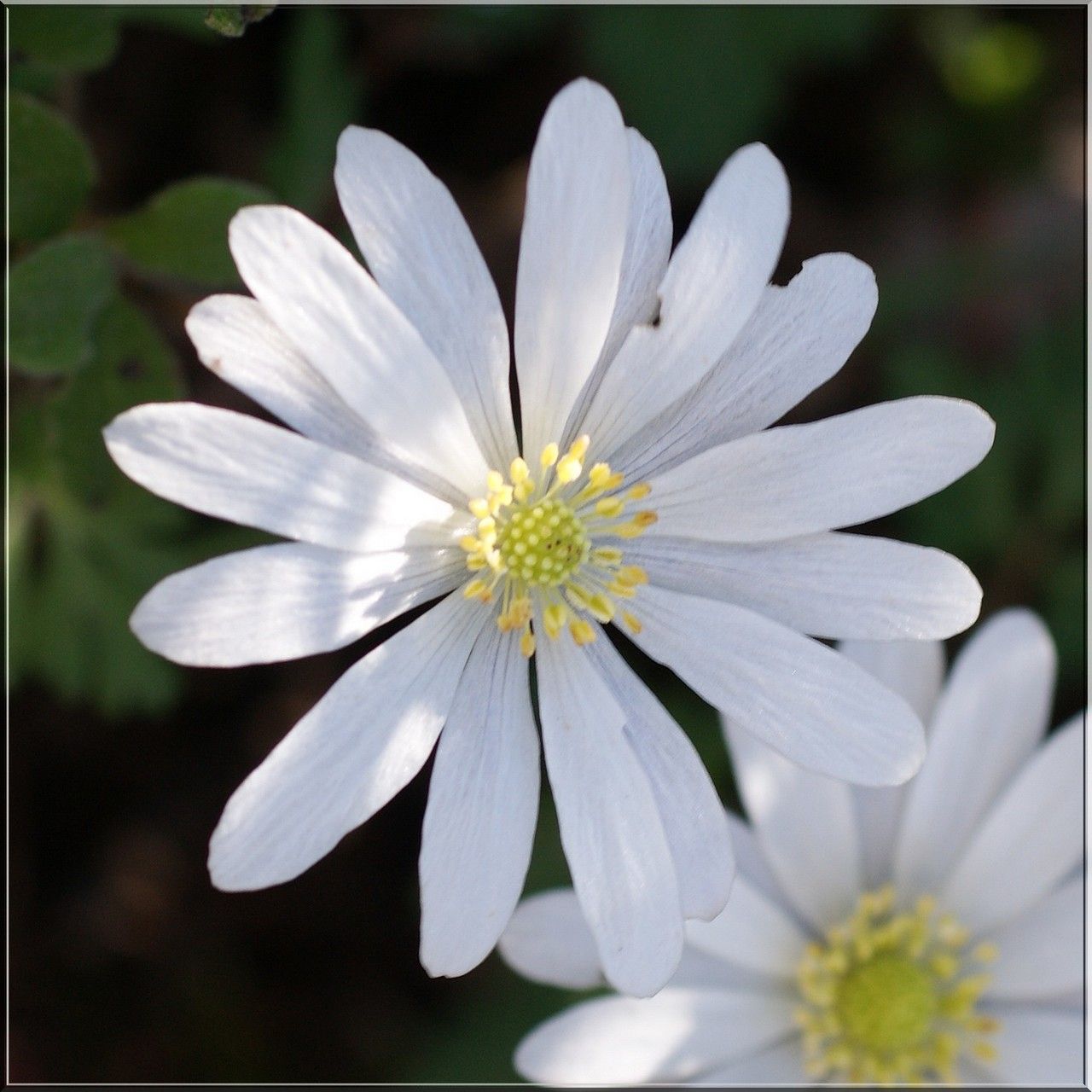
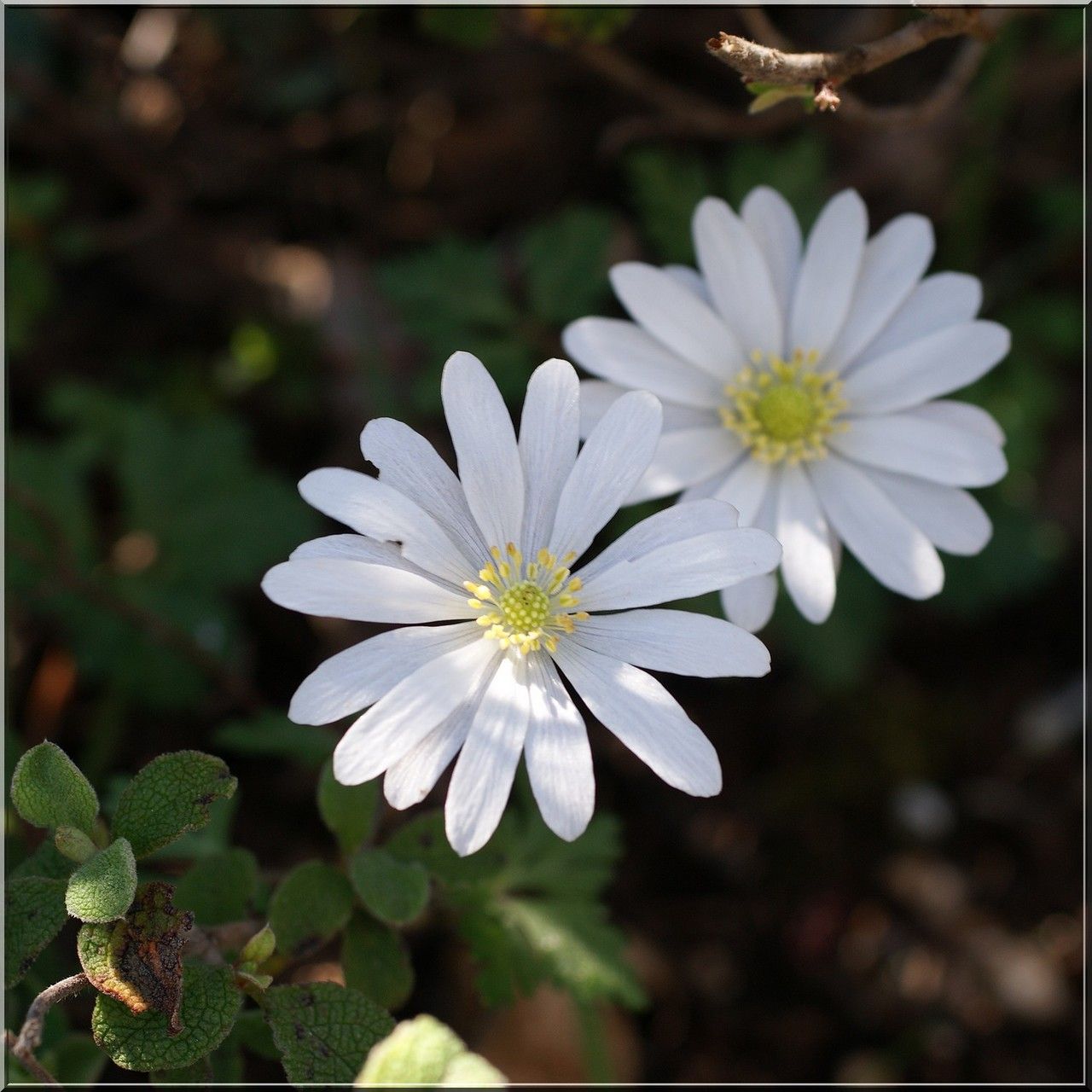
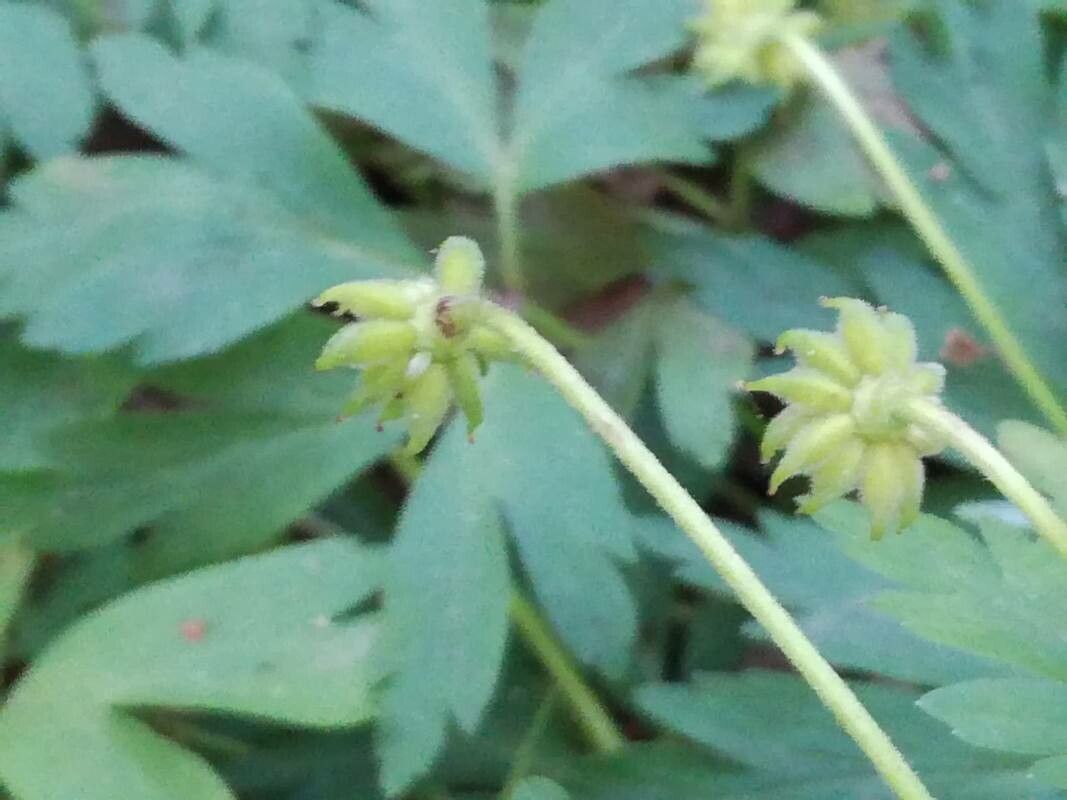
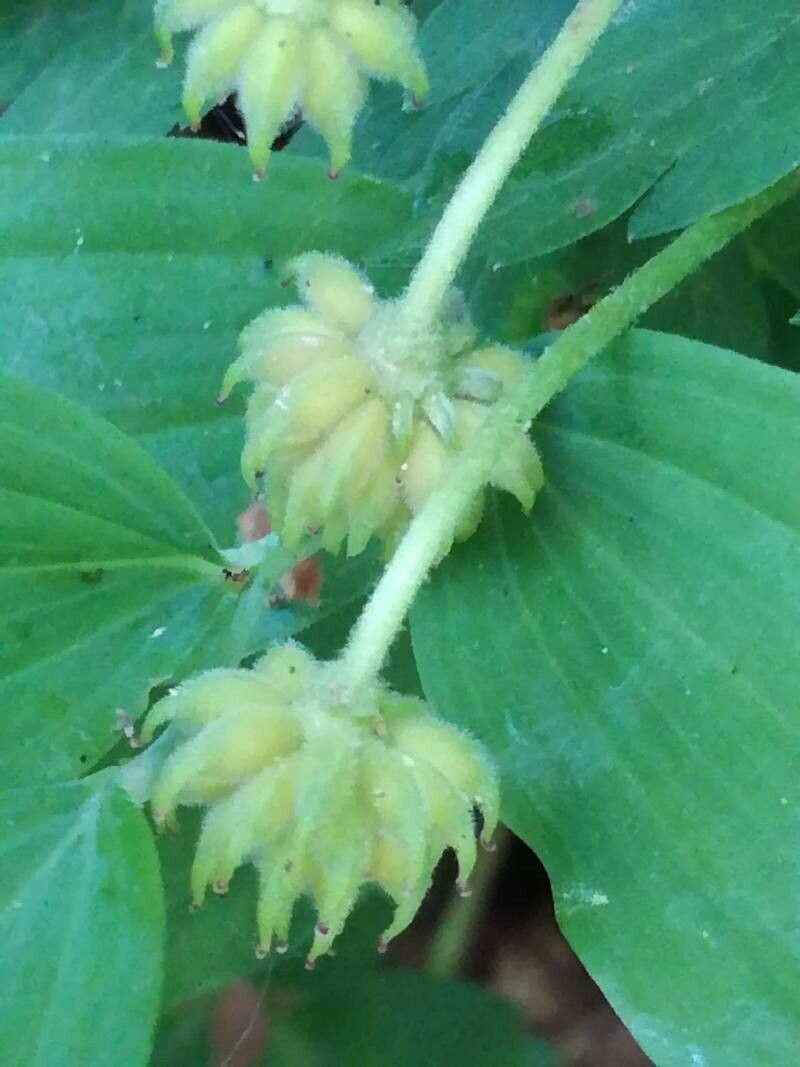
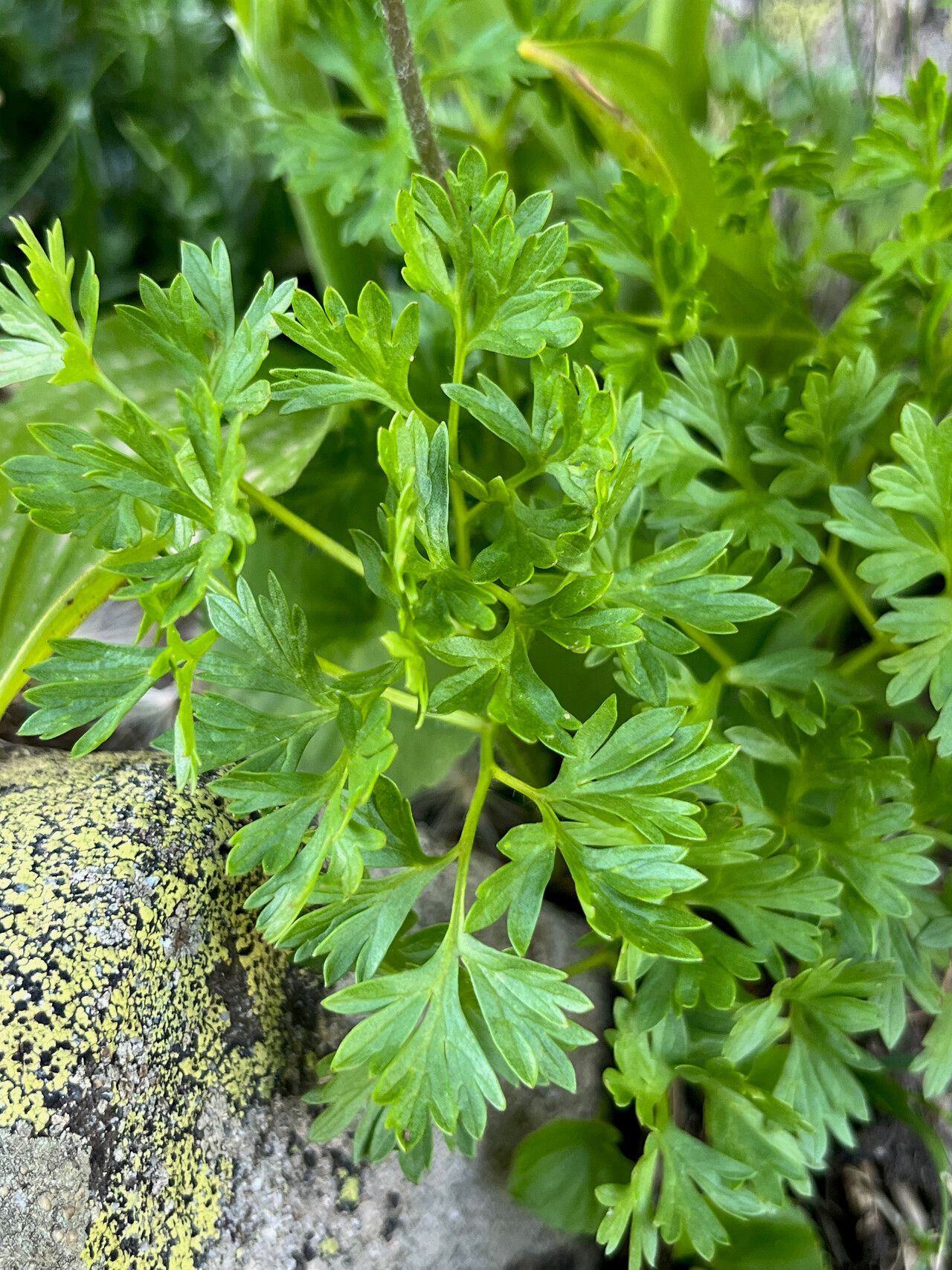
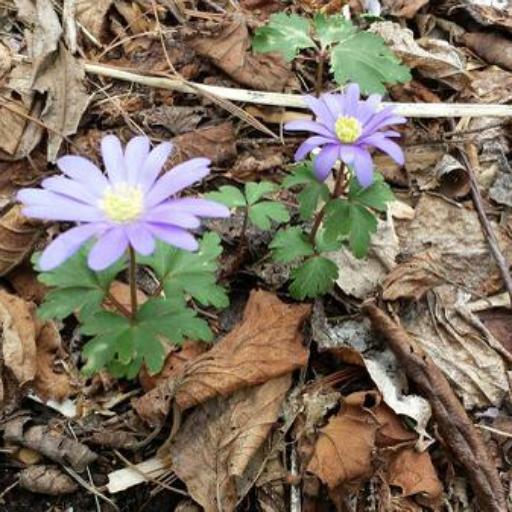
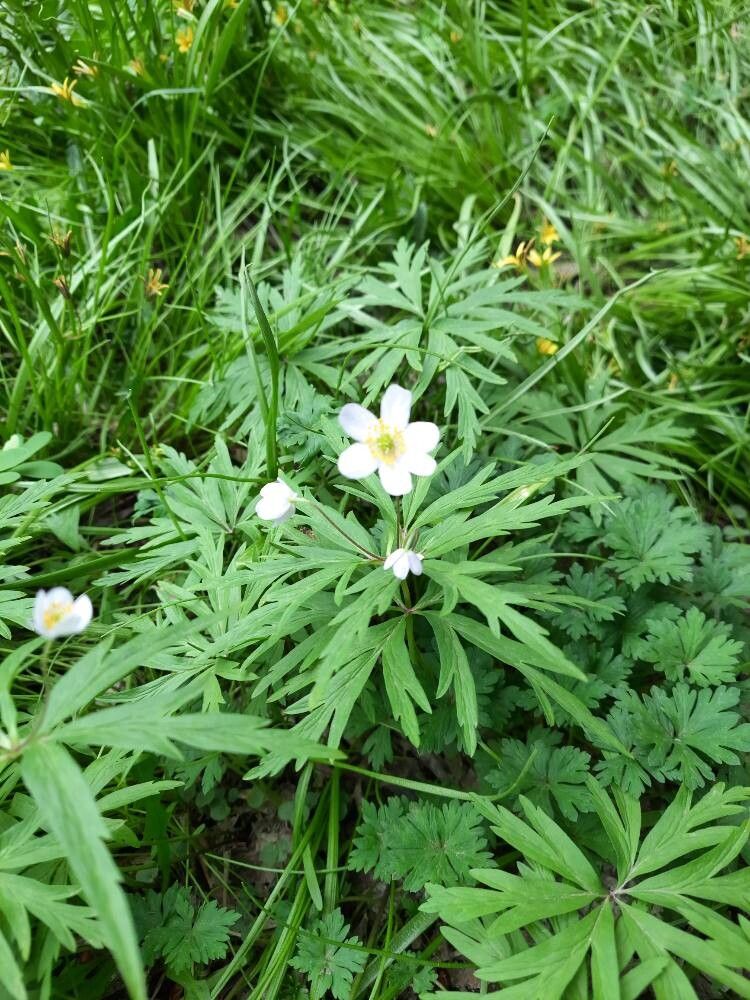
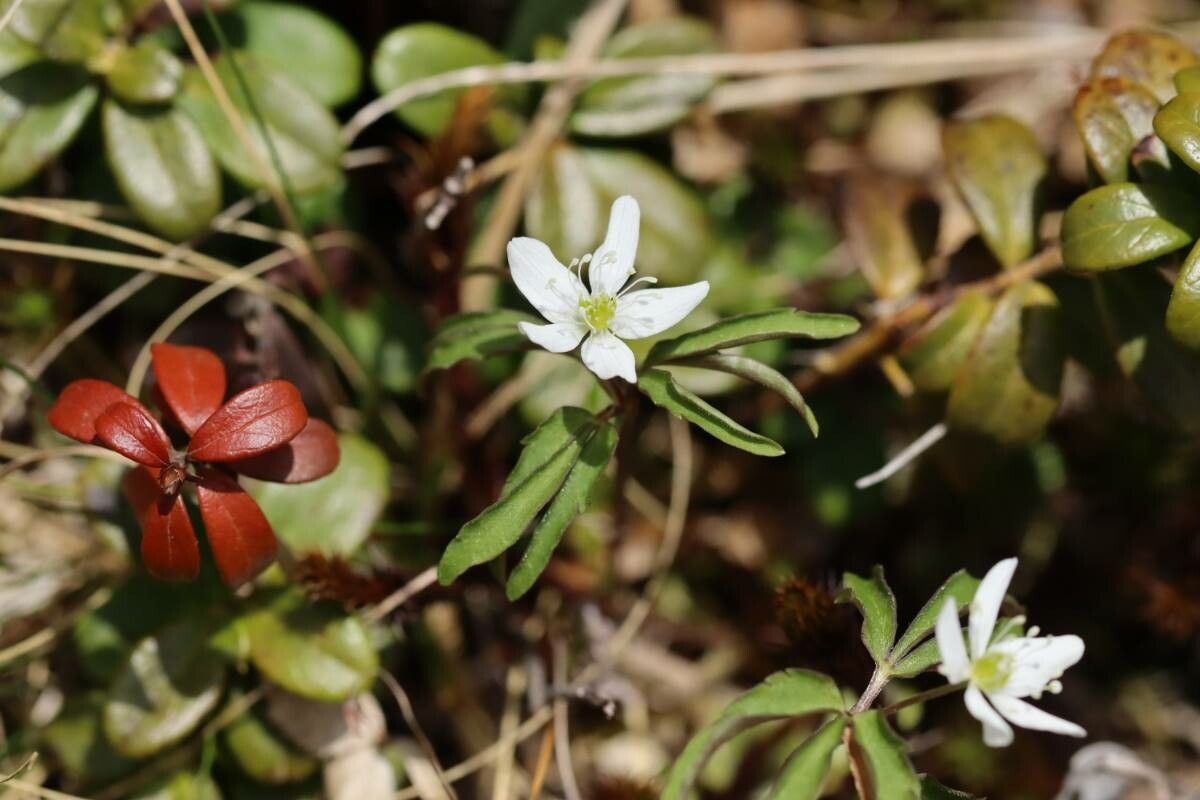
Anemonoides apennina, the Apennine anemone or blue anemone, is a flowering plant in the family Ranunculaceae. It is a rhizomatous perennial plant, native to southern central Europe, taking its name from the Apennine Mountains, but widely naturalised elsewhere in Europe, including the United Kingdom. It can be confused with Anemonoides nemorosa which it resembles. It grows to 20 cm. In early spring it produces single blue flowers above ferny foliage, which dies down in summer. The flowers are about 3.5 cm across, with 10-15 narrow petals. The leaves are palmate with dark green 3-lobed, toothed leaflets. The leaves are hairy underneath, which is how this plant may be distinguished from the similar Anemone blanda. It is especially valued for its ability to colonise deciduous woodlands, but it is also found in open scrub, under park trees, and near former habitation. This plant has gained the Royal Horticultural Society's Award of Garden Merit.
Blue anemone has strong disease resistance and is generally not susceptible to illnesses. However, it may be vulnerable to pests and diseases present in its environment. These infections are typically not serious. In terms of care, this plant needs moderate maintenance. It requires regular pruning to keep a good appearance and support healthy growth. Fertilizing can also help encourage flowering. Blue anemone is suitable for anyone with outdoor areas, such as a garden or patio, and does not demand extensive care experience. It may need more attention when grown indoors.
How to keep Anemonoides Apennina.
Light
In its native range, the blue anemone does best beneath a clear sky with plenty of sunlight. While it prefers ample sun, it can also tolerate somewhat shaded conditions. Strong light encourages its growth, whereas low light can stunt it. Excessive exposure, however, may scorch the plant.
Temperature
Blue anemone is native to climates with temperatures ranging from 50 to 95 °F (10 to 35 ℃). This plant thrives in those conditions and requires appropriate adjustments during extreme seasons to maintain its preferred temperature.
Fertilizer
The primary time to fertilize Blue anemone is in early spring, when the flowers are forming. Using the proper fertilizer promotes better blooms and helps Blue anemone produce attractive flowers. Fertilizing in early spring ensures strong flowering through the season and supplies energy for dormant growth phases.
Botanical profile.
- Plant Type
- Herb
- Life Cycle
- Perennial
- Genus
- Anemonoides
- Family
- Ranunculaceae
- Hardiness Zone
- 6-9
- Mature Height
- 15 cm
- Mature Spread
- 20 cm
- Leaf Color
- Green, Blue
- Leaf Type
- Deciduous
- Flower Color
- Blue, White, Purple
- Flower Size
- 2.03 cm to 3.05 cm
- Bloom Time
- Early spring, Mid spring
- Planting Time
- Spring, Autumn, Winter
- Harvest Time
- Late spring, Early summer
- Native Area
- Italy, Serbia, Montenegro, Albania, Greece, Croatia, France
Other names.