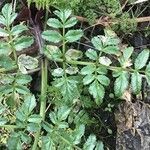
Angelica pachycarpa
Portuguese Angelica
Description
Source: leafsnapAngelica pachycarpa, commonly known as "thickfruit angelica," is a perennial herbaceous plant in the Apiaceae family. It is native to the western United States, particularly Arizona, New Mexico, and Utah. This plant can grow up to 1 meter tall and features a thick stem marked with purple spots and hollow chambers. The large, compound leaves have toothed edges and can reach up to 50 cm in length. The small flowers, which are white or greenish-yellow, are arranged in umbels at the top of the stems. For centuries, Native Americans have utilized Angelica pachycarpa for its medicinal properties. The plant contains essential oils with anti-inflammatory properties that can help alleviate pain caused by arthritis or rheumatism. Angelica pachycarpa thrives in well-drained soils with full sun exposure but can also tolerate partial shade. It blooms from June through August, attracting pollinators such as bees and butterflies. In summary, Angelica pachycarpa is a beautiful herbaceous perennial native to the western United States, valued both for its aesthetic appeal and its medicinal properties. Its large leaves make it an attractive addition to any garden, while its essential oils serve as a natural remedy for inflammation-related ailments such as arthritis and rheumatism.
Care Guide
💧 Water Every 7 days
Angelica thrives in damp environments and needs consistently moist soil. It's recommended to water it weekly and use mulch to help retain moisture, which can reduce the need for frequent watering during the growing season. Typically grown outdoors, the care for this species should align with its ability to retain moisture.
☀️ Light Partial sun
Angelica comes from habitats with dappled sunlight, such as forest understories or rocky spots that provide natural shade. It does well in partial sun but can also adapt to full sun conditions.
🌡️ Temperature 15–35°C
Angelica can tolerate a wide range of temperatures, but various combinations of moisture and heat can still limit its distribution. It does best in warm summer climates with sufficient rainfall or watering. Extended periods of cloudy, rainy weather or prolonged high temperatures can raise the chance of Angelica dying. In winter, proper protection from the cold can increase the plant's survival rate.
💨 Humidity
🪴 Soil 6-8
🌱 Fertilizer
Angelica requires regular fertilization to encourage flowering but does not tolerate excessive amounts. It needs light, frequent applications of fertilizer throughout its life cycle, especially during the peak of active growth and while it is flowering. Continue feeding your Angelica until it stops blooming.
🪴 Pot & Repot
✂️ Pruning
Angelica is characterized by its shiny, deep green leaves and tall, hollow stems. To encourage healthy growth and prevent legginess, it is advisable to prune the plant in early spring. Thinning the plants improves airflow and reduces the risk of disease, while regular pruning helps maintain bushiness and vitality. For specific care recommendations, consult reliable sources to ensure you are following the best practices for your situation.
🌿 Propagating
🐛 Diseases & pets
☠️ Toxicity
Characteristics
- Plant Type
- Herb
- Life Cycle
- Biennial
- Genus
- Angelica
- Family
- Apiaceae
- Hardiness Zone
- 7-10
- Mature Height
- 1.22 m
- Mature Spread
- 91 cm
- Leaf Color
- Dark Green, Forest Green
- Leaf Type
- Deciduous
- Flower Color
- White
- Flower Size
- 0.51 cm to 0.76 cm
- Bloom Time
- Early summer, Mid summer
- Planting Time
- Spring, Summer, Autumn
- Harvest Time
- Late summer, Early fall
- Native Area
- Spain, Portugal