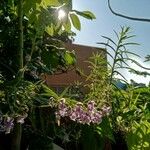
Angelonia salicariifolia
Willowleaf angelon
Description
Source: wikipedia (CC BY-SA)Angelonia salicariifolia is a species of flowering plant in the family Plantaginaceae. This species is native to Bolivia, Brazil, and northeast Argentina.
🌳 Aside from its decorative role in gardens, willowleaf angelon has carved out a special place in the niche pastime of creating fairy gardens, where its fine foliage and blossoms provide a magical accent. This surprising use highlights willowleaf angelon’s versatility and visual appeal, offering a backdrop for imaginative miniature landscapes that delight both children and adults.
Care Guide
💧 Water
Willowleaf angelon flourishes in tropical settings, favoring soil that is consistently moist yet well-drained. While it can tolerate drought conditions to some extent, it benefits from weekly watering. In the peak growing season, providing extra water encourages its abundant flowering and helps offset the effects of increased evaporation.
☀️ Light Full sun
Willowleaf angelon prefers plenty of light in its surroundings but can tolerate scattered or partial light. In nature it comes from areas with abundant sun. The amount of light strongly affects its health and well-being; both too little and too much can be harmful. Different stages of growth may also require different degrees of sun exposure.
What are the sunlight requirements for Willowleaf angelon?
Willowleaf angelon requires full sun exposure, defined as more than 6 hours of sunlight daily, for optimal growth. However, it can also tolerate partial sun conditions, which means about 3-6 hours of sunlight per day. The plant originates from habitats that enjoy abundant light, emphasizing the importance of sufficient sunlight for its health and wellbeing.
How does sunlight affect the growth of Willowleaf angelon?
Sunlight plays a crucial role in the health and development of Willowleaf angelon. The plant thrives best in environments that offer ample sunlight, though it can manage under scattered light conditions as well. At different growth stages, the plant may require varying degrees of sun exposure. Insufficient or excessive sunlight can negatively impact the plant by affecting its growth, leaf color, and overall vitality.
What are the guidelines for using artificial lighting with Willowleaf angelon?
When natural sunlight is not adequate, especially in winter or less sunny spaces, artificial lights can be used to support the growth of Willowleaf angelon. LEDs are recommended for indoor plant lighting as they can be tailored to provide specific wavelengths needed by the plant. For full sun plants, 30-50W per square foot is advised; partial sun plants require 20-30W per square foot, and full shade plants need 10-20W per square foot. The light source should be placed 12-36 inches above the plant to mimic natural sunlight, and the plant should receive 8-12 hours of light per day.
What symptoms indicate light deficiency in Willowleaf angelon?
Symptoms of light deficiency in Willowleaf angelon include smaller new leaves, leggy or sparse growth, faster leaf drop, slower or no new growth, and lighter-colored new leaves. These signs suggest that the plant is not receiving adequate sunlight, which is essential for its growth and health. Additionally, symptoms like chlorosis, sunscald, leaf curling, wilting, and leaf scorching may indicate too much sunlight, highlighting the need for a balanced light exposure.
How can I address light-related issues with my Willowleaf angelon?
To address insufficient sunlight, gradually move your Willowleaf angelon to a location with at least 6 hours of direct sunlight daily, utilizing a south-facing window for indoor plants. Artificial light can also be used to supplement light for large plants or those not easily movable. For outdoor plants, ensure they're moved gradually to sunnier spots to prevent sunburn. Minimizing obstructions, such as pruning trees that block sunlight, and transplanting smaller plants to sunnier locations can also help in managing light-related issues. Note that parts of the plant affected by insufficient light may not recover, but new growth should be healthy with adjusted light exposure.
🌡️ Temperature 20–37.8°C
Willowleaf angelon is native to regions with a temperate climate where temperatures typically range from 68 to 100°F (20 to 38°C), and it favors these conditions for optimal growth. During colder seasons, adjustments may be necessary to maintain temperatures within this range for healthy development.
What is the native climate for Willowleaf angelon?
Willowleaf angelon, also known by its botanical name Angelonia salicariifolia, thrives in temperate climates with temperatures ranging between 68 to 100°F (20 to 38°C). It is extremely heat-loving and requires such temperatures for optimal growth. During colder seasons, adjustments may need to be made to maintain this temperature range to ensure the plant's healthy development. It's recommended to move Willowleaf angelon indoors near a bright window in autumn, keeping it away from direct heat sources, to maintain ideal growth conditions above 20°C. Exposing the plant to temperatures close to 5°C can be harmful.
How does low temperature affect Willowleaf angelon, and what are the suitable solutions?
Willowleaf angelon is not tolerant of low temperatures and should be kept in conditions where temperatures are above 20°C to thrive. Exposure to temperatures below 1°C may cause the leaves to lighten in color, and frost damage can turn them brown or black, causing symptoms such as wilting and drooping. To combat low temperature effects, remove any frost-damaged sections and move the plant indoors to a warmer environment. Placing it near a south-facing window ensures sufficient sunlight while avoiding proximity to heaters or air conditioning vents, which could dry out the air excessively.
What should be done when Willowleaf angelon is exposed to high temperatures?
To protect Willowleaf angelon from high temperatures, especially during summer when temperatures should be kept below 38°C, certain measures need to be taken. Exposure to temperatures over 43°C can lighten the leaves' color and make the plant more prone to sunburn. Sunburned or dried-up parts of the plant should be trimmed away. The plant should then be moved to a shadier location, especially away from the midday and afternoon sun. Watering the plant in the morning and evening helps keep the soil moist and aids in managing the stress from high temperatures.
💨 Humidity
🪴 Soil 5-6
🌱 Fertilizer
Proper fertilization is essential for the health and appearance of Willowleaf angelon. Fertilize Willowleaf angelon in summer, applying nutrients once a month throughout the season. These nutrients fuel growth and help maintain the plant’s parts. Regular fertilization improves Willowleaf angelon’s flower display, ensuring the best blooms.
🪴 Pot & Repot 2-3 years
The Willowleaf Angelon is a non-climbing shrub that should be repotted every 2 to 3 years in the spring. When repotting, choose a slightly larger container and ensure the soil maintains consistent moisture levels. It's important to keep the plant out of direct sunlight for a week after repotting. Regularly feeding the plant with a balanced fertilizer will help it recover and encourage lush foliage growth.
✂️ Pruning
To maintain the health and appearance of willowleaf angelon, it is important to prune it regularly from early to late spring. This helps to shape the plant, remove dead stems, and encourage plentiful blooms. Avoid pruning late in the season to protect new buds, ensuring the plant's overall health and enhancing its aesthetic appeal.
🌿 Propagating
🐛 Diseases & pets
☠️ Toxicity
Characteristics
- Plant Type
- Herb
- Life Cycle
- Perennial, Annual
- Genus
- Angelonia
- Family
- Plantaginaceae
- Hardiness Zone
- 10-11
- Mature Height
- 61 cm
- Mature Spread
- 46 cm
- Leaf Color
- Green, Dark Green
- Leaf Type
- Semi-evergreen
- Flower Color
- Purple, Lavender
- Flower Size
- 1.02 cm to 2.03 cm
- Bloom Time
- Late spring, Early summer, Mid summer
- Planting Time
- Spring
- Harvest Time
- Mid summer, Late summer
- Native Area
- Colombia, Venezuela