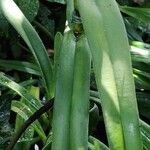
Angraecum eburneum
Ivory Angraecum
Description
Source: leafsnapAngraecum eburneum is a species of orchid. Their common name the "comet orchid". They generally grow up to 2 metres (6 ft 7 in) in height and grows 10 to 15 flowers per plant. They are native to Madagascar, Comoros, Seychelles, Réunion, Mauritius, Kenya, and Tanzania.
Care Guide
💧 Water
The ivory-colored Angraecum thrives in humid environments and should be watered twice a week to mimic its natural habitat. While it has a moderate tolerance for drought, regular misting is beneficial to maintain the humidity needed for its lush evergreen foliage, especially when grown indoors as an ornamental plant.
☀️ Light Partial sun
Ivory-colored angraecum is native to habitats such as forest understories and rocky areas, where it occurs in natural shade. It prefers partial sun but can adapt to full sun or full shade, demonstrating its versatile and hardy nature.
🌡️ Temperature 20–41.1°C
Ivory-colored angraecum prefers warm conditions. It performs best in moderately high temperatures, but not in very hot, humid weather. Sunlight helps warm the plant and encourages flowering. However, long periods of direct sun in summer can cause sunburn, so the amount of light it receives should be limited during that season. The plant is generally not tolerant of cold, so it needs proper protection and warmer temperatures in winter to avoid freezing.
💨 Humidity
🪴 Soil 5-6
🌱 Fertilizer
Appropriate fertilization is essential for the health and appearance of the Ivory-colored angraecum. Fertilize the Ivory-colored angraecum in summer, applying it once a month throughout the season. Nutrients support growth and sustain the plant's parts. Feeding the plant boosts the Ivory-colored angraecum's flower display, ensuring top-quality blooms.
🪴 Pot & Repot
When repotting Ivory-colored angraecum, select a pot that is slightly larger with good drainage, preferably a clear orchid pot. Use an orchid-specific, well-draining mix that contains bark or moss. Gently clean the roots and trim any that are dead or rotting. Repot after flowering, usually in spring or fall, water thoroughly, and place in bright, indirect light. Avoid disturbing the roots once repotted.
✂️ Pruning
The elegant, ivory-colored blooms of the Angraecum plant thrive with light pruning, which is best done from early to late spring. To encourage growth, remove dead stems and spent flowers, but be careful not to over-prune, as this can cause stress to the plant. Proper pruning not only enhances blooming but also reduces the risk of fungal infections.
🌿 Propagating
🐛 Diseases & pets
☠️ Toxicity
Characteristics
- Plant Type
- Herb
- Life Cycle
- Perennial
- Genus
- Angraecum
- Family
- Orchidaceae
- Hardiness Zone
- 12-13
- Mature Height
- 61 cm to 91 cm
- Mature Spread
- 40 cm to 61 cm
- Leaf Color
- Dark Green
- Leaf Type
- Evergreen
- Flower Color
- White
- Flower Size
- 6.35 cm to 10.16 cm
- Bloom Time
- Winter
- Planting Time
- Spring, Summer
- Harvest Time
- Spring