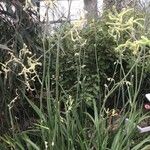
Anigozanthos flavidus
Evergreen kangaroo-paw · Tall kangaroo-paw · Australian sword lily
Description
Source: leafsnapAnigozanthos flavidus is a species of plant found in Southwest Australia. It is member of the Haemodoraceae family. It is commonly known as the tall, yellow, or evergreen, kangaroo paw. The specific epithet, flavidus, refers to the yellow flowers of this plant.A member of the genus Anigozanthos (kangaroo- and cats-paws) that has an evergreen clump of strap-like leaves, up to 1 metre long and 0.2 m wide, growing from an underground rhizome around 0.5 m in diameter. The rhizome allows the species to regenerate after drought or fire. Each plant may produce over 350 flowers, on up to 10 long stems, these appear during the summer of the region. Pollen is distributed by birds as they plunge into the flowers to reach the nectaries. Flowers are frequently yellow and green, but may present in shades of red, pink, orange, or brown. It is found along roadsides, along creeks, and in forests and swamps, and other unshaded winterwet habitat.The species occurs in a range from Two Peoples Bay in the southeast, throughout the Warren and southern Jarrah Forest, to Waroona on the Swan Coastal Plain. It was previously endemic to the region, but is now naturalised in New South Wales. This kangaroo paw is now widely cultivated in the Eastern states of Australia and the United States of America. Anigozanthos flavidus hybridises with other members of the genus, and is used in the development of cultivars. It is a hardy plant, tolerant of a wide range of soil types and condition, that may live for around 30 years in a garden. It is propagated from seed or sections of the rhizome.The first description of the species was by Augustin Pyramus de Candolle in 1807. This was published in Redouté's Les Liliacees with an illustration by that artist.
💡 Native to Australia, these unique flowers resemble a kangaroo's paw in their formation. The tube-shaped blooms are covered in dense hairs that trap insects and coat them with pollen. These plants attract birds, bees, and other pollinators. The color of the flowers varies with temperature: cooler temperatures intensify the colors, while warmer temperatures mute them.
🌳 Tall kangaroo paw is more than merely attractive; it helps support local pollinators such as birds and bees, which are attracted to its abundant, sweet nectar. Apart from garden ornamentation, the plant’s intricate structure offers potential for biomimicry designs, particularly in investigating new ways to maximize surface area for solar energy devices or water collection systems.
🎭 Distinctiveness and individuality
Care Guide
💧 Water Every 2 weeks
The tall kangaroo paw flourishes in well-drained soils typical of Australia's arid regions, showcasing an impressive tolerance for drought conditions. It thrives with infrequent watering—about every two weeks—and direct sunlight, making it an excellent choice for outdoor environments. Maintaining the right balance of moisture is crucial to avoid waterlogging and to ensure healthy root development.
☀️ Light Full sun
The tall kangaroo paw does well with abundant sunlight but can also tolerate locations with moderate sun. It does not require changing light conditions during its growth stage. Coming from habitats with high light exposure, it continues to grow healthily in those conditions. Nonetheless, uneven light can negatively affect its vigor and development.
What are the sunlight requirements for tall kangaroo paw?
Tall kangaroo paw benefits significantly from full sunlight exposure, requiring above 6 hours of sunlight to thrive optimally. It can also tolerate partial sun, which entails about 3-6 hours of sunlight. However, for achieving the best growth, ensuring the plant is placed in a location where it can receive abundant sunlight is crucial. This aligns with its natural habitat preference for considerable light exposure. Observing how sunlight moves through your garden can help in choosing spots that provide the right balance of light and shade, ensuring the plants' happiness and vitality.
Can tall kangaroo paw grow in artificial lighting?
Yes, tall kangaroo paw can grow under artificial lighting, making it suitable for indoor cultivation, especially in situations where natural sunlight is insufficient. Artificial light sources, such as LED lights, are recommended because they can provide specific wavelengths needed for optimal plant growth. For full sun plants, 30-50W/sq ft of light is needed, while partial sun plants require 20-30W/sq ft, and full shade plants need 10-20W/sq ft. The light source should be placed 12-36 inches above the plant to mimic natural sunlight conditions, and most plants will need between 8-12 hours of light per day to mimic the natural duration of daylight hours they would experience outdoors.
What are the signs of insufficient light for tall kangaroo paw?
When tall kangaroo paw does not receive adequate light, several symptoms may indicate light deficiency. These include smaller new leaves compared to older ones, leggy or sparse growth due to elongated spaces between leaves or stems, faster leaf drop as the plant conserves resources, slower growth or a complete halt in new growth, paler new leaves indicating a lack of chlorophyll, and conditions like chlorosis where leaves lose their green color and turn yellow. Excessive sunlight can lead to sunscald, leaf curling, wilting, and leaf scorching, which damage the plant's tissue and reduce overall health.
How can light exposure be optimized for tall kangaroo paw?
Optimizing light exposure for tall kangaroo paw involves several strategies whether the plant is grown indoors, outdoors, or in the ground. For indoor plants, gradually increasing sunlight exposure to at least 6 hours daily or using artificial lighting for at least 8 hours a day can promote healthy growth. Outdoor plants should be gradually moved to sunnier locations to prevent sunburn. For plants grown in the ground, reducing obstruction by pruning trees or other barriers that block sunlight and considering transplantation during the plant's dormant period can ensure sufficient sunlight exposure. It's crucial to monitor the plant's response to changes in light exposure to adjust care practices accordingly.
🌡️ Temperature 20–37.8°C
The Tall kangaroo paw, sometimes called tall kangaroo paw, prefers temperatures of 68 to 100 ℉ (20 to 38 ℃). It is native to areas with warm to hot climates but can adapt to cooler temperatures in winter. It is advisable to keep the plant in a bright, sunny spot and to protect it from frost or extreme heat.
What is the preferred temperature range for Tall Kangaroo Paw?
The Tall Kangaroo Paw (Anigozanthos flavidus) thrives in a temperature range of 68 to 100°F (20 to 38°C). It is native to warm to hot regions but can adjust to cooler temperatures during winter. It is crucial to maintain the plant in a bright, sunny spot while protecting it from frost or extreme heat. During winter, temperatures should be kept above 20°C for optimal growth, and the plant should be brought indoors to avoid cold temperatures that can cause harm.
How should Tall Kangaroo Paw be cared for in low temperatures?
In conditions of low temperatures, which the Tall Kangaroo Paw is not tolerant of, care should be taken to maintain the temperature above 20°C, and never let it drop below 5°C to prevent damage. If exposed to temperatures below 1°C, you may notice the leaves lightening in color. Post frost damage could further darken the leaves to brown or black, alongside wilting and drooping. To remedy this, trim off frost-damaged parts and move the plant to a warm, indoor environment, preferably near a south-facing window for adequate sunlight, but keep it away from direct heat sources to avoid air dryness.
What are the guidelines for caring for Tall Kangaroo Paw in high temperatures?
During summer, it's best to ensure the Tall Kangaroo Paw remains below 38°C to avoid heat stress. Should the temperatures rise above 43°C, the plant’s leaves may lighten, indicating a higher susceptibility to sunburn. To mitigate this, trim away any sunburned or dried parts of the plant, and relocate it to a spot where it can be shaded during the intense midday and afternoon sun. Additionally, watering the plant in the morning and evening will help keep the soil adequately moist and support the plant's well-being through higher temperatures.
💨 Humidity normal (40-60%)
This plant will thrive in moderate humidity, which is probably the level in your home. However, misting it a few times a week can be very beneficial. Make sure the room has good ventilation.
🪴 Soil 5-7
🌱 Fertilizer
Tall kangaroo paw requires the most fertilizer during its active growth period, which takes place mainly in spring, summer, and early fall. Fertilizing is needed to supply essential nutrients the soil may lack, supporting healthy root and stem growth and encouraging the attractive foliage that is a notable feature of this plant.
🪴 Pot & Repot 2-3 years
When repotting Tall kangaroo paw, select a pot 1-2 inches (2.5–5.1 cm) larger with ample drainage. Use a well-draining potting mix. Repot in spring or fall, ensuring the root ball sits slightly lower than the rim of the flower pot. Water thoroughly after repotting and place in a warm spot with indirect sunlight.
✂️ Pruning
The tall kangaroo paw boasts vibrant, claw-shaped flowers atop long stems. To maintain the plant's health, it's beneficial to prune it regularly from early to late spring, after it has finished flowering. This practice involves removing spent stalks and any damaged foliage, which promotes better air circulation, encourages new growth, and helps maintain the plant's shape for more abundant blooms.
🌿 Propagating
🐛 Diseases & pets
☠️ Toxicity
Kangaroo paw plants are non-toxic to people and pets, making them an excellent choice as garden specimens or indoor houseplants. Many wildlife eat kangaroo paw plants but it's best to refrain from adding these to your diet as they may cause mild stomach upset.
Characteristics
- Plant Type
- Herb
- Life Cycle
- Perennial, Annual
- Genus
- Anigozanthos
- Family
- Haemodoraceae
- Hardiness Zone
- 10-12
- Mature Height
- 2.13 m to 3.05 m
- Mature Spread
- 0.91 m to 2.13 m
- Leaf Color
- Green
- Leaf Type
- Evergreen
- Flower Color
- Yellow, Green
- Flower Size
- 2.54 cm
- Bloom Time
- Early spring, Mid spring, Fall, Winter
- Planting Time
- Spring
- Harvest Time
- Spring, Mid fall, Late fall, Winter
- Native Area
- Western Australia