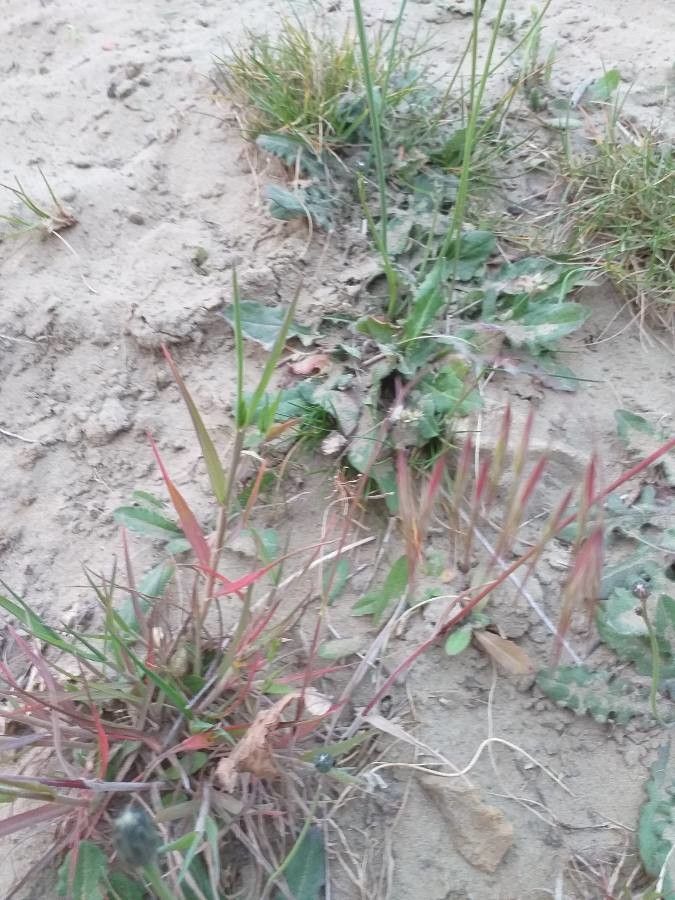
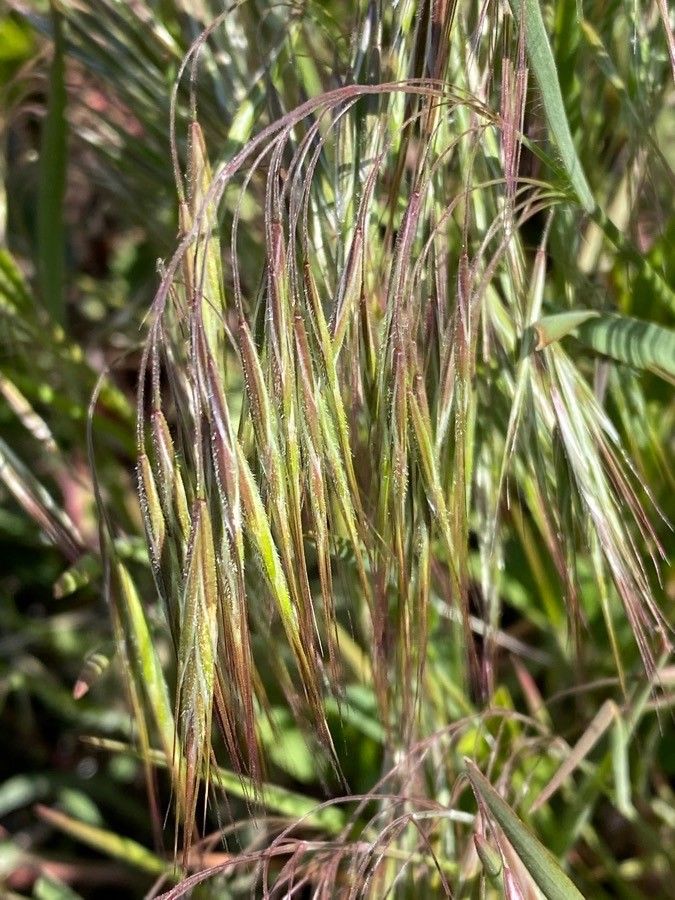
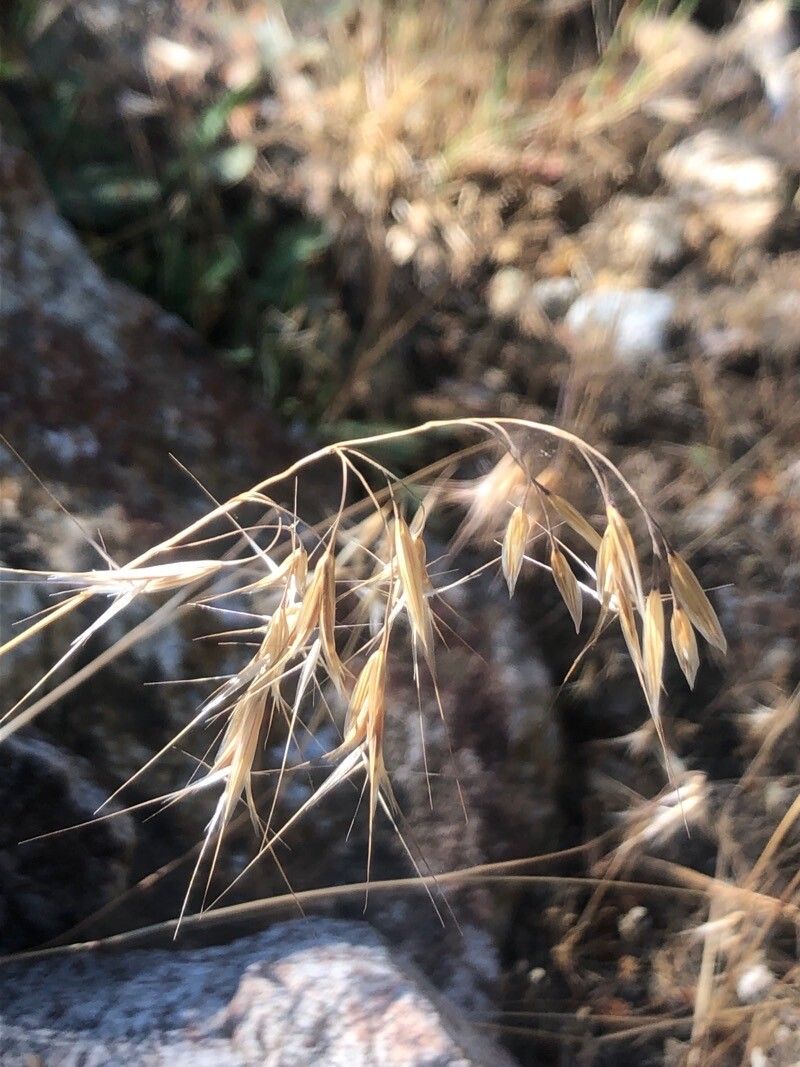
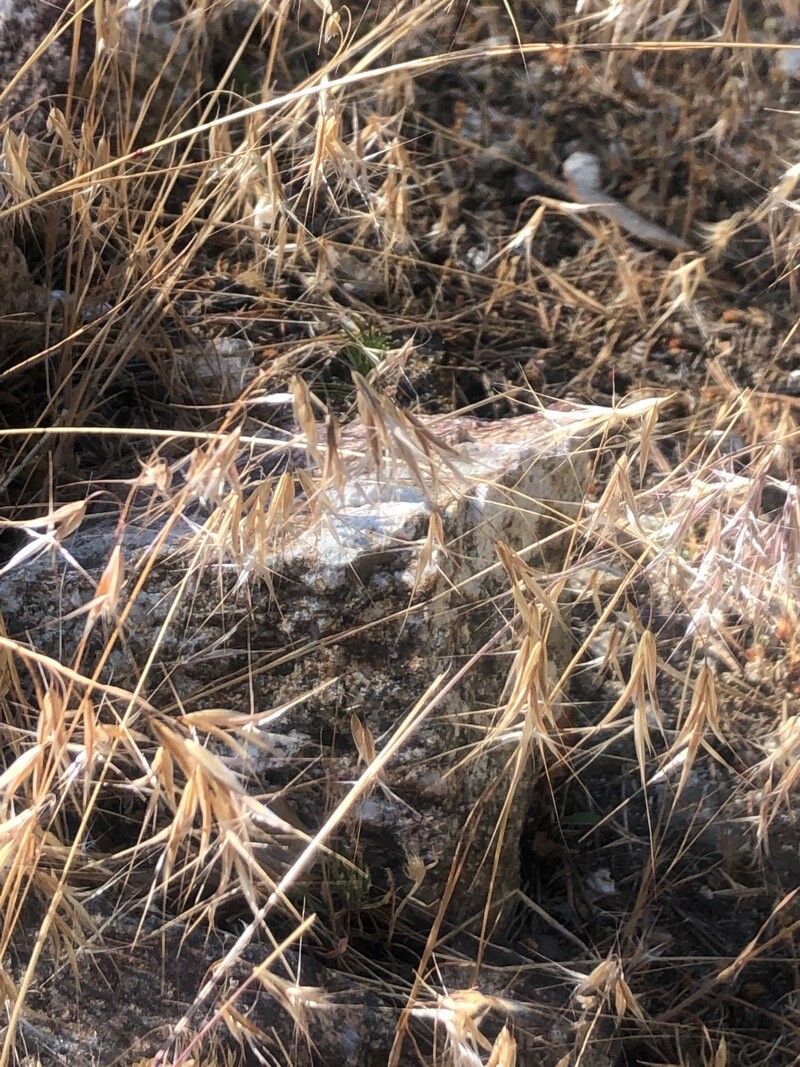
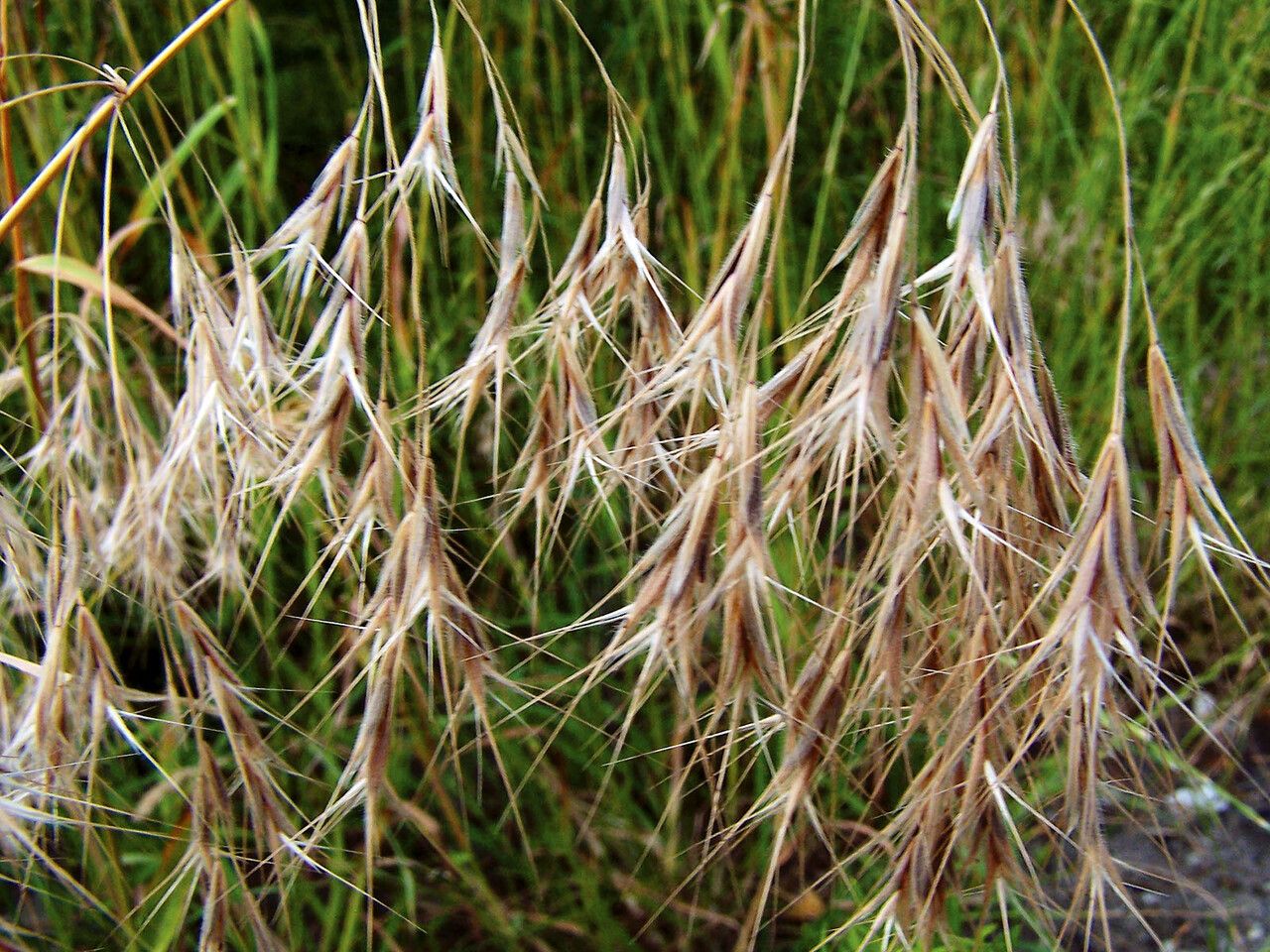
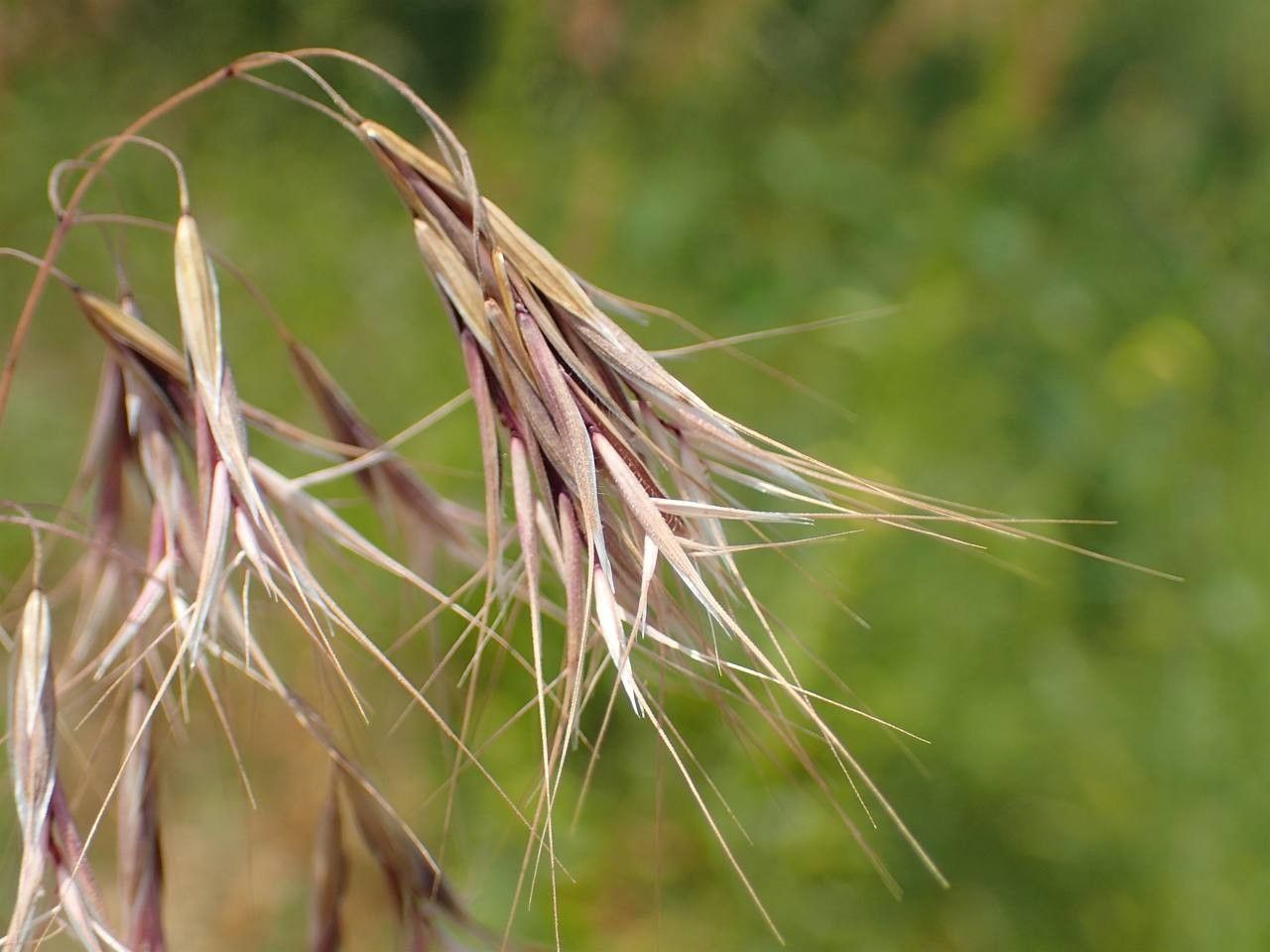
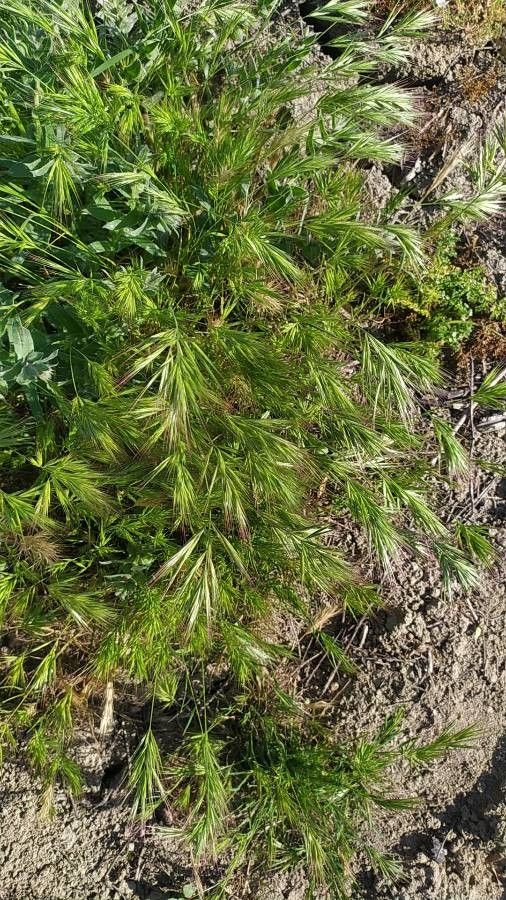
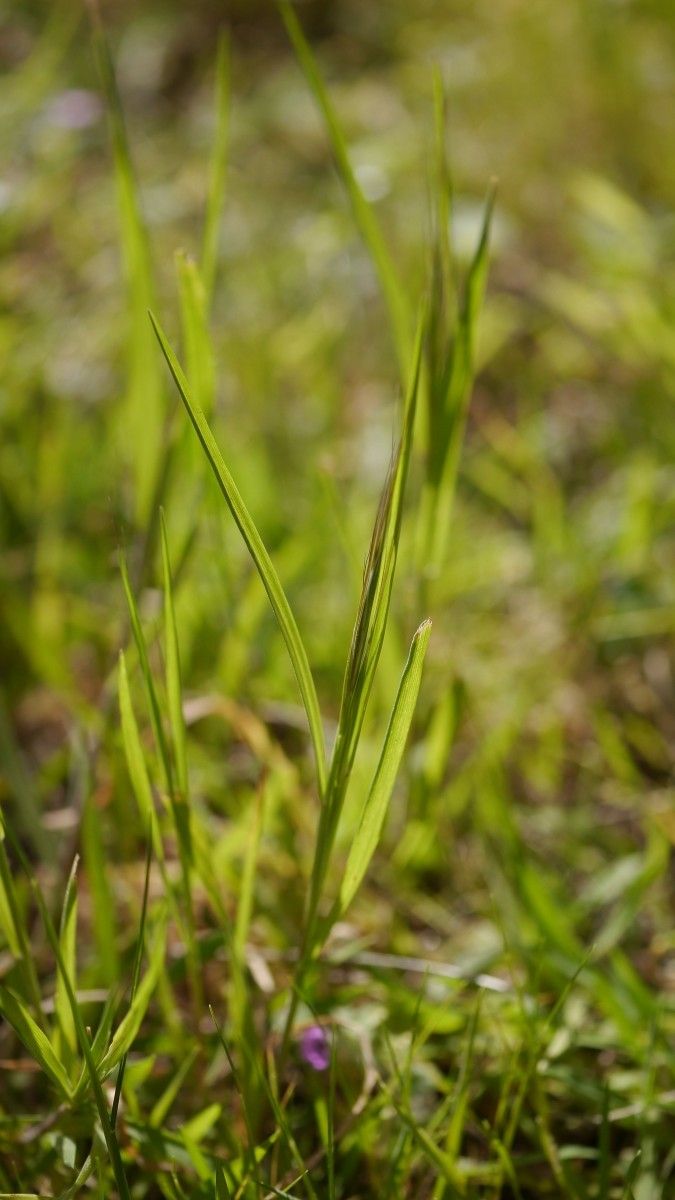
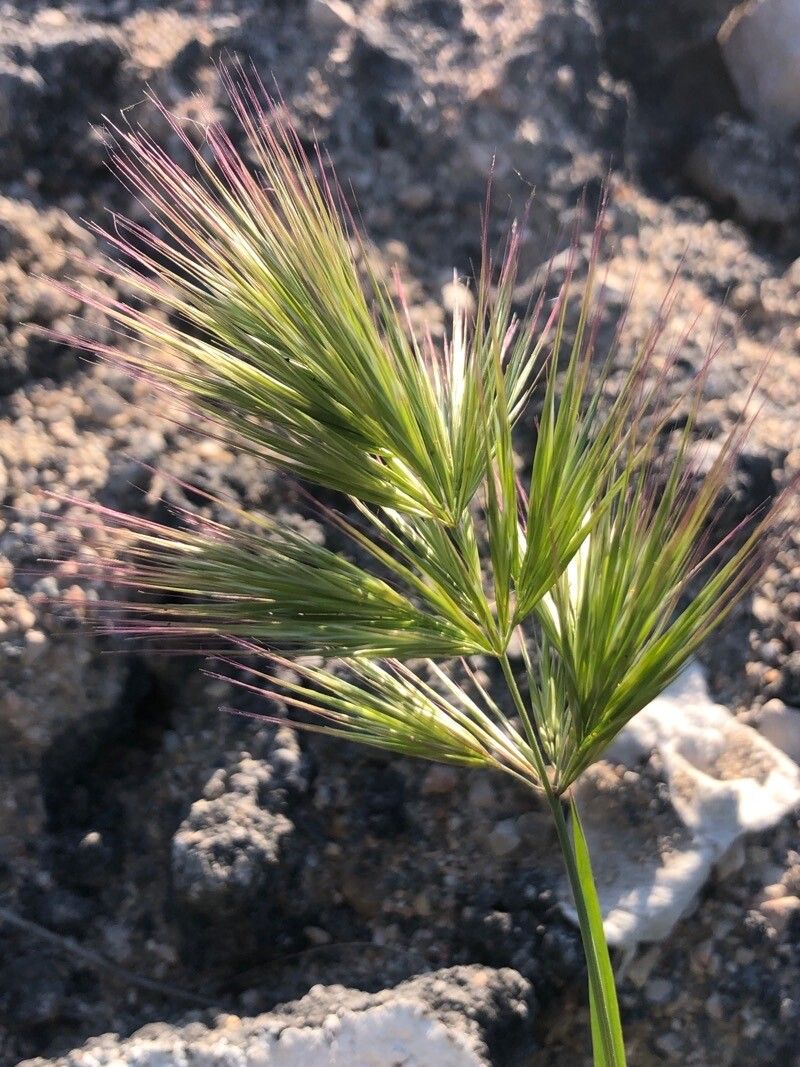
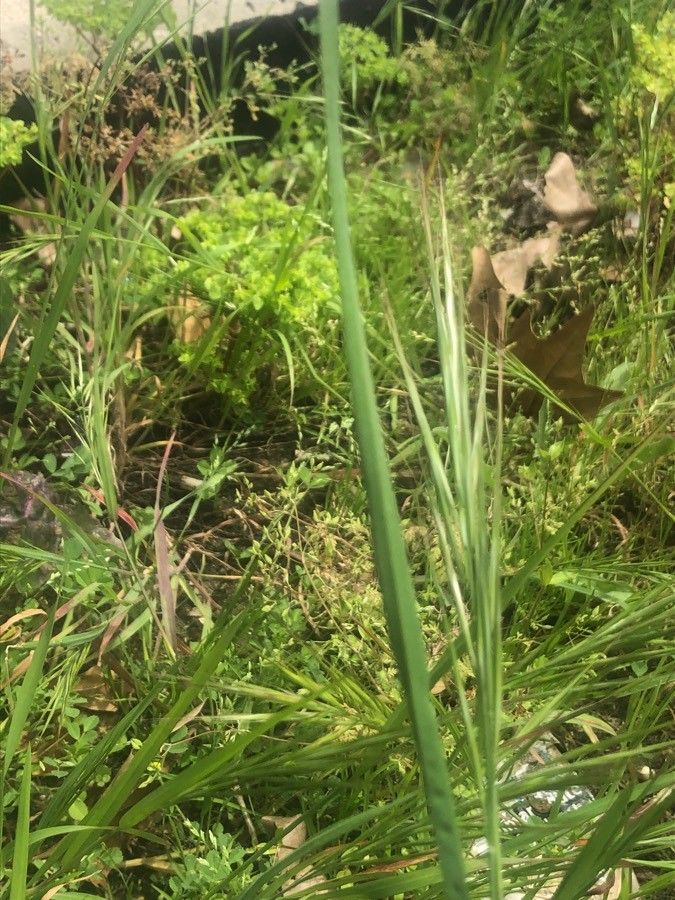
Anisantha tectorum, commonly known as greater quaking grass or giant brome, is a species of grass belonging to the Poaceae family. This perennial plant can grow up to 1.5 meters tall and features long, narrow leaves that are green in color. In late spring and early summer, it produces large panicles of flowers that are greenish-yellow.
Native to Europe and Asia, greater quaking grass has been introduced to other parts of the world, including North America, where it is considered an invasive species. It thrives in disturbed areas such as roadsides, fields, and waste places.
The seeds of this plant serve as an important food source for birds like finches and sparrows, while its leaves provide sustenance for grazing animals such as sheep and cattle.
Historically, Anisantha tectorum has been used for medicinal purposes by various cultures, including Native Americans, who used it to treat respiratory ailments like bronchitis.
In summary, Anisantha tectorum is a hardy plant with ecological significance. However, it can be problematic when introduced into non-native habitats, where it has the potential to outcompete local flora.
Cheatgrass is fairly resistant to diseases and is generally not vulnerable to them. Nonetheless, it can be affected by pests and diseases present in its environment. Such infections are typically mild. Regarding care, this plant requires a moderate amount of maintenance. It should be pruned regularly to preserve a neat appearance and support healthy growth. Fertilizing can also help encourage flowering. Cheatgrass is appropriate for anyone with outdoor space, like a garden or patio, and does not demand extensive care experience. It may need more attention when grown indoors.
How to keep Anisantha Tectorum.
Light
Cheatgrass grows best in locations that provide plentiful sunlight. Too little light can limit its growth, while too much light generally does not significantly harm it. Coming from open habitats, it is adapted to receiving a generous amount of light throughout the day at every stage of its growth cycle.
Temperature
Cheatgrass originates from cool, temperate regions and prefers temperatures of 68 to 95 °F (20 to 35 ℃). As the seasons change, adjust its environment to replicate those conditions. If temperatures fall below that range in winter, protective measures may be necessary.
Fertilizer
Cheatgrass does well with regular, light applications of fertilizer to encourage healthy leaf development. You should apply fertilizer to Cheatgrass about once a month during the summer. Nitrogen is important for foliage, and providing nitrogen-rich sources helps Cheatgrass prosper.
Botanical profile.
- Plant Type
- Herb
- Life Cycle
- Annual
- Genus
- Anisantha
- Family
- Poaceae
- Hardiness Zone
- 7-10
- Mature Height
- 40 cm to 91 cm
- Mature Spread
- 11 cm
- Leaf Color
- Green
- Leaf Type
- Semi-evergreen
- Flower Color
- White, Yellow, Green, Purple, Brown
- Flower Size
- 0.10 cm to 0.20 cm
- Bloom Time
- Late spring, Early summer
- Planting Time
- Spring, Autumn
- Harvest Time
- Early summer, Mid summer
- Native Area
- Egypt, India, Turkey, Sweden, United Arab Emirates, Slovakia, Montenegro, Pakistan, Croatia, Slovenia, Morocco, Yemen, Belarus, Uzbekistan, Iraq, Germany, Jordan, Romania, Belgium, Moldova, Portugal, Nepal, Saudi Arabia, Netherlands, France, Tajikistan, Tunisia, Czech Republic, Cyprus, Bulgaria, Poland, Armenia, Greece, North Macedonia, Ukraine, Serbia, Lebanon, China, Norway, Afghanistan, Syria, Kyrgyzstan, Kazakhstan, Italy, Spain, Switzerland, Mongolia, Israel, Bosnia and Herzegovina, Bhutan, Iran, Albania, Azerbaijan, Algeria, Hungary, Kuwait, Turkmenistan
Other names.