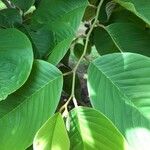
Annona cherimola
Chirimoya · Custard-apple · Cherimoya · Sweet apple · Sugar apple
Description
Source: leafsnapThe cherimoya (Annona cherimola), also spelled chirimoya and called chirimuya by the Inca people, is a species of edible fruit-bearing plant in the genus Annona, from the family Annonaceae, which includes the closely related sweetsop and soursop. The plant has long been believed to be native to Ecuador and Peru, with cultivation practiced in the Andes and Central America, although a recent hypothesis postulates Central America as the origin instead, because many of the plant's wild relatives occur in this area.Cherimoya is grown in tropical and subtropical regions throughout the world including Central America, eastern South America, Southern California, South Asia, Australia, the Mediterranean region and North Africa. American writer Mark Twain called the cherimoya "the most delicious fruit known to men". The creamy texture of the flesh gives the fruit its secondary name, the custard apple.
Care Guide
💧 Water
Cherimoya, which originates from the high-altitude regions of South America, thrives in environments with moderate humidity and abundant rainfall. For optimal growth, water the plant every 2 to 3 weeks, allowing the soil to dry slightly between waterings. As an evergreen, cherimoya requires consistent moisture, making it ideal for outdoor cultivation where natural rain and irrigation can work together to keep the plant adequately hydrated.
How should I water my Cherimoya plant?
You can water your Cherimoya using any common watering tool like watering cans, hoses, or cups. It's important to water the plant by applying the water directly to the soil and make sure to moisten all areas equally to provide water to the entire root system. Using filtered water is recommended to avoid harmful particles from tap water. It's also better to use water at or slightly above room temperature, as very cold or hot water can be a shock to the Cherimoya. However, the Cherimoya generally does well with any type of water.
What should I do if I give my Cherimoya plant too much water or too little water?
When caring for outdoor plants, especially new ones or seedlings, it's important to prevent them from becoming dry due to lack of watering. Make sure to water them regularly, especially during the first few months when the plant is still small or has just been planted. Once the roots are established, Cherimoya plants can usually rely on rain for moisture. If you have Cherimoya plants in pots, overwatering can be a common issue. In case you accidentally provide too much water, it's important to take immediate corrective action. Stop watering your plant right away to minimize the negative effects of overwatering. Then, remove the Cherimoya from its pot to check the roots. If there is no sign of root rot, you can put the plant back in its container. However, if you find any evidence of root rot, carefully trim away the affected roots and consider applying a fungicide to prevent further damage. Finally, make sure to repot the Cherimoya in well-draining soil. On the other hand, underwatering is relatively easy to fix. If you notice that the plant's leaves are drooping, drying out, or falling off, it is a clear sign of underwatering. Simply increase the frequency of watering and the leaves should quickly bounce back to their fullness. It's important to correct your watering schedule as soon as you notice underwatering occurring.
How often should I give water to my Cherimoya plant?
If you have plants growing outdoors, they usually get enough water from rainfall. However, if you live in an area with little rainfall, you should water your plants every 2 weeks in spring and fall, and more often in summer. In winter, when plants need less water, you can water them less frequently or not at all. If your Cherimoya plant is young or newly planted, you should water it more often to help it establish and grow. For potted Cherimoya plants, there are two ways to determine how often to water them. The first way is to have a set schedule, such as watering once a week or once every other week. However, this may not always be sufficient, as it doesn't take into account the specific conditions of your growing environment. The second way is to check the moisture level of the soil. It's generally best to wait until the top two to four inches of soil, or about ⅓ to ½ depth of the pot, have dried out completely before watering again. This method allows you to adjust the watering frequency based on the season and the plant's water needs.
How much water does my Cherimoya plant need?
To water your Cherimoya effectively, there are a few things to consider. Firstly, you may be surprised to learn that this plant doesn't always require a lot of water. Instead, if the top few inches of soil have dried since the last watering, you can promote healthy growth by giving it about five to ten ounces of water each time you water it. You can also gauge the water volume based on the soil moisture. So, keep an eye on how many inches of soil have dried out between waterings. To ensure your Cherimoya receives the right amount of moisture, water enough to dampen all the soil layers that have become dry. If over half of the soil is dry, consider giving it a bit more water than usual. In such cases, continue adding water until you see excess water draining from the pot's drainage holes. If your Cherimoya is planted outdoors in a rainy area, it may not need any additional watering. However, when the Cherimoya is young or still establishing, make sure it receives 1-2 inches of rain per week. As it continues to grow and establish itself, it can survive solely on rainwater. Only during hot weather with a lack of rainfall for 2-3 weeks should you consider giving it a thorough watering to prevent it from suffering stress.
How can I know if I'm giving enough water to my Cherimoya plant?
Overwatering is a common issue for the Cherimoya plant, and there are specific signs to watch out for. If a Cherimoya is overwatered, its leaves will turn yellow and it may even lose some of them. Overwatering can also cause the overall structure of the plant to shrink and may lead to root rot. On the other hand, an underwatered Cherimoya will also start to droop. Its leaves may become brown and brittle. If you notice any signs of overwatering or underwatering, you should take action to restore the health of your Cherimoya.
☀️ Light Full sun
Cherimoya prospère sous la lumière claire et joyeuse du ciel ouvert et tolère aussi la lumière douce d'un endroit ombragé. Elle provient d'environnements où le soleil est abondant, absorbant de l'énergie pour une croissance vigoureuse. Un excès ou un manque de lumière peut freiner sa croissance, montrant ainsi le besoin marqué de la plante pour une exposition solaire équilibrée.
What are the sunlight requirements for Cherimoya?
Cherimoya requires a specific balance of sunlight to thrive, benefiting from full sun, which is above 6 hours of sunlight, or partial sun, approximately 3-6 hours of sunlight daily. It's crucial to observe the movement of sunlight through your garden to ensure your Cherimoya receives the ideal mix of light and shade, fostering its growth and happiness.
How does Cherimoya respond to different lighting conditions?
Cherimoya thrives under the clear, cheerful light of the open sky but can also grow in mellow, shady areas. It originates from environments that receive generous sunlight, which is vital for its robust growth. Both an excess and a deficit of sunlight can hinder its growth, highlighting the plant's need for balanced solar exposure. For indoor plants where natural sunlight is insufficient, artificial lighting can be a crucial solution. LED lights are often recommended as they can be tailored to provide specific wavelengths needed by your plants. The amount of artificial light required varies based on the plant's sun exposure needs, ranging from 10-50W/sq ft depending on whether the plant is categorized under full sun, partial sun, or full shade.
What are the symptoms of incorrect sunlight exposure in Cherimoya?
Incorrect sunlight exposure can lead to several symptoms in Cherimoya, including smaller new leaves, leggy or sparse growth, faster leaf drop, slower or halted new growth, and leaves that develop irregular color patterns or appear pale due to insufficient chlorophyll. Excessive sunlight can result in chlorosis (leaves turning yellow), sunscald (damage from intense sunlight exposure), leaf curling (as a defense mechanism against excessive sunlight), wilting (due to increased water loss), and leaf scorching (characterized by brown, dry, and crispy leaf edges). These symptoms indicate the plant's struggle with either too much or too little sunlight.
How can I mitigate symptoms of inadequate sunlight in Cherimoya?
To mitigate symptoms of inadequate sunlight in Cherimoya, start by gradually moving your plant to sunnier locations, ensuring it receives at least 6 hours of direct sunlight daily. If the plant is large or not easily movable, using artificial light can provide additional support. Indoors, keep a desk or ceiling lamp on for at least 8 hours daily, or invest in professional grow lights. Outdoors, acclimate your Cherimoya by incrementally moving it to brighter areas while avoiding sudden changes that could cause sunburn. Additionally, for plants in the ground, identifying and minimizing obstructions like overhanging branches can improve sunlight access. If necessary, transplant smaller plants during their dormant period to areas with better sun exposure and drainage.
🌡️ Temperature 20–37.8°C
Cherimoya is quite adaptable to temperature, able to endure higher heat and wide temperature fluctuations. In hot weather, attention should be given to watering and adequate shading should be provided to prevent sunburn. On the other hand, cherimoya has a fairly poor tolerance for low temperatures. While it can resist some cold, excessively low temperatures may cause frost damage.
💨 Humidity normal (40-60%)
This plant will thrive in moderate humidity, which is probably the level in your home. However, misting it a few times a week can be very beneficial. Make sure the room has good ventilation.
🪴 Soil 6-7
🌱 Fertilizer
The Cherimoya plant needs adequate nutrients to produce fruit at its best. Fertilize in early spring to support new growth and flowering. Regular feeding keeps the plant healthy, produces tastier fruit, and prevents nutrient deficiency problems like yellowing leaves and reduced fruit production.
Why do I have to add plant nutrients to my Cherimoya tree?
Regular fertilization is essential for Cherimoya plants to maintain their health and produce delicious fruit. As plants grow, they deplete the soil of nutrients, particularly fast-growing plants like Cherimoya. If a plant is not fertilized regularly, it may face various problems. One common issue is nutrient deficiency, which can cause yellowing leaves or even reddish coloration. Other signs of nutrient deficiency include deformed leaves, withering tips, or widespread plant deterioration. Bark disorders, slow growth, poor shoot development, and a lack of fruit production can also occur due to nutrient deficiency. Therefore, providing Cherimoya with an extra supply of nutrients through regular fertilization is crucial for optimal growth and fruit quality.
When should I put fertilizer on my Cherimoya plant?
The best time to fertilize Cherimoya is in early spring, before the buds start to grow. When Cherimoya comes out of winter dormancy, it uses stored reserves to grow new branches. Since a lot of energy is needed for bloom development, it's recommended to fertilize around 2 to 4 weeks prior to the expected bloom. This allows enough time for the nutrients to be absorbed by the plant. During spring, Cherimoya can still be fed, but it's not advisable to fertilize in autumn as it can cause excessive foliage growth, making the leaves vulnerable to winter damage.
When is not a good time to add fertilizer to my Cherimoya plant?
Here are some tips for fertilizing Cherimoya plants: 1. Avoid fertilizing Cherimoya during the first year of growth. If fertilization is necessary, use it sparingly. 2. Do not fertilize if you pruned 20% or more of the plant the previous year. 3. Hold off on fertilizing diseased or damaged plants, as it can do more harm than good. Find and address the root cause of the issue. 4. Do not fertilize after the peak of summer, as this can cause excessive growth before winter. 5. Avoid fertilizing Cherimoya during hot and dry periods, as dry soil is less effective at delivering nutrients. Additionally, excessive growth stimulated by fertilizer may require more water than is available. 6. Apply fertilizer earlier in the season when temperatures are cooler. 7. Be cautious about inadvertently giving nearby plants or lawns a double-dose of fertilizer, as Cherimoya can absorb fertilizer applied to them.
Which fertilizer is best for my Cherimoya plant?
Using fertilizer that contains a balance of nitrogen, phosphorus, and potassium can bring many benefits to plants. Nitrogen is important for leaf growth and chlorophyll production. Phosphorus helps support the root system and promotes the development of blossoms, fruits, and seeds. Potassium plays a role in photosynthesis and the movement of water and nutrients throughout the plant. When choosing a fertilizer, you can opt for a commercial one that is specifically designed for a particular type of tree. Alternatively, you can use organic sources of nitrogen such as manure, feather meal, or blood meal. To ensure you apply fertilizer accurately, conducting a soil test can give you a better understanding of the condition of your soil. For commercial fertilizers, if your soil lacks sufficient phosphorus and potassium according to the soil test, you can use a balanced granular fertilizer with a ratio of 10-10-10 or similar. In most cases, nitrogen in the soil is continuously depleted with rainfall. If your soil already has enough phosphorus and potassium, it would be more appropriate to use a high-nitrogen fertilizer with a ratio of 6-2-1 or 10-2-2.
How can I make my Cherimoya plant grow better?
To ensure proper fertilization for your Cherimoya tree, it's important to follow the instructions for the specific fertilizer you are using and conduct some research on its appropriate usage. Over-fertilizing can be detrimental, so determining the correct amount is crucial, especially for fruit trees. A general guideline is to base the amount of fertilizer on the tree's age or trunk diameter, using approximately one-tenth of a pound per year or per inch of trunk, with a maximum of one pound. It's worth noting that Cherimoya trees shouldn't be fertilized during their first few years. Granular and organic fertilizers, like blood meal, should be sprinkled around the tree's base, extending all the way to the drip line (the area beneath the farthest-reaching branches). However, be careful to avoid direct contact between the fertilizer and the trunk. As time progresses, the granules will break down, gradually filtering into the soil and being absorbed by the roots. After fertilizing, it's recommended to spread a one-inch layer of compost around the tree's base and ensure thorough watering.
🪴 Pot & Repot Every 12 months
✂️ Pruning
Cherimoya, a subtropical fruit tree, is valued for its sweet and creamy fruit. Pruning should be done from early to late spring. Focus on removing dead branches and thinning the canopy. This helps to enhance fruit size and quality, and it promotes overall tree health by improving airflow.
🌿 Propagating
🐛 Diseases & pets
☠️ Toxicity
If crushed open, cherimoya seeds are toxic. The entire plant, like other members of the Annonaceae family, contains trace levels of neurotoxic acetogenins including annonacin, which are thought to be associated with atypical parkinsonism in Guadeloupe. Additionally, when administered, a bark extract might cause paralysis.
Characteristics
- Plant Type
- Tree, Shrub
- Life Cycle
- Perennial
- Genus
- Annona
- Family
- Annonaceae
- Hardiness Zone
- 9-11
- Mature Height
- 3.66 m to 5.49 m
- Mature Spread
- 4.57 m to 9.14 m
- Leaf Color
- Dark Green, Forest Green
- Leaf Type
- Evergreen
- Flower Color
- Yellow, Green
- Flower Size
- 2.54 cm to 5.08 cm
- Bloom Time
- Summer
- Planting Time
- Spring, Summer, Autumn
- Harvest Time
- Late summer, Fall
- Native Area
- Colombia, New Zealand, Peru