Annona squamosa
القشطه · Sugar apple · Sweet sop · Custard-apple · Scopapel
Description
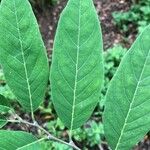
Source: leafsnapAnnona squamosa, commonly known as the sugar apple or sweetsop, is a small tropical fruit tree belonging to the Annonaceae family. Native to the Caribbean and Central and South America, it has been widely cultivated in many tropical regions around the globe. Typically, the sugar apple tree grows to a height of 3-6 meters, although it can reach up to 10 meters. It features a short trunk with spreading branches that form an open crown. The leaves are simple, alternate, and oblong, with a glossy dark green color. The fruit of Annona squamosa is round or heart-shaped and has a knobby skin covered in scales or bumps. Inside, the flesh is white and creamy, embedded with numerous black seeds. The flavor is sweet and aromatic, often compared to custard or vanilla. In traditional medicine, various parts of this plant have been used for their medicinal properties, such as treating fever, diarrhea, and dysentery, as well as for their anti-inflammatory effects. Annona squamosa thrives in warm temperatures between 20-30°C (68-86°F) but can tolerate temperatures up to 40°C (104°F). It prefers well-drained soils rich in organic matter but can grow in various soil types, including sandy soils. Overall, this plant offers both nutritional value through its delicious fruits and medicinal benefits, making it an important species in many cultures around the world today.
💡 The sugar apple, though highly popular in Asia, actually originates from the tropical regions of the Americas and the West Indies. Spanish traders, using Manila galleons, introduced the fruit to Asia. Due to the region's suitable tropical climate, the sugar apple has become a widely cultivated and popular crop.
🌳 Besides being a tasty tropical fruit, the sugar apple contains seeds with little-known insecticidal properties. When processed, those seeds produce a natural biopesticide that provides an environmentally friendly alternative to synthetic chemicals. This potential connects with a growing market for organic pest-control solutions, illustrating the sugar apple's role beyond mere consumption.
🎭 Affection, Restoration, Garden, Enchantment
Care Guide
💧 Water Every 7 days
The sugar apple, a tropical fruit, thrives in warm, humid climates. To keep it healthy, water the plant every 1-2 weeks, ensuring the soil remains moist but not overly wet. It prefers full sun and grows best outdoors in conditions similar to its native environment, which includes plenty of rainfall during the growing season.
What is the best way to water my Sugar apple tree?
To promote excellent root development, place a garden hose at the base of the plant. Avoid spraying the leaves directly, especially if they are outdoors in direct sunlight as they will require more water. Moistening the roots can be done using bubblers or soaker hoses that cover the entire garden or bed. After adding or removing plants, make sure to deeply water the roots. Remember to drain any excess water and wait for the soil to dry before watering again. To prevent diseases, water at ground level and on sunny days, consider spraying the entire bush. Whether potted or in-ground, keep in mind that Sugar apple prefers deep watering rather than light sprinkling.
What should I do if I give too much/not enough water to the Sugar apple?
An overwatered Sugar apple can show various signs of distress, such as yellowing, wilting, and dropping leaves. The plant may also appear dull and have mushy stems. If these signs are observed, it is advisable to adjust the watering schedule accordingly. Conversely, the wilting of leaves can also indicate under watering, which causes them to become crispy and dry. It is important to check the soil regularly and provide sufficient water when it is dry. Although sufficient watering can help the Sugar apple recover, the damaged root system may cause the plant to continue having dry, yellow leaves for a few days. Once the plant returns to normal, the yellowing of leaves will cease. When keeping the Sugar apple indoors, it is crucial to monitor moisture levels and avoid overwatering. If black spots appear, it is recommended to let the soil dry in the pot by refraining from watering for a few days. Overwatering can lead to root rot, so if this occurs and discolored and slimy roots are present, it may be necessary to transfer the plant to a different pot. Preventing root rot is always important, so be cautious not to allow the soil to become excessively soggy. When planting Sugar apple outdoors, it is advised to dig a little deeper and check the soil moisture with your fingers. If it is too dry, underwatering may be the issue, and sufficient watering is necessary to assist the plant's recovery.
How frequently should I water my Sugar apple?
The Sugar apple prefers deep watering every few days. This is especially important for potted plants as they dry out faster. In cold regions, water every 3 to 5 days. Water in the morning when the soil is dry. Check the soil moisture and water when the top 2-3 inches are dry. During hot days, check moisture daily as it can dry out quickly. If you have a garden, water once a week in hot climates. Consider rainfall and avoid overwatering to prevent root rot. Add mulch to conserve water when outdoors. In sandy soil, water more frequently. In clay soil, water less frequently to avoid root rot. Keep track of watering dates and pay attention to drooping leaves.
How much water should I give my Sugar apple?
The Sugar apple generally needs about a gallon of water on a regular schedule. For potted plants, it's best to water them deeply until water is dripping out of the bottom of the pot. Then, wait for the soil to dry before watering again. You can use a water calculator or a moisture meter to keep track. During the flowering period, provide plenty of water but let the moisture evaporate to avoid root rot. If the Sugar apple is planted outside and receives enough rainfall, it may not need additional watering. When it's young or newly planted, make sure it gets 1-2 inches of rain per week. As it grows, it can rely solely on rainfall, except during very hot weather or droughts of 2-3 weeks, when a full watering during cooler hours is suggested. Additional watering may be needed during extended dry spells.
Do I need to change how often I water my Sugar apple tree depending on the time of year or the weather?
The Sugar apple requires outdoor conditions with some rain, but only needs watering during dry periods. During the spring and fall, the soil needs to be moist but not soggy, and alternating dry and moist conditions are good for growth. In the summer, hot weather and lack of rain may require more frequent watering to keep the soil moist. During winter, the Sugar apple needs less water because it goes dormant and can benefit from well-draining soil. Once it starts to leaf out in spring, watering can be skipped as it relies on rain. Good drainage is important throughout the year, especially when flowering. If planted in pots, the limited root growth requires regular watering, especially in summer. Deep soaking once or twice a week is preferable to shallow sprinkles. The Sugar apple should not be allowed to dry out completely in fall or winter. Avoid overwatering and provide adequate drainage to avoid damage. Applying mulch can help reduce stress, conserve water, and promote healthy blooming.
☀️ Light Full sun
Native to areas with intense sun, the sugar apple grows vigorously when given abundant sunlight. While it tolerates lower light levels, full sun optimizes its health. Steady bright sunlight is important during its development. Excessive sun intensity can scorch the leaves, whereas too little light may stunt its growth.
What are the sunlight requirements for sugar apple plants?
Sugar apple plants thrive best in full sun, which means they require above 6 hours of sunlight daily to maintain optimal health and robust growth. However, they can also tolerate partial sun conditions, getting about 3-6 hours of sunlight. It's crucial to observe the movement of sunlight through your garden carefully and choose locations that provide a balanced mix of light and shade to ensure the plants' well-being.
How does the intensity of sunlight affect sugar apple plants?
Originating from environments with intense sunlight, sugar apple plants exhibit robust growth when exposed to abundant sunlight. While they can tolerate less sunlight, maximum sun exposure is vital for their health. Throughout their growth process, sufficient sunlight is essential. However, excessive sunlight intensity can cause leaf scorch, and inadequate sunlight may stunt the plant's development. It's important to find a balance to prevent these issues.
What artificial lighting requirements do sugar apple plants have indoors?
Indoor sugar apple plants require adequate lighting to grow optimally, especially when natural sunlight is insufficient, like in winter or less sunny spaces. Artificial lights, such as LED lights, provide a valuable solution by promoting faster, healthier growth. These lights should be chosen based on their ability to emulate specific wavelengths needed by the plants. Full sun plants need 30-50W/sq ft of artificial light, partial sun plants need 20-30W/sq ft, and full shade plants need 10-20W/sq ft. The light source should be placed 12-36 inches above the plant and kept on for 8-12 hours per day to mimic natural daylight hours.
What are the signs of insufficient light in sugar apple plants?
Sugar apple plants show several symptoms when they receive insufficient light. These include smaller new leaves compared to previous ones, leggy or sparse growth due to longer spaces between leaves or stems, faster leaf drop as older leaves are shed early to conserve resources, slower or no new growth as the plant enters survival mode, and lighter-colored new leaves indicating a lack of chlorophyll and nutrients. These symptoms point to the need for better lighting conditions to support the plant's growth.
How can you address light-related issues in sugar apple plants?
To address light-related issues in sugar apple plants, gradually move them to sunnier locations each week, ensuring at least 6 hours of direct sunlight daily for indoor plants by using a south-facing window and keeping curtains open. Artificial lights can provide additional light for large or immobile plants, with at least 8 hours of exposure daily. Outdoors, moving plants to optimal sunlight spots gradually avoids sunburn. Minimize obstructions like trees by pruning, and consider transplanting smaller plants during their dormant period to locations with ample sunlight and good drainage. Note that parts of the plant affected by insufficient sunlight may not recover, but new growth should be healthy after adjusting light exposure.
🌡️ Temperature 20–37.8°C
The sugar apple originates from tropical areas and prefers a warm climate with temperatures between 68 and 100 ℉ (20 to 38 ℃). It can tolerate some temperature variation but should be shielded from cold and frost. During the summer, it’s best to position the plant in a shaded spot or provide some artificial shade to prevent the leaves from scorching. In winter, it can be brought indoors to keep it warm.
What are the essential care instructions for a Sugar Apple (Annona squamosa)?
The Sugar Apple, or Annona squamosa, thrives in tropical regions and prefers a warm climate, ideally between 68 to 100°F (20 to 38°C). It requires protection from cold and frost, as it is extremely sensitive to low temperatures. During hot summer months, it's beneficial to provide the plant with shade to prevent leaf scorch. In winter, moving it indoors helps maintain a suitable temperature. It's important to avoid placing the plant too close to heaters when kept inside to prevent damage from dry heat. Maintaining temperatures above the minimum suitable growth temperature during the winter promotes healthy plant growth, while temperatures near the lower tolerance limit can be harmful.
How should I care for my Sugar Apple plant in low temperature conditions?
Sugar Apple plants prefer warm temperatures and struggle in cold climates. They thrive best when temperatures are kept above their minimum suitable growth temperature. In winter, ensuring the environment remains above the tolerable growing temperature minimum is crucial. If temperatures fall below the plant’s growth limit, you may notice the leaves lightening in color, eventually turning brown or black after frost damage, accompanied by symptoms like wilting and drooping. To mitigate frost damage, trim off the frost-damaged parts and move the plant indoors to a warm environment, ideally placing it near a south-facing window for ample sunlight. Avoid placing the plant near heaters or air conditioning vents to prevent air dryness.
How do I protect my Sugar Apple plant from high temperatures?
During the peak of summer, it's important to ensure the Sugar Apple plant is kept below its maximum suitable growth temperature. Exceeding the maximum tolerable growing temperature can make the plant's leaves lighten and increase susceptibility to sunburn. To protect the plant, remove any sunburned or dried-up parts and relocate the plant to a spot where it can be shielded from the midday and afternoon sun. Watering the plant during the cooler morning and evening hours helps keep the soil moist and supports plant health in high temperature conditions.
💨 Humidity
🪴 Soil 5-7
🌱 Fertilizer
Use organic fertilizers (e.g., fish emulsion, compost) instead of chemical ones for sugar apple. Give young plants higher amounts of nitrogen and phosphorus in spring. Incorporate compost or fertilizer into the soil before or after planting. For mature plants, add a balanced fertilizer or one targeted to a specific deficiency in spring. Nutrient deficiency leads to small leaves, short branches, yellow or bronze leaves, acidic fruits, premature fruit drop, and splitting.
Why do I have to add fertilizer to my Sugar apple tree?
In areas with rich soil, fertilizing may not be necessary. But, if the soil lacks nutrients, a Sugar apple won't be able to produce enough leaves, flowers, and fruits. To figure out which nutrients are abundant or lacking in the soil, a soil test is recommended. Nutrient deficiency in Sugar apple can result in small leaves, short branches, yellowing or bronze leaves, and less tasty, more acidic fruits. Certain nutrient deficiencies can even cause premature fruit dropping or splitting.
When should I fertilize my Sugar apple tree for the best results?
To promote strong leaf and root growth in young Sugar apple plants, it is recommended to provide higher levels of nitrogen and phosphorus fertilizer. The best time to fertilize is in the spring, during the first growing season. It is advisable to mix compost or another fertilizer into the soil before or immediately after planting. As for mature plants, it is necessary to supplement their fertilizer every few years during the spring and summer, using a balanced fertilizer or one that addresses specific soil deficiencies in your area. However, it is important to avoid fertilizing Sugar apple plants in the autumn or winter.
When is it a bad idea to fertilize my Sugar apple?
To ensure the health of your Sugar apple tree, it is advised to avoid fertilizing it after pruning, when it is infested with pests or diseased, or when it is already under stress. While fertilizer can address nutrient deficiencies, it is not a cure-all for other problems that may affect a Sugar apple tree. It is important to accurately diagnose the issue before applying fertilizer, as there may be an underlying cause that needs to be addressed instead. Additionally, it is best to refrain from fertilizing the tree during winter or during excessively hot and dry periods in the summer.
What kind of fertilizer does my Sugar apple tree need?
Most types of Sugar apple thrive in tropical locations with abundant decaying organic matter. While they can benefit from fertilizer to meet their macronutrient and micronutrient needs, it is important to choose the right type of fertilizer. For optimal fruit growth, a high-phosphorus organic fertilizer like mushroom compost, bone meal, or poultry manure is recommended. When purchasing fertilizer, you will find a number (NPK) on the label indicating the ratio of nitrogen, phosphorus, and potassium. Typically, nitrogen deficiency is the most common issue in soil, but it is always advisable to perform a soil test to determine specific nutrient deficiencies and decide on additional supplementation.
How can I give my Sugar apple plant nutrients?
When choosing fertilizer, remember to follow the instructions provided. It's always better to under-apply fertilizer than to over-apply it, so it's recommended to be conservative when adding fertilizers. This is especially important for chemical fertilizers, as they are typically more concentrated compared to organic fertilizers. Liquid fertilizers should be diluted with water and used to water the Sugar apple plant. On the other hand, granular or dry fertilizers can be spread around the base of the plant, ensuring that no fertilizer comes into direct contact with any part of the plant. It is commonly advised to use fertilizers once every 2-3 weeks during the growing season. For organic fertilizers, they can either be mixed into the soil before planting or spread in a layer over the top of the soil for newly-planted or mature plants.
🪴 Pot & Repot 2-3 years
When repotting a sugar apple, select a pot 1-2 inches (2.5–5.1 cm) larger with ample drainage. Use a well-draining potting mix. Repot in spring or fall, ensuring the root ball sits slightly below the rim of the flower pot. Water thoroughly after repotting and place in a warm spot with indirect sunlight.
✂️ Pruning
The sugar apple produces knobby fruit and requires regular pruning to maintain its health. Effective pruning involves removing dead branches, thinning excessive growth, and shaping the tree to allow maximum sunlight exposure. For optimal results, carry out pruning from early to late winter. This will enhance air circulation and promote the growth of larger fruit.
🌿 Propagating
🐛 Diseases & pets
☠️ Toxicity
Characteristics
- Plant Type
- Shrub
- Life Cycle
- Perennial
- Genus
- Annona
- Family
- Annonaceae
- Hardiness Zone
- 10-12
- Mature Height
- 3.05 m to 7.92 m
- Mature Spread
- 6.1 m
- Leaf Color
- Green
- Leaf Type
- Semi-evergreen
- Flower Color
- Yellow, Green, White
- Flower Size
- 1.52 cm to 3.05 cm
- Bloom Time
- Mid spring, Late spring, Early summer
- Planting Time
- Spring, Autumn
- Harvest Time
- Mid summer, Late summer, Early fall
- Native Area
- Chile, Belize, Honduras, Mexico, Guatemala, Panama, Jamaica, Uruguay, Colombia, Bahamas, Argentina, Venezuela, Guyana, El Salvador, Nicaragua, Suriname, Costa Rica