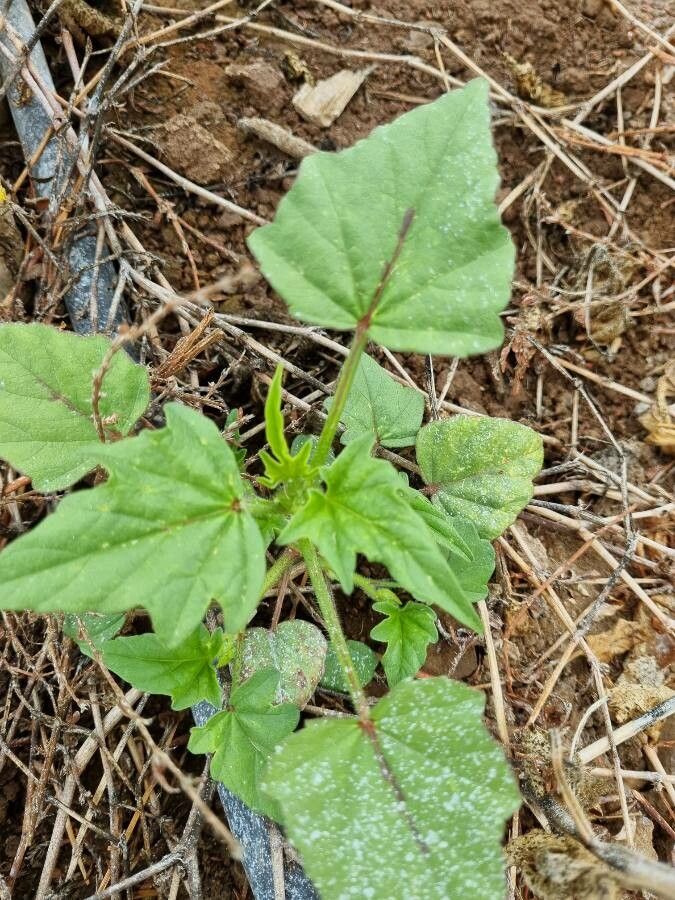
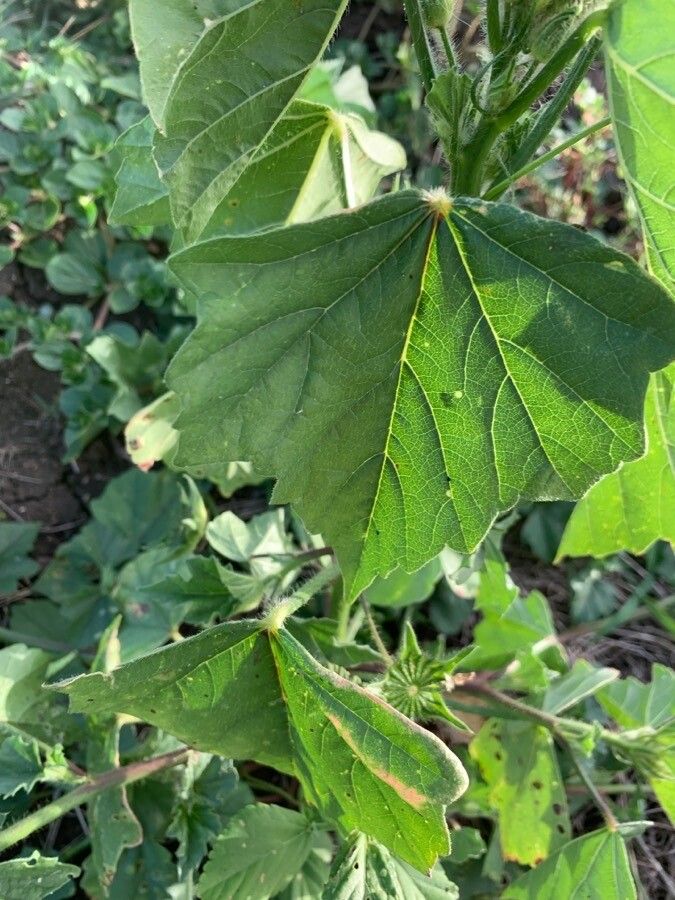
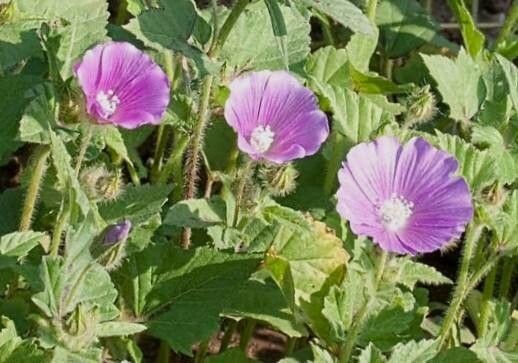
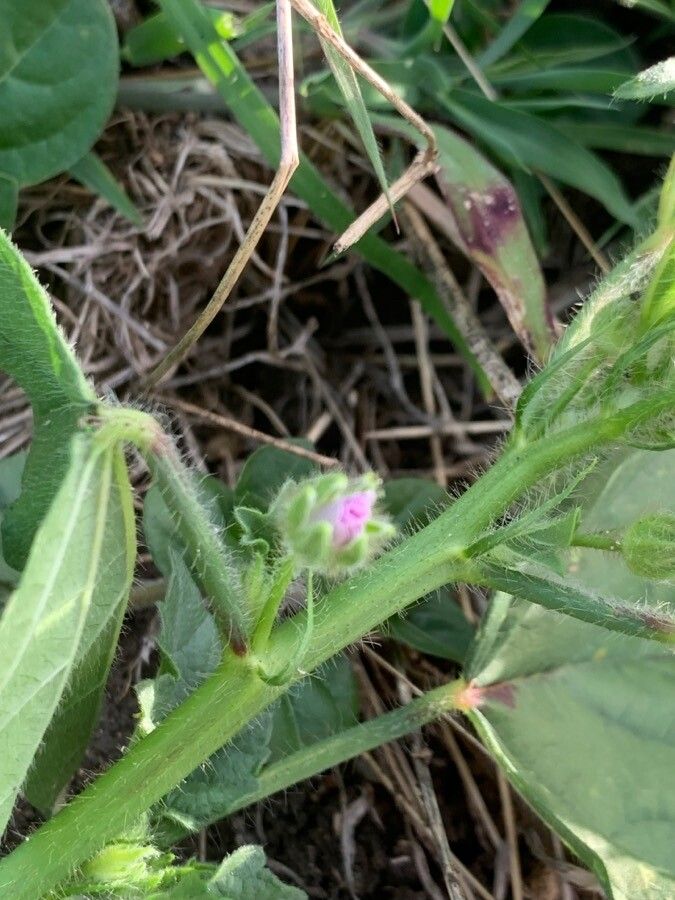
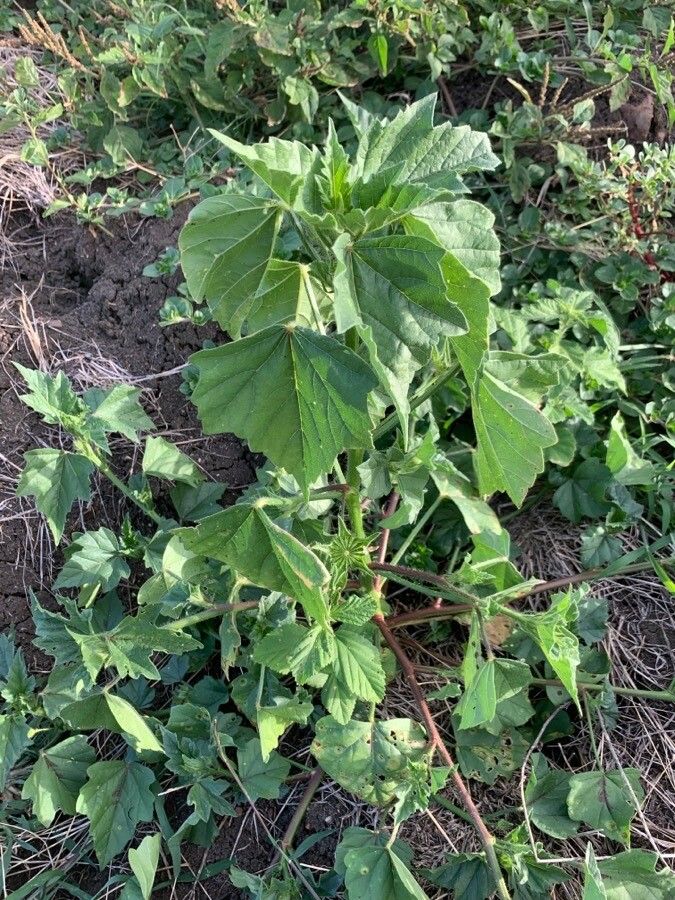
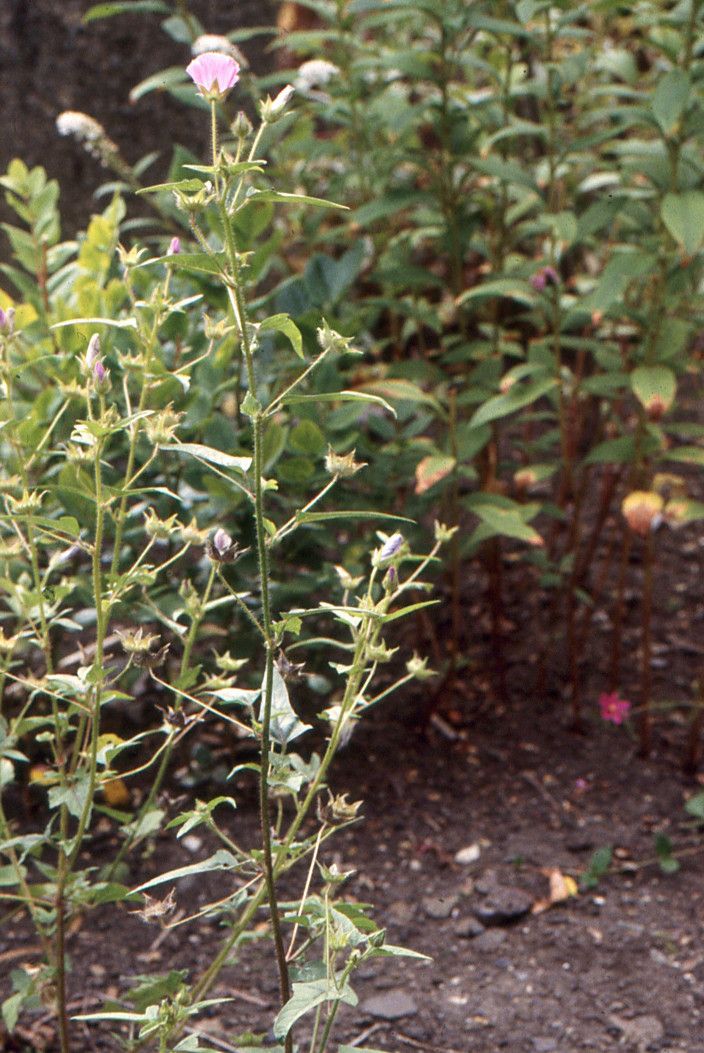
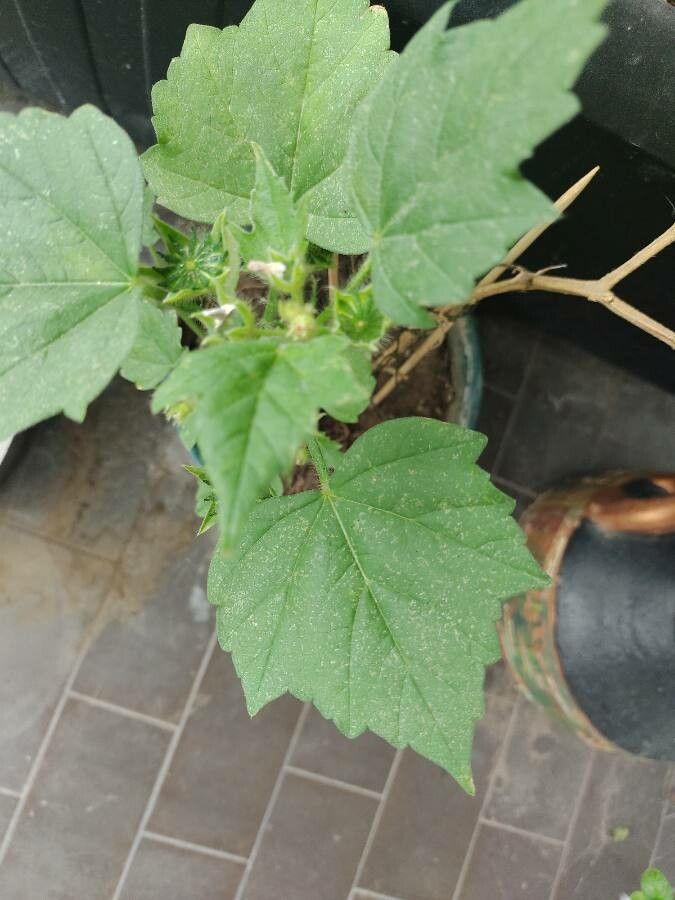
Anoda cristata is a species of flowering plant in the mallow family known by many common names, including spurred anoda, crested anoda, and violettas. It is native to North and South America. It is known throughout the rest of the Americas as well as Australia as an introduced species and often a noxious weed. It has been found as a weed in Belgium. Naturally, it is often found near streams, in moist meadows, and in disturbed areas.This is an annual herb reaching a maximum erect height between one half and one meter. The stem is ridged and branching. The plant is variable in morphology, especially in leaf shape, but leaves are usually somewhat triangular, and hairy. Solitary flowers grow in the leaf axils on long pedicels. The flower is 2 to 3 centimeters wide, with pointed green to reddish sepals and 5 petals, which may be blueish-purple or reddish-pink in color. The fruit is a bristly, disc-shaped capsule with 9 to 20 segments. Each segment produces a seed. This is sometimes an agricultural weed, especially of soybeans. It is tolerated as a weed of crop fields in parts of Mexico, and even fostered, because it is eaten and used as a source of medicinal remedies.
Crested anoda has strong disease resistance and is generally not prone to illnesses. However, it can be vulnerable to pests and diseases present in its surroundings. Such infections are typically mild. Care-wise, this plant needs moderate maintenance. It requires regular pruning to preserve a neat appearance and support healthy growth. Fertilizing can also help encourage flowering. Crested anoda is appropriate for anyone with outdoor space, such as a garden or patio, and does not demand extensive care experience. It may need more attention if grown indoors.
How to keep Anoda Cristata.
Light
The crested anoda does best with plenty of daily sunlight, which is essential for its healthy development. It grows well in environments with abundant sunshine. Although it can tolerate situations with limited sun exposure, that lack may diminish its overall vigor. At every stage of growth, ample sunlight is preferred.
Water
Crested anoda is a plant native to tropical regions and thrives with consistent moisture, needing to be watered weekly. Although it can withstand short periods of dryness, its growth is closely linked to rainfall patterns, so it requires less extra watering during wet seasons.
Temperature
The crested anoda thrives in climates where temperatures range from 68 to 95 °F (20 to 35 ℃). If temperatures fall, adjustments must be made to maintain these environmental requirements.
Fertilizer
Once a Crested anoda has opened most of its blooms to full size, resume fertilizing. When the blooms are at peak production, apply fertilizer every three to four weeks, weather permitting. Then, once the Crested anoda begins producing fewer new blooms, cease fertilizing; there’s no need to feed the plant when it can no longer produce additional blooms.
Pruning
Crested anoda has heart-shaped leaves and small flowers that resemble hibiscus blooms. To maintain the plant's health: 1. Prune any dead branches and thin out crowded areas to improve airflow. This should be done from early to late spring. 2. Regular pruning helps promote blooming and controls the plant's spread. However, avoid heavy pruning to prevent stressing the plant. 3. Always use clean, sharp tools to minimize the risk of disease.
Botanical profile.
- Plant Type
- Herb
- Life Cycle
- Annual, Biennial, Perennial
- Genus
- Anoda
- Family
- Malvaceae
- Hardiness Zone
- 9
- Mature Height
- 61 cm to 91 cm
- Mature Spread
- 30 cm to 40 cm
- Leaf Color
- Green
- Leaf Type
- Deciduous
- Flower Color
- Lavender, Pink
- Flower Size
- 2.03 cm to 3.05 cm
- Bloom Time
- Summer, Fall
- Planting Time
- Spring, Summer, Autumn
- Harvest Time
- Late summer, Fall, Early winter
- Native Area
- Belize, Honduras, Mexico, Guatemala, Peru, Panama, Jamaica, Colombia, Cuba, Bolivia, Venezuela, Brazil, El Salvador, Nicaragua, Ecuador, Costa Rica
Other names.
Reader questions.
What are the ideal temperature conditions for growing Crested Anoda?
Crested anoda thrives in climates where the temperature range is between 68°F and 95°F (20°C and 35°C). It has some degree of cold tolerance and generally doesn't require special measures if the temperature is above 0°C. However, in cases where temperatures are expected to drop below freezing, temporary protective measures, such as wrapping the plant with plastic film or fabric, are necessary to keep the plant in an optimal condition. Once the temperature rises back within its ideal range, these protections should be removed.
How does Crested Anoda respond to low temperatures, and what measures should be taken?
Crested anoda has moderate tolerance to low temperatures and thrives best above 20°C. It should be kept above 0°C during the winter. If temperatures fall below -5°C, the plant's leaves may start to droop; they can recover in mild cases but will wilt and eventually fall off in severe conditions. To protect Crested anoda from cold, you should trim off any frost-damaged parts and wrap the plant with non-woven fabric or cloth. Additionally, constructing a wind barrier can help protect it from cold winds.
What should be done if Crested Anoda is subjected to high temperatures?
During the summer, it's important to keep Crested anoda below 35°C to avoid stress from high temperatures. Temperatures above 38°C can cause the leaves to lighten in color, tips to dry and wither, leaves to curl, and increase susceptibility to sunburn. In such scenarios, trim away the sunburned and dried-up parts of the plant. Relocating the plant to a shaded area during the midday and afternoon sun or using a shade cloth can be beneficial. Watering the plant in the morning and evening will help keep the soil moist and support the plant's health under high temperature conditions.