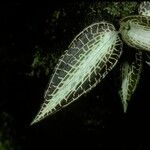
Anoectochilus roxburghii
Copper-glint Orchid · Hong Kong Jewel Orchid
Care Guide
💧 Water
The Roxburgh's jewel orchid thrives in the humid and moist conditions typical of tropical forests. To keep it healthy, this plant requires weekly watering to maintain consistent moisture levels and prefers an environment with high humidity. Usually grown indoors, the Roxburgh's jewel orchid flourishes when the soil remains moist but not waterlogged, particularly during its active growing season.
☀️ Light Partial sun
Roxburgh's jewel orchid occurs naturally in habitats like forest understories or rocky sites, where it grows in natural shade. It prefers partial sun but can tolerate full sun or full shade, reflecting its adaptable, hardy nature.
What are the sunlight requirements for Roxburgh's jewel orchid?
Roxburgh's jewel orchid thrives in conditions ranging from partial sun to full shade. For optimal growth, plants should receive about 3-6 hours of sunlight when placed in partial sun while those in full shade should receive less than 3 hours of sunlight. It is essential to watch how sunlight moves through your garden, choosing spots that provide a balance of light and shade. This flexibility makes it a vibrant addition to any garden or indoor setting, adapting well to environments like forest understories or rocky areas where natural shade prevails.
How can artificial lighting be used to support Roxburgh's jewel orchid growth indoors?
Indoor Roxburgh's jewel orchids benefit significantly from artificial lighting, especially in spaces where natural sunlight is scarce. LED lights are recommended due to their adaptability in providing specific wavelengths needed by plants. Full sun plants require 30-50W per square foot, partial sun plants 20-30W per square foot, and full shade plants 10-20W per square foot of artificial light. It's vital to place the light source 12-36 inches above the plants and mimic natural daylight hours, typically 8-12 hours per day, to ensure healthy growth.
What symptoms indicate insufficient light for Roxburgh's jewel orchid?
Symptoms of insufficient light in Roxburgh's jewel orchid include smaller new leaves, leggy or sparse growth, faster leaf drop, slower or halted new growth, paler new leaves indicating a lack of chlorophyll, chlorosis or yellowing of the leaves, sunscald, leaf curling, wilting, and leaf scorching. Each of these symptoms points towards the plant struggling with light deficiency. Adjusting the plant's exposure to light or supplementing with artificial light sources can help mitigate these issues.
What solutions are available for Roxburgh's jewel orchids experiencing insufficient sunlight?
To address insufficient sunlight for Roxburgh's jewel orchids, consider moving plants to gradually sunnier spots each week until they achieve 3-6 hours of sunlight daily. For indoor plants, using a desk or ceiling lamp for at least 8 hours daily or investing in professional plant grow lights offers an effective solution. Outdoors, ensure plants are gradually adapted to sunnier locations to prevent sunburn. If necessary, reduce obstructions by pruning or transplanting to ensure adequate light access. Remember that some damage from insufficient sunlight may be irreversible, but new growth will be healthy with improved light conditions.
🌡️ Temperature 20–37.8°C
Roxburgh's jewel orchid prefers warm conditions. It performs best at moderately high temperatures, but not in excessively hot or humid surroundings. Sunlight helps warm the plant and encourages flowering. Still, prolonged direct sun in summer can cause sunburn, so the plant's sun exposure should be limited during that season. It is generally intolerant of cold and needs proper protection and warmer winter temperatures to avoid freezing.
What is Roxburgh's jewel orchid?
Roxburgh's jewel orchid, known botanically as Anoectochilus roxburghii, is a species of orchid. This plant is recognized for its ornamental value, often cultivated for its beauty rather than its flowers. Specific details about its care, cultivation or distinctive features were not provided, but its name suggests it’s a jewel in the orchid family, likely prized for unique foliage or possibly its bloom.
💨 Humidity
🪴 Soil 5-6
🌱 Fertilizer
Proper fertilization is essential for Roxburgh's jewel orchid's health and appearance. Fertilize Roxburgh's jewel orchid in the summer, repeating the application monthly throughout the season. Nutrients fuel growth and help maintain the plant's tissues. Fertilization improves Roxburgh's jewel orchid's flower display, helping ensure the best blooms.
🪴 Pot & Repot
When repotting Roxburgh's jewel orchid, pick a pot that is only slightly larger and has good drainage, preferably a clear orchid pot. Use a well-draining, orchid-specific potting mix that includes bark or moss. Carefully clean the roots and trim any that are dead or rotting. Repot after flowering, typically in spring or fall, water thoroughly, and place the plant in bright, indirect light. Do not disturb the roots once it has been repotted.
✂️ Pruning
Pruning Roxburgh's jewel orchid from early to late spring encourages healthy growth by removing dead leaves and trimming long stems for a bushier appearance. During this active growth phase, pruning also aids in recovery and helps prevent diseases and pests. For personalized guidance, consult reliable horticultural guides.
🌿 Propagating
🐛 Diseases & pets
☠️ Toxicity
Characteristics
- Plant Type
- Herb
- Life Cycle
- Perennial
- Genus
- Anoectochilus
- Family
- Orchidaceae
- Hardiness Zone
- 10-12
- Mature Height
- 8 cm to 18 cm
- Mature Spread
- 10 cm
- Leaf Color
- Dark Green, Gold
- Leaf Type
- Semi-evergreen
- Flower Color
- White
- Flower Size
- 3.05 cm to 5.08 cm
- Bloom Time
- Summer
- Planting Time
- Spring
- Harvest Time
- Late summer, Early fall, Mid fall
- Native Area
- Nepal, Sri Lanka, India, Vietnam, Myanmar, Bhutan, Bangladesh, Laos, Thailand, China