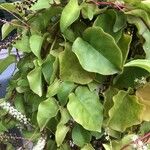
Anredera cordifolia
Maderia-Vine · Basell-potatoes · Mignonette-vine · Bridal wreath · Madeira-vine
Description
Source: leafsnapAnredera cordifolia, commonly known as Madeira vine or mignonette vine, is a fast-growing perennial plant that belongs to the Basellaceae family. Native to South America, it has been introduced and naturalized in many parts of the world. The plant features heart-shaped, glossy green leaves and produces small white or pink flowers arranged in clusters. Madeira vine is a popular ornamental plant due to its attractive foliage and rapid growth rate. It can be grown as a ground cover or trained to climb trellises, walls, or fences. The plant prefers well-drained soil with moderate moisture levels but can tolerate drought conditions once established. In addition to its ornamental value, Madeira vine also has medicinal properties. Its leaves have been traditionally used to treat various ailments such as coughs, colds, fever, and inflammation. However, it's important to note that Madeira vine can become invasive if not properly managed. Its rapid growth can harm native plants if left unchecked. Overall, Anredera cordifolia is an interesting addition for gardeners looking for an attractive climbing perennial with medicinal properties. However, it should be managed carefully due to its invasive potential.
💡 Madeira-vine grows exceptionally fast in suitable climates, reaching up to 1 meter per week and a total height of around 30 meters. Due to its rapid growth, it can completely cover and kill even tall native trees, often breaking their branches in the process. Therefore, controlling Madeira-vine is extremely important.
🌳 Madeira-vine is mostly known for its invasive nature, which eclipses any potential beneficial uses. Still, its rapid growth and tendency to build up large amounts of biomass suggest a possible, though not widely recognized, role in biofuel production. This under-explored possibility could provide an alternative way to manage the species by using its growth as an energy resource.
🎭 Your qualities exceed your charms, Health
Care Guide
💧 Water Every 7 days
Madeira-vine thrives in humid environments and requires consistent moisture, typically achieved through weekly watering. While it can withstand brief dry spells, keeping the soil adequately moist is crucial for healthy foliage. Commonly grown outdoors, Madeira-vine benefits from plenty of water during its active growing season, which helps it withstand temperature changes.
How should I water my Madeira-vine plant?
To best care for the Madeira-vine, use filtered water at room temperature or slightly warmer. Tap water can have harmful particles, so filtration is preferred. The plant is accustomed to a warm environment, so avoid using cold water as it can be a shock to its system. It is also important to refrain from overhead watering, as this can cause issues with the foliage. Instead, thoroughly saturate the soil with the filtered room temperature water. This benefits the plant by moisturizing the roots and aiding their spread through the soil to gather necessary nutrients.
What should I do if I give my Madeira-vine too much or too little water?
Overwatering is a more common issue for Madeira-vine than underwatering. When overwatered, the plant's stems and leaves may wilt and turn yellow. Prolonged overwatering can lead to diseases like root rot, mold, and mildew, which can be fatal for the plant. Underwatering is less common due to the plant's drought tolerance, but it can still occur, causing brittle and brown leaves. It is important to detect overwatering early to prevent irreversible damage. If signs of overwatering appear, reduce watering immediately and check the soil's drainage. Replace poorly draining soil with a loose, well-draining potting mix. If signs of underwatering are present, increase watering until the symptoms improve.
How frequently should I water my Madeira-vine?
If your Madeira-vine is in a pot, the most accurate way to determine if it needs water is to check the moisture level of the soil by sticking your finger in it. If the top two to three inches of soil feel dry, then it's time to water it. If you have planted your Madeira-vine outdoors in the ground, you can use a similar method to test the soil. Once again, if the first few inches of soil have become dry, it is time to water the plant. Typically, during the spring and early fall, you'll need to water this plant about once a week following this method. However, in extremely hot weather, you may need to increase the frequency to about twice or more per week. It's worth mentioning that mature, well-established Madeira-vines have a remarkable ability to tolerate drought conditions.
How much water does my Madeira-vine plant require?
To properly water your Madeira-vine, don't be afraid to give it a generous amount of water. When the top couple inches of soil are dry, it's time to water thoroughly. Make sure to water enough to fully saturate the soil, causing any excess water to flow out through the drainage holes at the bottom of the pot. If you don't see any excess water draining out, you may not have given enough water. However, be careful not to let water accumulate in the soil, as this can be harmful to the plant. On the other hand, if water doesn't drain through the pot, it could mean that the soil doesn't drain well, which can harm the plant. If the plant is outside, one inch of rain per week should be sufficient.
How should I water my Madeira-vine at different times as it grows?
The water needs of the Madeira-vine can vary depending on its growth stages. When the plant is young or recently transplanted, it requires more water compared to when it is more mature. During these early stages, the Madeira-vine focuses its energy on developing new roots, which need extra moisture for optimal growth. As the plant matures, it will require less water. Additionally, during the bloom period, the Madeira-vine may need more water as the flowers utilize a significant amount of moisture.
☀️ Light Full sun
Madeira-vine flourishes with plenty of sunshine, encouraging robust growth, but it can also persist in places with less light. Its native environment has high light levels, which prepared it to endure those conditions. An imbalance in light prevents it from developing properly and often affects its health.
What are the sunlight requirements for Madeira-vine?
Madeira-vine requires full sun, which is above 6 hours of sunlight daily, to thrive optimally. However, it can also tolerate partial sun conditions, receiving about 3-6 hours of sunlight. It's essential to watch how sunlight moves through your garden to find spots that offer a perfect balance of light and shade, ensuring the plant's health and happiness.
How does Madeira-vine adapt to different light conditions?
Madeira-vine thrives under full sunlight but can also grow in less sunny areas thanks to its origin environment, which is rich in light exposure. This adaptation allows it to survive in various conditions. However, an imbalance in light exposure can hinder its proper development and impact its health. When natural sunlight is insufficient, especially in winter or less sunny spaces, artificial lighting is recommended for indoor plants. Proper artificial lighting, such as LED lights customized to provide specific wavelengths, can promote faster, healthier growth by ensuring plants receive 30-50W/sq ft for full sun plants, 20-30W/sq ft for partial sun plants, and 10-20W/sq ft for full shade plants.
What symptoms indicate light deficiency in Madeira-vine?
Symptoms of light deficiency in Madeira-vine include smaller new leaves, leggy or sparse growth, faster leaf drop, slower or no new growth, lighter-colored new leaves, chlorosis (yellowing of leaves), sunscald (pale, bleached areas on plant tissue), leaf curling, wilting from water loss, and leaf scorching (brown, dry edges on leaves). These symptoms suggest the plant is not receiving adequate sunlight.
How can you improve Madeira-vine's lighting conditions both indoors and outdoors?
To improve lighting conditions for Madeira-vine, gradually move the plant to a sunnier location each week, aiming for at least 6 hours of direct sunlight daily. For indoor plants, use a south-facing window and keep curtains open during the day. Consider using artificial light if the plant is large or not easily movable, keeping a lamp on for at least 8 hours daily. Outdoors, gradually adapt plants to brighter spots to avoid sunburn. For ground plants, reducing obstructions like pruning trees and transplanting smaller plants during their dormant period can significantly increase sunlight exposure, ensuring new growth is healthy.
🌡️ Temperature 20–37.8°C
Madeira-vine is native to habitats with temperatures ranging from 68 to 100 °F (20 to 38 °C). It prospers in these conditions, so replicate this environment when cultivating. Seasonal adjustments may be needed to maintain this temperature range.
What is the ideal temperature range for growing Madeira-vine?
The ideal temperature range for cultivating Madeira-vine is between 68 to 100 °F (20 to 38 °C). This range mimics the plant's native habitat, where it thrives best. It is crucial to make seasonal adjustments to maintain this temperature range, as Madeira-vine is extremely heat-loving. During colder months, it is advantageous to keep the plant indoors with temperatures above 20°C and ensure that it is placed at a certain distance from heaters to prevent harm.
How should I care for Madeira-vine during winter?
In winter, it's important to protect Madeira-vine from cold temperatures by keeping it above 0°C. The plant prefers warm temperatures and does not tolerate low temperatures well. If outdoor temperatures approach freezing, bring the Madeira-vine indoors and place it near a bright window, but away from direct heat sources like heaters to avoid damaging the plant. Managing the environment to prevent the temperature from dropping below -5°C is critical to prevent the leaves from lightening in color and further damage from frost.
What should I do if my Madeira-vine is damaged by low temperatures?
If your Madeira-vine suffers damage due to low temperatures or frost, trim off the frost-damaged parts to prevent further deterioration. Move the plant immediately indoors to a warm environment for protection against the cold. Positioning the plant near a south-facing window can ensure it receives ample sunlight without direct exposure to heater vents or air conditioners, which can dry out the air and further stress the plant.
What precautions should be taken for Madeira-vine in high temperatures?
During the summer, it's essential to keep Madeira-vine's exposure below 38°C to prevent heat stress. If temperatures exceed 43°C, the plant may suffer from lightened leaf color and increased susceptibility to sunburn. To mitigate this, trim away sunburned and dried-up parts of the plant. Move Madeira-vine to a shaded location during the peak sun exposure hours of midday and afternoon. Ensure the soil remains moist by watering the plant in the morning and evening.
What is Madeira-vine?
Madeira-vine, botanically known as Anredera cordifolia, is a heat-loving plant that thrives in temperature ranges between 68 to 100 °F (20 to 38 °C). It requires careful management of its environment to mimic its native habitat, including protection from both low and high temperatures to prevent damage.
💨 Humidity normal (40-60%)
This plant will thrive in moderate humidity, which is probably the level in your home. However, misting it a few times a week can be very beneficial. Make sure the room has good ventilation.
🪴 Soil 6-7
🌱 Fertilizer
To achieve the best yield, Madeira vine benefits from regular use of a balanced fertilizer, especially one high in nitrogen. Apply fertilizer before planting, at the time of planting, and when seedlings are 2 inches tall. Incorporating compost or manure also gives a continuous supply of nutrients. A lack of nutrients in the soil leads to poorly developed leaves and stems, weaker flavors, thin stems, and possibly a bitter taste.
Why is it important to add fertilizer to my Madeira-vine plant?
All plants, including the Madeira-vine, need soil nutrients for growth. However, it's not always guaranteed that the soil will have all the necessary nutrients. To ensure your garden plants have the required nutrients, fertilization and soil amendments are essential. For the Madeira-vine, fertilizer is needed to promote healthy root and stem development throughout the growing season. Additionally, fertilization will enhance the appearance of its foliage, which is the main attraction of this plant.
When should I fertilize my Madeira-vine plant?
During the active growing seasons of spring, summer, and early fall, the Madeira-vine requires the most fertilizer. After winter, you should feed it every two to four weeks until fall, when you can gradually reduce the fertilization rate until you stop completely in preparation for the winter, when the Madeira-vine's growth slows down significantly.
When is it a bad idea to add fertilizer to my Madeira-vine?
To keep your Madeira-vine healthy, it's best to feed it regularly throughout most of the year, including spring, summer, and most of the fall. However, if you accidentally over-fertilize or use the wrong fertilizer, causing issues like fertilizer burn, you need to fix the problem before resuming regular feeding. The only exception is during the winter, when the Madeira-vine goes into a dormant phase, especially if it's grown indoors in a cold area. Feeding the plant during this dormant phase is unnecessary and can lead to fertilizer burn.
What kind of fertilizer does my Madeira-vine need?
The fertilizer for a Madeira-vine has a specific blend of nutrients, each present in low amounts. An ideal fertilizer should have an N-P-K ratio of 3-1-2, but a general-purpose fertilizer with a balanced blend can also work well. When using a balanced fertilizer, the volume of each nutrient should be at 10 or lower. You can choose between granular or liquid-based fertilizer. If you opt for liquid-based fertilizer, it is best to dilute it by half. Granular fertilizer has few downsides, but using liquid fertilizer, especially while watering your Madeira-vine, is often the most sensible choice.
How can I make my Madeira-vine plant grow better?
When purchasing fertilizer for your Madeira-vine, it is important to follow the included application instructions. In most cases, you should fertilize just before or while watering the soil to prevent the plant's roots from getting burned. If using a slow-release granular fertilizer, sprinkle it on the soil and water immediately after. For liquid-based fertilizer, dilute it with water, apply to the soil, and then provide additional water. It is especially crucial to dilute the fertilizer by at least half during spring and fall when the plant's growth is increasing or slowing down.
🪴 Pot & Repot Every 12 months
✂️ Pruning
Madeira-vine is a vigorous climbing plant known for its heart-shaped leaves and fragrant flowers. To maintain its growth and health, it should be pruned from early to late spring. Pruning helps manage the vine's growth, remove dead or damaged stems, and promote healthy airflow. Regular pruning not only encourages flowering but also helps prevent the plant from becoming invasive and reduces the risk of pests.
🌿 Propagating
🐛 Diseases & pets
☠️ Toxicity
Characteristics
- Plant Type
- Herb
- Life Cycle
- Perennial
- Genus
- Anredera
- Family
- Basellaceae
- Hardiness Zone
- 9-11
- Mature Height
- 0.91 m to 7.01 m
- Mature Spread
- 3.05 m to 6.1 m
- Leaf Color
- Green
- Leaf Type
- Evergreen
- Flower Color
- White
- Flower Size
- 0.51 cm
- Bloom Time
- Early spring, Mid spring, Mid summer, Late summer, Fall, Winter
- Planting Time
- Spring
- Harvest Time
- Spring, Late summer, Fall, Winter
- Native Area
- Bolivia, Peru