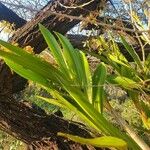
Ansellia africana
Leopard orchid · Monkey sugarcane · Mopane orchid · Tree orchid · Orchid
Description
Source: leafsnapAnsellia africana, commonly known as the African ansellia or leopard orchid, is a species of orchid native to tropical Africa. This large epiphytic plant can grow up to 2 meters in height and produces long, arching stems adorned with clusters of yellow and brown flowers. The flowers are fragrant and can last up to six weeks. The plant thrives in bright, indirect light and high humidity levels. In the wild, it is often found growing on tree trunks or branches in rainforests or savannas. Traditionally, some African tribes have used Ansellia africana for medicinal purposes to treat ailments such as fever, headaches, and stomach problems. The orchid has also gained popularity among enthusiasts due to its striking appearance and ease of cultivation compared to other orchid species.
Care Guide
💧 Water Every 7 days
The Leopard Orchid flourishes in the humid regions of Africa and needs regular watering once a week to stay healthy. It grows best outdoors, where rainwater naturally helps regulate its moisture levels. This evergreen plant particularly benefits from rainwater, which ensures it receives the right amount of moisture.
☀️ Light Partial sun
Leopard orchid originates from habitats like forest understories or rocky sites that provide natural shade. It prefers partial sun but can adjust to full sun or complete shade, showing its hardy and adaptable character.
What are the sunlight requirements for Leopard Orchid?
Leopard orchid (Ansellia africana) thrives under partial sun, necessitating about 3-6 hours of sunlight a day. It's crucial to observe the movement of sunlight in your garden to find spots that offer a balanced mix of light and shade, fostering optimal growth conditions for your plants. Although Leopard Orchid prefers partial sun, it can also grow well in full shade, making it adaptable to various lighting conditions.
How does artificial lighting benefit indoor plants, and what are the recommendations for Leopard Orchid?
Artificial lighting is crucial for indoor plants, especially when natural sunlight is insufficient, like in winter or less sunny spaces. It supports faster and healthier growth by providing necessary light wavelengths. For Leopard Orchid, LED lights are recommended due to their customizability. The lighting needs vary with the plant's natural sunlight requirements: full sun plants require 30-50W/sq ft, partial sun plants need 20-30W/sq ft, and full shade plants need 10-20W/sq ft of artificial light. The light source should be placed 12-36 inches above the plant, mimicking natural sunlight, and provided for 8-12 hours per day to replicate the natural daylight hours for most plant species.
What are the signs of light deficiency in Leopard Orchid?
When Leopard Orchid is grown indoors under insufficient light, several symptoms may manifest, signaling light deficiency. These include smaller new leaves compared to older ones, leggy or sparse growth, premature leaf drop, halted or no new growth, and lighter-colored new leaves. Notably, the plant may experience chlorosis, leading to yellow leaves due to chlorophyll breakdown from insufficient light. Additionally, excessive sunlight exposure can cause sunscald, leaf curling, wilting, or even leaf scorching, indicating that the plant is struggling with the light conditions.
What solutions are available for managing light deficiency in Leopard Orchid?
To manage light deficiency in Leopard Orchid, several strategies can be employed. Indoors, gradually shifting the plant to sunnier spots each week until it receives 3-6 hours of direct sunlight daily can help. If moving the plant isn't feasible, consider using artificial light, such as a desk or ceiling lamp for at least 8 hours daily, or investing in professional plant grow lights. Outdoors, it's crucial to gradually accustom your plants to more sunlight by moving them to sunnier locations each week, avoiding sudden changes which could lead to sunburn. Additionally, reducing obstructions by pruning and transplanting smaller plants during their dormant period to sunnier spots can significantly improve their light exposure.
🌡️ Temperature 20–37.8°C
The leopard orchid flourishes in warm conditions. It prefers moderately high temperatures but not extreme heat and humidity. Sunlight warms the plant and encourages flowering. However, extended direct sun exposure in summer can cause sunburn, so its sunlight exposure should be managed during that season. The plant generally does not tolerate cold well, so it needs adequate protection and warmer conditions in winter to prevent freezing.
💨 Humidity high (>60%)
This plant needs special care because it loves high humidity levels of 60-80% or more. The best way to achieve this is by placing a humidifier near the plant. Daily misting is also essential! Make sure the room has good ventilation.
🪴 Soil 5-6
🌱 Fertilizer Every 30 days
Proper fertilization is vital for Leopard orchid's health and appearance. Fertilize Leopard orchid during the summer, repeating the treatment monthly throughout the season. Nutrients fuel growth and support the plant's parts. Fertilization improves Leopard orchid's flower display, ensuring its best blooms.
🪴 Pot & Repot
When repotting a Leopard orchid, pick a pot that is just slightly bigger and has good drainage, preferably a clear orchid pot. Use an orchid-specific, well-draining mix that includes bark or moss. Carefully clean the roots and cut away any that are dead or rotting. Repot after flowering, typically in spring or fall, water thoroughly, and place in bright, indirect light. Once repotted, avoid disturbing the roots.
✂️ Pruning
The leopard orchid thrives with minimal pruning, which is ideally done from early to late spring. To promote the plant's health, remove spent flower spikes and damaged leaves. Making clean cuts helps prevent infections, enhances air circulation, reduces the risk of disease, and encourages new growth. Always use sterilized tools to ensure protection.
🌿 Propagating
🐛 Diseases & pets
☠️ Toxicity
Characteristics
- Plant Type
- Herb
- Life Cycle
- Perennial
- Genus
- Ansellia
- Family
- Orchidaceae
- Hardiness Zone
- 11
- Mature Height
- 0.49 m to 1.52 m
- Mature Spread
- 0.49 m to 1.52 m
- Leaf Color
- Green
- Leaf Type
- Evergreen
- Flower Color
- Yellow, Brown
- Flower Size
- 6.35 cm
- Bloom Time
- Winter
- Planting Time
- Summer, Autumn
- Harvest Time
- Spring