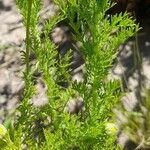
Anthemis cotula
بابونه بهاری · Chamomile · Foetid chamomile · Mayweed · Mayweed chamomile
Description
Source: leafsnapAnthemis cotula, also known as stinking chamomile, or mayweed, is a flowering annual plant with a noticeable and strong odor. The odor is often considered unpleasant, and it is from this that it gains the common epithet "stinking". In pre-colonial times, its distribution was limited to the Old Continent and Africa; though it was established in most of Europe, it was not present in Finland, Ireland, or the northernmost reaches of Scotland, in spite of the fact that these countries feature climatic regions favorable to this plant and are in proximity to countries where the species is native, such as Russia, Estonia, Lithuania and England. It has successfully migrated to the New Europes where it can be found growing in meadows, alongside roads, and in fields.The name "cotula" is the Latin form of κοτύλη kotylē, the Greek word for "small cup", describing the shape of the flowers; it was assigned by Carl Linnaeus in his work Species Plantarum in 1753.Anthemis cotula is also known by a wide variety of other names, including mather, dog- or hog's-fennel, dog-finkle, dog-daisy, pig-sty-daisy, chigger-weed, mayweed, Johnnyweed, maroute, Maruta cotula, Cotula Maruta foetida, Manzanilla loca, wild chamomile, Camomille puante. Foetid Chamomile, maithes, maithen, mathor mayweed chamomile, camomille des chiens, camomille puante, stinkende Hundskamille, camomila-de-cachorro, macéla-fétida, and manzanilla hedionda.
🌳 Although frequently seen as a largely useless weed, studies have indicated that stinking chamomile may disrupt the life cycle of parasitic nematodes that infect livestock. Extracts of this plant have been examined for nematicidal activity. The significance lies in its potential to serve as a natural replacement for chemical parasiticides, lessening environmental damage and promoting more sustainable agricultural methods.
🎭 Cash, Rest, Affection
Care Guide
💧 Water
Stinking chamomile, which comes from a temperate climate, flourishes in moderate moisture conditions. It needs the soil to be consistently moist, so it's important to water it weekly to keep it healthy. Mulching is recommended to help retain moisture during dry periods, particularly during its active growing season.
How should I water my Stinking chamomile plant?
To water Stinking chamomile, you have several options. You can choose to use a garden hose with a spray nozzle, a watering can, or any other common watering tool. Stinking chamomile is not too particular when it comes to how it receives water. It can thrive on rainwater, tap water, or even filtered water. Just be cautious not to water the plant from above, as this can harm the leaves and flowers and potentially cause disease. Instead, consider using a drip irrigation system, as it provides even and direct watering to the soil, which is ideal for Stinking chamomile. If you have a container-grown Stinking chamomile, you can adopt a similar watering approach but switch to using a cup, watering can, or tap to water the soil directly.
What should I do if I give my Stinking chamomile too much water or not enough water?
If you notice that your Stinking chamomile plant is not getting enough water, simply water it more regularly. However, overwatering can be a serious problem. It can lead to diseases and even death for your plant. To prevent overwatering, choose a sunny location with good drainage. If your Stinking chamomile is in a pot and you're overwatering it, consider changing to a pot with better drainage. When repotting, use loose soils and a pot that drains efficiently.
How often do I need to water my Stinking chamomile?
Stinking chamomile requires regular watering throughout the growing season. In the spring, water it once a week. As the season progresses and it gets hotter, you may need to water it two to three times a week. However, be careful not to exceed this rate as it can harm the plant. Regardless of how often you water, make sure the soil stays relatively moist but not overly wet. Watering Stinking chamomile in a pot is slightly different. The soil in a pot tends to dry out faster, so you'll need to water container-grown plants a few times a week, compared to just once a week for plants in the ground.
How much water does my Stinking chamomile plant need?
Determining how much water to give your Stinking chamomile can be approached in a few different ways. Some gardeners prefer to gauge the moisture level of the soil through touch. This method suggests watering until the first six inches of soil feel damp. Alternatively, you can use a specific measurement to determine the water quantity. Typically, Stinking chamomile requires around two gallons per week, but this can vary depending on the temperature and soil dryness. It's important to avoid overwatering if your plant doesn't need the full two gallons. When growing Stinking chamomile in a container, a different method is necessary. Make sure to water enough to moisten all layers of dry soil. You can test this by feeling the soil with your finger or until you observe a slight trickle of excess water from the drainage holes.
How do I know if I'm watering my Stinking chamomile enough?
Avoiding overwatering your Stinking chamomile can be tricky because of its deep roots that need weekly soil moisture. However, Stinking chamomile is highly prone to root rot and browning if overwatered. Underwatering is less of a concern as these plants can survive without additional watering for a while. However, if you neglect to water them for too long, they will start to wilt and develop dry leaves.
☀️ Light Full sun
Stinking chamomile grows best with ample sunlight. This tendency arises from the conditions of its native habitat, which encourage vigorous development. The plant’s various growth stages do not significantly alter this preference. Excessive sun can cause wilting, while inadequate light can hinder healthy growth.
What are the sunlight requirements for Stinking Chamomile?
Stinking Chamomile requires full sun, meaning it needs to be exposed to sunlight for more than 6 hours daily. Observing how sunlight moves through your garden can help you choose the best spots that provide a balance of light and shade, ensuring your plant's happiness. This amount of sun exposure is vital for the plant as it reflects its native habitat conditions, promoting robust growth.
Can Stinking Chamomile be grown indoors and how?
Yes, Stinking Chamomile can be grown indoors with proper care. When natural sunlight is insufficient, especially in winter or less sunny spaces, artificial lights provide a crucial solution. LED lights are a popular choice because they offer customizable wavelengths needed by plants. Full sun plants need 30-50W/sq ft, partial sun 20-30W/sq ft, and shade-loving plants 10-20W/sq ft of artificial light. Position the light source 12-36 inches above the plant to mimic natural sunlight and ensure the plant receives 8-12 hours of light per day for healthy growth.
What are the symptoms of inadequate sunlight for Stinking Chamomile?
When Stinking Chamomile doesn't get enough sunlight, it may show several symptoms: New leaves may grow smaller, the plant could become leggy or have sparse growth, faster leaf drop might occur as older leaves are shed early, there might be slower or no new growth as the plant enters survival mode, lighter-colored new leaves can indicate a lack of chlorophyll, chlorosis might occur turning leaves yellow, sunscald can damage leaves or stems, leaf curling could develop as a defense mechanism, wilting might happen due to increased water loss, and leaf scorching can appear as brown, dry edges on leaves due to excessive sunlight.
How can you address and prevent light-related issues in Stinking Chamomile?
To optimize growth and prevent light-related issues in Stinking Chamomile, gradually move plants to sunnier locations, ensuring at least 6 hours of direct sunlight daily. For indoor plants, use south-facing windows for maximum sunlight or provide artificial light with desk or ceiling lamps for at least 8 hours daily. Outdoors, adjust plant positioning gradually to avoid sunburn. If sunlight is blocked by obstructions like trees, consider pruning to allow more light through. When transplanting for better sunlight, do it during the plant's dormant period with careful handling of the roots and soil ball for a smooth transition to a location with ample sunlight and good drainage. Note that parts of the plant damaged by insufficient light may not recover, but new growth should be healthy with improved light conditions.
🌡️ Temperature 5–32.2°C
Stinking chamomile is native to temperate regions and prefers warm surroundings. It does best at 68 to 95 °F (20 to 35 ℃), and seasonal adjustments in cultural care may be necessary to maintain optimal temperature.
What is the native habitat and temperature preference of Stinking Chamomile?
Stinking Chamomile, scientifically known as Anthemis cotula, is native to temperate zones and favors a warm habitat. It flourishes optimally in temperatures ranging from 68 to 95 °F (20 to 35 °C). Depending on the season, cultural care modifications may be necessary to maintain the ideal temperature range for the plant. Stinking Chamomile possesses strong resistance to cold, eliminating the need for specific frost protection measures in most cases. However, if temperatures are expected to fall below the plant's growth limit, it is crucial to provide protection. This can be done by covering the plant with soil or straw and ensuring the soil is moist before the first freeze of autumn to prevent drought and water scarcity during the colder months.
How does Stinking Chamomile respond to low temperatures?
Stinking Chamomile is cold-tolerant and performs best when temperatures are kept above its minimum suitable growth temperature. During winter, it's important to ensure the temperature doesn't fall below its tolerable growing minimum. If temperatures drop beneath the plant's growth limit, there might not be noticeable changes during the winter. However, there could be a decrease in sprouting or a complete lack of sprouting in the spring. To address this, any non-sprouting parts should be removed at the start of the growing season.
How should Stinking Chamomile be cared for during high temperatures?
In the summer, Stinking Chamomile thrives when maintained below its maximum suitable growth temperature. Exceeding the tolerable maximum temperature can cause symptoms such as lighter-colored leaves, curling, susceptibility to sunburn, and in severe cases, wilting and drying out of the entire plant. To mitigate these issues, it's recommended to trim away sunburned and dried-up parts. The plant should be relocated to an area with shade during the midday and afternoon sun or covered with a shade cloth. Additionally, watering the plant in the morning and evening can help keep the soil adequately moist.
💨 Humidity
🪴 Soil 6-7
🌱 Fertilizer
When most of the Stinking chamomile flowers have opened to full size, resume fertilizing. At about the peak bloom period, apply fertilizer once every three to four weeks, weather permitting. Then, when the plant begins to produce fewer new flowers, stop fertilizing; there's no need to feed it when it can no longer set more blooms.
🪴 Pot & Repot
✂️ Pruning
🌿 Propagating
🐛 Diseases & pets
☠️ Toxicity
Characteristics
- Plant Type
- Herb
- Life Cycle
- Annual
- Genus
- Anthemis
- Family
- Asteraceae
- Hardiness Zone
- 4-8
- Mature Height
- 25 cm to 55 cm
- Mature Spread
- 20 cm to 30 cm
- Leaf Color
- Green
- Leaf Type
- Semi-evergreen
- Flower Color
- White, Yellow
- Flower Size
- 2.54 cm
- Bloom Time
- Late spring, Early summer, Mid summer
- Planting Time
- Spring
- Harvest Time
- Early summer, Mid summer
- Native Area
- Libya, Egypt, Turkey, Sweden, India, Austria, Slovakia, Montenegro, Pakistan, Slovenia, Morocco, Croatia, Belarus, Russia, Iraq, Germany, Jordan, Romania, Belgium, Moldova, Portugal, Netherlands, Saudi Arabia, France, Tunisia, Czech Republic, Cyprus, Bulgaria, Poland, Armenia, Greece, Ukraine, Serbia, Lebanon, Norway, Syria, Italy, Kazakhstan, Spain, Switzerland, Denmark, Israel, Iran, Albania, Ireland, United Kingdom, Hungary, Algeria, Azerbaijan