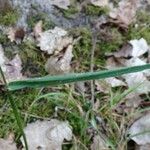
Anthoxanthum odoratum
بهاری چمن، · Sweet vernal grass · Scented vernal grass · Sweet-scent vernal grass · Holy grass
Description
Source: leafsnapAnthoxanthum odoratum, commonly known as sweet vernal grass, is a perennial grass species in the Poaceae family. Native to Europe and Asia, it has spread and become naturalized in many parts of the world. The plant can grow up to 60 cm tall and is noted for its distinctive sweet scent, which is released when it blooms in late spring or early summer. Sweet vernal grass features long, narrow, bright green leaves. It produces small flowers arranged in dense clusters at the top of its stems. These flowers, which are yellow-green, generate seeds that are dispersed by the wind. This grass prefers moist soils but is also tolerant of dry conditions. It thrives in meadows, pastures, open woodlands, and along roadsides, where it can form dense stands. Sweet vernal grass has several uses. It is valuable for hay production due to its high protein content and is also used as an ornamental species because of its attractive appearance and pleasant scent. Beyond its agricultural and ornamental applications, sweet vernal grass plays an important ecological role by providing habitat for various insects, such as butterflies, which feed on its nectar-rich flowers during the blooming season.
🎭 Psychic abilities, protection. It represents food, concealment and resilience.
Care Guide
💧 Water Every 7 days
Sweet vernal grass flourishes in temperate regions, needing consistent moisture and some drought tolerance. To maintain its health, it's best to water it weekly. The grass thrives outdoors, as it benefits from natural rainfall that matches its growth cycles and the area's seasonal precipitation patterns.
If I give too much or too little water to my Sweet vernal grass, what should I do?
Proper watering is essential for the well-being of this beautiful ornamental grass. When it is planted in the ground, any watering issues can be addressed. However, if Sweet vernal grass is grown in a container, even a slight imbalance of too much or too little water can quickly kill it. Insufficient water can cause it to stop growing, resulting in drooping leaves, weak seed head production, and browned leaves. On the other hand, overwatering may cause yellow leaves with brown tips. If you suspect that your Sweet vernal grass is being watered improperly, the first step is to determine whether it is receiving too much or too little water. If it is being overwatered, immediately stop watering and wait for the soil to dry out. Once new growth appears, test the soil for moisture and determine whether additional watering is necessary. If the grass is not receiving enough water, simply give it a good, deep drink and observe if it improves. Remember that a long, deep watering is better than frequent shallow waterings because it encourages the growth of deep roots, which makes the grass more resistant to drought and less prone to watering problems.
How frequently should I water my Sweet vernal grass?
The watering needs of Sweet vernal grass depend on the location where it is planted. Typically, this grass should be watered on a weekly basis. In hot climates, watering once or twice a week during the summer may be necessary. In moderate climates, watering once every seven days or more may be sufficient. Grass in containers generally requires more frequent watering compared to grass in the ground. However, the watering frequency also depends on the species and its sun exposure. Shaded grasses require less water than those planted in the ground. Sweet vernal grass should only be watered when the soil is dry. You can check the soil moisture by pressing your finger a few inches into the soil. For potted grass, you can weigh the grass with a portable scale or check if the pot feels light. Insufficient water may cause the grass blades to appear folded and thinner. Despite its drought tolerance, regular and deep watering will result in beautiful color. Although Sweet vernal grass is naturally found in open scrubland with extreme heat and intermittent rain, it still requires care and attention. Therefore, consistent watering is beneficial even though it can handle dry conditions. When initially planted, Sweet vernal grass needs frequent watering until it establishes deep roots. For potted grass, the soil dries out quickly, especially in hot, direct sun. Test the soil every 3 to 4 days and water only when it feels dry. In-ground Sweet vernal grass generally requires less watering, but it depends on the soil type. Clay soil holds water longer and may feel dry at the surface while retaining moisture below the ground. Sandy soils that drain quickly will necessitate more frequent watering.
What do I need to watch out for when I water my Sweet vernal grass in different seasons, climates, or during different stages of growth?
To determine if you need to water your grass adequately, observe its growth rate. Sweet vernal grass, for example, typically grows rapidly and can double in size in a year, particularly during the hottest months. If the weather is hot but the grass isn't growing vigorously, it may be necessary to adjust your watering schedule. During winter, you can potentially water just once a month, but it's still essential to check the soil for moisture. When the grass is in its growth cycle, namely during the warmest months, it requires more water than usual. However, the need for water significantly decreases during winter and cooler months. Regardless, it is crucial to remember that the soil should always be allowed to completely dry out before adding water when dealing with Sweet vernal grass.
☀️ Light Full sun
Sweet vernal grass does best when fully exposed to sunlight, obtaining ideal nourishment for healthy growth. It can nonetheless survive in less bright spots, showing adaptability. Its origin in sunlit environments adds to its hardiness. However, insufficient sun can limit growth, and overly intense light can put it under stress.
What are the sunlight requirements for sweet vernal grass?
Sweet vernal grass requires full sun, defined as more than 6 hours of sunlight, to thrive optimally. However, it can also manage in partial sun, which is about 3-6 hours of sunlight. Observing the movement of sunlight through your garden helps in determining the right balance of light and shade, essential for the plant's happiness.
Can sweet vernal grass grow with artificial lighting?
Yes, sweet vernal grass can grow with artificial lighting, especially when natural sunlight is insufficient. Indoor plants benefit from adequate lighting for optimal growth. Artificial lights, such as LED lights, can be a vital solution, providing the specific wavelengths needed for the plant. Full sun plants require 30-50W/sq ft of artificial light, partial sun plants need 20-30W/sq ft, and the recommended distance for the light source is 12-36 inches above the plant. Most plants need 8-12 hours of light per day.
What symptoms indicate insufficient light for sweet vernal grass?
Symptoms of insufficient light for sweet vernal grass include smaller new leaves, leggy or sparse growth, faster leaf drop, slower or no new growth, lighter-colored new leaves, and chlorosis. Excessive sunlight can cause symptoms like sunscald, leaf curling, wilting, and leaf scorching. Each symptom reflects the plant's response to its environmental conditions, signaling a need for adjustment in light exposure.
How can I address sunlight-related issues for sweet vernal grass?
To address sunlight-related issues, gradually moving plants to sunnier locations can be effective. For indoor plants, using a south-facing window or artificial light such as a desk or ceiling lamp for at least 8 hours daily can help. Outdoors, gradually acclimating plants to brighter spots prevents sunburn. Pruning obstructions like tree branches can enhance sunlight exposure. For small plants, transplanting during the dormant period to a sunnier location with good drainage is advisable. It's important to note that parts of the plant affected by insufficient sunlight may not recover, but new growth will be healthy with improved light exposure.
🌡️ Temperature 5–35°C
Sweet vernal grass prefers temperatures ranging from 41 to 95 ℉ (5 to 35 ℃). It is native to temperate regions and can acclimate to cooler conditions in the fall and warmer conditions in the summer.
What is the optimal temperature range for Sweet Vernal Grass?
Sweet Vernal Grass thrives in a temperature range of 41 to 95°F (5 to 35°C). Native to temperate regions, it adjusts well to cooler temperatures in the fall and warmer temperatures in the summer. Due to its strong cold resistance, it generally does not require special frost protection measures in winter. However, for temperatures expected to drop below -25°C, cold protection through covering with materials like soil or straw is advisable. Additionally, watering the plant abundantly before the first freeze in autumn to keep the soil moist is recommended for preventing drought and water scarcity during winter and early spring.
How does Sweet Vernal Grass react to low temperatures?
Sweet Vernal Grass is cold-tolerant and functions best when temperatures are above 5°C. It is robust during winter, requiring that it stays above -20°C for optimal health. In cases where temperatures fall below -25°C, the grass may not show immediate unfavorable changes during winter but could experience decreased sprouting or a complete lack of sprouting in the spring. To address issues arising from extremely cold temperatures, removing any parts of the grass that have failed to sprout in spring is recommended.
What should be done if Sweet Vernal Grass experiences high temperature stress?
In periods of high temperatures, specifically above 35°C, Sweet Vernal Grass needs special care to prevent damage. Temperatures exceeding 38°C can cause the leaves to lighten, curl, become prone to sunburn, and in severe cases, lead to wilting and drying of the plant. To mitigate high temperature stress, trim away sunburned and dried-up parts of the plant. Moving the plant to a shaded area during the midday and afternoon sun or utilizing shade cloth can be very effective. Additionally, watering the plant in the morning and evening to maintain soil moisture helps in alleviating stress from high temperatures.
What is the botanical name of Sweet Vernal Grass?
The botanical name of Sweet Vernal Grass is Anthoxanthum odoratum.
💨 Humidity
🪴 Soil 6-7
🌱 Fertilizer
Sweet vernal grass needs extra nutrients to encourage healthy new growth. In spring, spreading compost around the base of the plant will effectively supply the required nourishment. Fertilizing supports robust growth and helps the plant fend off diseases and pests.
🪴 Pot & Repot
✂️ Pruning
🌿 Propagating
🐛 Diseases & pets
☠️ Toxicity
Characteristics
- Plant Type
- Grass
- Life Cycle
- Perennial
- Genus
- Anthoxanthum
- Family
- Poaceae
- Hardiness Zone
- 5-9
- Mature Height
- 30 cm to 91 cm
- Mature Spread
- 30 cm to 61 cm
- Leaf Color
- Green, Yellow, Red, Orange
- Leaf Type
- Deciduous
- Flower Color
- Green, Yellow, Purple, Brown
- Flower Size
- 2.03 cm to 3.05 cm
- Bloom Time
- Mid spring, Late spring, Early summer
- Planting Time
- Spring
- Harvest Time
- Early summer, Mid summer
- Native Area
- Turkey, Sweden, India, Austria, Slovakia, Montenegro, Pakistan, Slovenia, Morocco, Croatia, Belarus, Russia, Germany, Iceland, Estonia, Romania, Latvia, South Korea, Belgium, Moldova, Portugal, Netherlands, France, Tunisia, Czech Republic, Bulgaria, Armenia, Poland, Greece, Ukraine, Serbia, Lebanon, Lithuania, Norway, China, Syria, Kyrgyzstan, Kazakhstan, Italy, Spain, Switzerland, Denmark, Japan, Mongolia, Finland, Bosnia and Herzegovina, Iran, Albania, Ireland, United Kingdom, Hungary, Algeria, Azerbaijan, Thailand