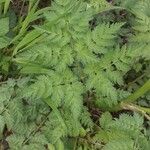
Anthriscus sylvestris
Cow Parsley · Keck · Wild chervil · Wuducerfille · Bur Chervil
Description
Source: leafsnapAnthriscus sylvestris, known as cow parsley, wild chervil, wild beaked parsley, Queen Anne's lace or keck, is a herbaceous biennial or short-lived perennial plant in the family Apiaceae (Umbelliferae), genus Anthriscus. It is also sometimes called mother-die (especially in the UK), a name that is also applied to the common hawthorn. It is native to Europe, western Asia and northwestern Africa. It is related to other diverse members of Apiaceae, such as parsley, carrot, hemlock and hogweed. It is often confused with Daucus carota, another member of the Apiaceae also known as "Queen Anne's lace" or "wild carrot".
💡 There are differing opinions on whether cows do or should eat cow parsley. The main concern is that cow parsley could easily be mistaken for poisonous plants that look similar, so it's generally best to avoid feeding it to cows. Cow parsley is also known as Queen Anne’s lace. Its delicate flowers are said to resemble the lace once worn by royalty and the aristocracy. According to tradition, these flowers bloomed for Queen Anne and her ladies-in-waiting.
🌳 Cow parsley, often called cow parsley, is unassuming yet noteworthy. It decorates European gardens with its delicate, snowy flowers. Surprisingly, the leaves of cow parsley can be used as a seasoning in various dishes such as soups and salads. Its essential oils, having a distinctive, pleasant scent, show promise in the perfumery industry. Additionally, the gentle blossoms supply nectar for nectar-producing bees.
🎭 Helpful knowledge
Care Guide
💧 Water Every week
Cow parsley, native to temperate climates, thrives in consistently moist soil and needs weekly watering to prevent both drought and waterlogging. It usually grows outdoors and flourishes when the rainfall corresponds with its natural growing season, emphasizing the essential role of water in its life cycle.
How should I water my Cow parsley as it grows?
The water needs of Cow parsley can vary depending on its growth stages. In the first few years of its life or when you have just transplanted it to a new location, it requires more water than usual. This is because during these stages, it focuses on developing new roots that will support future growth. These roots require extra moisture to thrive. As the plant matures, it will require less water. Another stage that may require increased watering is the bloom period when the flower development demands more moisture.
☀️ Light Partial sun
Cow parsley grows best when it receives a generous mix of sun and shade throughout the day, though it can also adapt fairly well to areas that are mostly sunny or mostly shaded. Its native habitats include a range of light conditions. Too much light can cause leaf scorch, while too little light can lead to thin, spindly growth.
What are the sunlight requirements for cow parsley?
Cow parsley requires partial sun, about 3-6 hours of sunlight, but can also thrive in full sun or full shade conditions, which means more than 6 hours of sunlight. It's important to observe your garden's sunlight patterns to choose the optimal spots for planting, ensuring a balance between light and shade. This balance promotes the health and happiness of your cow parsley, helping it to thrive in a variety of light conditions.
How does cow parsley respond to different lighting conditions?
Cow parsley adapts well to both sunny and shaded areas, making it versatile in different lighting conditions commonly found in its native environments. Too much light can cause leaf scorch, while insufficient light may lead to weak, spindly growth. If indoor lighting conditions are suboptimal, especially during winter or in less sunny spaces, artificial lighting can be a beneficial solution. LEDs are recommended for being customizable to plant needs, with full sun plants requiring 30-50W/sq ft, partial sun plants 20-30W/sq ft, and full shade plants 10-20W/sq ft of artificial light.
What symptoms indicate inadequate light for cow parsley?
Symptoms of light deficiency in cow parsley include smaller new leaves, leggy or sparse growth, faster leaf drop, slower or stopped growth, and lighter-colored new leaves. Additionally, excessive sunlight can cause chlorosis, sunscald, leaf curling, wilting, and leaf scorching. These symptoms signify that the plant's light conditions need to be adjusted to ensure its health and vigor.
What solutions are recommended for cow parsley experiencing light issues?
For indoor cow parsley, gradually increase sunlight exposure or use artificial light to provide 3-6 hours of direct sunlight if relocation isn't feasible. Outdoor plants should be moved to sunnier spots weekly to prevent sunburn. Removing obstructions or transplanting can also enhance light exposure. It's crucial to note that while damaged parts may not recover, new growth will be healthy if the light exposure is corrected, ensuring the plant's overall wellbeing.
🌡️ Temperature 15–35°C
Cow parsley thrives between 68 and 95 °F (20 and 35 ℃), matching its native temperate habitat. Acclimation is required if conditions become too hot or too cold. In those situations, provide shade for heat and mulch the soil for cold.
What are the ideal temperature conditions for growing Cow parsley?
Cow parsley thrives best within a temperature range of 68 to 95°F (20 to 35°C), which is typical of its native temperate environment. To ensure its health during excessive heat or cold, acclimation strategies such as providing shade in hot conditions and mulching the soil in cold conditions are effective. Cow parsley has strong cold resistance and does not usually require special frost protection. However, for temperatures expected to drop below -15°C, it is important to cover the plant with protective materials like soil or straw. Before the first freeze in autumn, watering the plant abundantly to keep the soil moist can help prevent drought and water scarcity during winter and early spring.
How does Cow parsley respond to low temperatures and what measures should be taken?
Cow parsley is cold-tolerant, preferring temperatures above 20°C and can usually withstand winters above 0°C. When temperatures fall below -15°C, you might not notice immediate changes, but there could be a decrease in sprouting or even no sprouting at all in spring. To manage any non-sprouting parts in spring, it's advised to remove them. Ensuring the plant is adequately protected in severe cold by covering it with soil or straw, and keeping the soil moist before the first freeze are key steps in preparing it for colder months.
What should be done if Cow parsley is exposed to high temperatures?
During the summer, it's essential to keep Cow parsley's surrounding temperature below 35°C. Exceeding 41°C can cause the leaves to lighten in color, curl, become prone to sunburn, and in severe cases, the plant may wilt and dry. Solutions to counteract these symptoms include trimming away sunburned and dried parts of the plant, moving it to a shaded location away from midday and afternoon sun, or using a shade cloth. Additionally, watering the plant in the morning and evening to ensure the soil stays moist can help alleviate stress from high temperatures.
💨 Humidity normal (40-60%)
This plant will thrive in moderate humidity, which is probably the level in your home. However, misting it a few times a week can be very beneficial. Make sure the room has good ventilation.
🪴 Soil 6-7
🌱 Fertilizer
Cow parsley is regarded as a heavy feeder in terms of nutrients. It requires frequent, small doses of nitrogen and potassium fertilizers and occasional applications of phosphorus, micronutrients, sulfur, and magnesium to maintain good growth and bright coloration. Continuous fertilization throughout the growing season is needed to prevent deficiency symptoms and preserve optimal growth.
🪴 Pot & Repot Every 12 months
✂️ Pruning
It is best to dead-head this plant to prevent it from self-seeding.
🌿 Propagating
🐛 Diseases & pets
☠️ Toxicity
This plant is not considered toxic.
Characteristics
- Plant Type
- Herb
- Life Cycle
- Biennial, Perennial, Annual
- Genus
- Anthriscus
- Family
- Apiaceae
- Hardiness Zone
- 7-10
- Mature Height
- 0.61 m to 1.52 m
- Mature Spread
- 30 cm to 61 cm
- Leaf Color
- Green
- Leaf Type
- Deciduous
- Flower Color
- White
- Flower Size
- 2.54 cm to 7.62 cm
- Bloom Time
- Late spring, Early summer
- Planting Time
- Spring, Autumn
- Harvest Time
- Early summer, Mid summer
- Native Area
- Europe, northwestern Africa, and western Asia