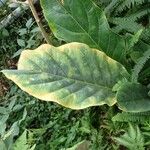
Anthurium jenmanii
Atta mokka
Description
Source: leafsnapAnthurium jenmanii is a tropical plant species belonging to the Araceae family. It is native to South America, particularly found in Brazil, Colombia, and Venezuela. Known for its striking foliage and beautiful flowers, which come in various shades of red, pink, orange, and white, Anthurium jenmanii is an eye-catching addition to any plant collection. This species features large, heart-shaped leaves that are glossy green with prominent veins. The leaves can grow up to 30 cm long and 20 cm wide. The flowers are borne on long stems called spadices, which emerge from a modified leaf known as a spathe. Anthurium jenmanii prefers warm temperatures ranging from 20-30°C and high humidity levels between 60-80%. It thrives in well-draining soil with good moisture retention but does not tolerate waterlogging or drought conditions. Propagation of Anthurium jenmanii can be done through stem cuttings or by division of mature plants. Regular fertilization during the growing season promotes healthy growth and flowering. This plant adds ornamental value by enhancing the beauty of indoor spaces such as homes or offices when grown in pots. It is also suitable for landscaping purposes in tropical regions where it naturally thrives. However, it is important to note that all parts of this plant are toxic if ingested by humans or pets. Therefore, caution should be exercised when handling it, especially around children and animals, as accidental ingestion can cause harm and may require prompt medical attention.
Care Guide
💧 Water Every 7 days
☀️ Light Partial sun
Birdnest anthurium naturally occurs in habitats such as forest understories or rocky areas, where it grows in natural shade. It prefers partial sun but can tolerate full sun or full shade, showing its hardy and adaptable nature.
🌡️ Temperature 20–35°C
Birdnest anthurium comes from tropical areas, where the climate is generally warm and humid. As a result, it is well suited to high temperatures and humidity. It dislikes abrupt temperature shifts and prefers a steady thermal environment, so avoiding temperature fluctuations indoors is important. It typically does not tolerate cold and needs higher temperatures to grow. If the surrounding temperature falls too low, the plant may stop growing or even die.
💨 Humidity
🪴 Soil 5-6
🌱 Fertilizer
Proper fertilization is vital for Birdnest anthurium's health and appearance. Fertilize the Birdnest anthurium in summer, repeating the application monthly throughout the season. Nutrients feed growth and help maintain the plant's parts. Fertilization improves the Birdnest anthurium's flower display, ensuring the best blooms.
🪴 Pot & Repot Once a year
Repot the Birdnest anthurium in spring or summer when it’s warm enough, choosing a slightly larger pot with good drainage. Water thoroughly after repotting and place the plant in bright, indirect light. Consider adding a moss pole for support as it grows.
✂️ Pruning
🌿 Propagating
🐛 Diseases & pets
☠️ Toxicity
Characteristics
- Plant Type
- Herb
- Life Cycle
- Perennial
- Genus
- Anthurium
- Family
- Araceae
- Hardiness Zone
- 10
- Mature Height
- 1 cm to 30 cm
- Mature Spread
- 49 cm to 61 cm
- Leaf Color
- Green
- Leaf Type
- Evergreen
- Flower Color
- Purple
- Flower Size
- 10.16 cm to 15.24 cm
- Bloom Time
- All year round
- Planting Time
- Winter, Spring
- Harvest Time
- All year round
- Native Area
- Guyana, Venezuela, Brazil