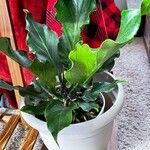
Anthurium plowmanii
Care Guide
💧 Water
The Bird's Nest Anthurium thrives in tropical rainforests and requires high humidity to flourish. To keep its soil consistently moist without causing root rot, it should be watered once a week. As an evergreen plant, the Bird's Nest Anthurium retains its foliage throughout the year. For optimal growth, it should be kept in a humid environment that closely resembles its natural habitat.
☀️ Light Partial sun
Bird's Nest Anthurium comes from habitats like forest understories and rocky areas, where it grows in natural shade. It prefers partial sun but can adapt to full sun or full shade, showing its versatile and hardy nature.
🌡️ Temperature 20–41.1°C
Bird's Nest Anthurium comes from tropical areas, where the climate is generally warm and humid. Consequently, it is adapted to high temperatures and humidity. It does not tolerate sudden temperature shifts and prefers a steady temperature, so avoiding indoor temperature fluctuations is important. It typically cannot endure cold and needs warmer conditions to grow. If the temperature falls too low, the plant may stop growing or even die.
💨 Humidity normal (40-60%)
This plant will thrive in moderate humidity, which is probably the level in your home. However, misting it a few times a week can be very beneficial. Make sure the room has good ventilation.
🪴 Soil 5-6
🌱 Fertilizer
Proper fertilization is essential for the health and look of the Bird's Nest Anthurium. Fertilize the Bird's Nest Anthurium during summer, repeating the treatment each month throughout the season. Nutrients power growth and help maintain the plant's parts. Fertilizing improves the Bird's Nest Anthurium's floral display, ensuring the best blooms.
🪴 Pot & Repot Once a year
Repot Bird's Nest Anthurium in spring or summer when it's warm enough, choosing a slightly larger pot with good drainage. Water thoroughly after repotting, and place the plant in bright, indirect light. Consider adding a moss pole for support as it grows.
✂️ Pruning
The Bird's Nest Anthurium features large, leathery, rosette-shaped leaves. To encourage new growth and improve air circulation, prune the plant from early to late spring. This will also help prevent disease by removing dead leaves. Be cautious not to prune too heavily, as this can stress the plant. Instead, opt for regular, light pruning to keep your Bird's Nest Anthurium healthy and vibrant.
🌿 Propagating
🐛 Diseases & pets
☠️ Toxicity
Characteristics
- Plant Type
- Herb
- Life Cycle
- Perennial
- Genus
- Anthurium
- Family
- Araceae
- Hardiness Zone
- 10-12
- Mature Height
- 91 cm
- Mature Spread
- 61 cm
- Leaf Color
- Dark Green
- Leaf Type
- Evergreen
- Flower Size
- 10.16 cm to 15.24 cm
- Bloom Time
- All year round
- Planting Time
- Spring, Summer, Autumn
- Harvest Time
- All year round
- Native Area
- Brazil, Bolivia, Peru