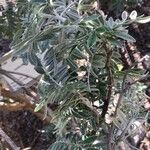
Anthyllis barba-jovis
Jupiter's-beard
Description
Source: leafsnapAnthyllis barba-jovis, commonly known as Jupiter's beard or the beard of Jove, is a perennial herbaceous plant in the Fabaceae family. Native to Mediterranean regions, it thrives in rocky and dry habitats, including cliffs, slopes, and rocky outcrops. This plant features a woody stem that can grow up to 50 cm tall. Its small, pinnate leaves have oval-shaped leaflets covered in fine hairs. The flowers of Anthyllis barba-jovis are small and yellowish-white, each with a distinctive red spot at its base. These blooms appear from May to July. Historically, Anthyllis barba-jovis has been used for medicinal purposes, owing to its anti-inflammatory properties. Ancient Greeks also valued it as an aphrodisiac. Additionally, this plant contributes significantly to soil conservation. It has the ability to fix nitrogen from the atmosphere into the soil through symbiotic relationships with bacteria living on its roots. In summary, Anthyllis barba-jovis is a fascinating species that not only enhances natural beauty but also provides ecological and medicinal benefits.
Care Guide
💧 Water Every 7 days
Jupiter's beard thrives in arid conditions and is highly drought-tolerant, needing minimal watering only once every 2-3 weeks. Its ability to adapt to low rainfall and grow in rocky terrains makes it an excellent choice for xeriscaping and rock gardens, where water conservation is a priority.
How should I water my Jupiter's beard plant?
You can water your Jupiter's beard in various ways, so feel free to use any common watering tool you have available. This includes watering cans, hoses, or even cups. To ensure proper watering, it's best to directly apply the water to the soil. Make sure to evenly moisten all areas of the soil to provide sufficient hydration for all parts of the root system. It's recommended to use filtered water instead of tap water, as tap water may contain harmful particles. Additionally, using water that is at or slightly above room temperature is preferable to avoid shocking the plant. However, it's worth mentioning that the Jupiter's beard is usually resilient and responds well to any type of water you give it.
What should I do if I give too much or too little water to my Jupiter's beard plant?
Outdoor plants, especially newly planted ones or seedlings, can often experience a lack of watering. It is important to consistently water them for a few months when they are small or just planted. Once the roots are established, they can rely on rain most of the time. When Jupiter's beard is planted in pots, overwatering is more likely. If you accidentally overwater your Jupiter's beard, take immediate action to fix the situation. Stop watering the plant right away to minimize the effect of overwatering. Take the plant out of its pot to inspect the roots. If there is no root rot, you can return the plant to its container. If there are signs of root rot, trim away the affected roots and apply a fungicide to prevent further damage. Repot the Jupiter's beard in well-draining soil. In the case of underwatering, simply water the plant more frequently. Underwatering is an easy fix, as the leaves will droop, dry out, and fall off. The leaves will quickly regain their fullness after sufficient watering. Correct your watering frequency as soon as you notice underwatering.
How frequently should I water my Jupiter's beard?
If you live in an area with regular rainfall, most outdoor plants can grow naturally without needing additional watering. However, if your area doesn't receive much rainfall, you should water your plants every 2 weeks in the spring and fall, and more frequently in the summer. In the winter, when plants grow slower and need less water, you can water them less often or not at all. If you have a young or newly planted Jupiter's beard, it's important to water it more frequently to help it establish and grow into a drought-tolerant plant. For potted Jupiter's beard plants, there are two main approaches to determine how often to water them. One option is to set a schedule and water them once a week or every other week. However, this method may not work well as it doesn't consider the specific conditions of your growing environment. Another option is to base your watering frequency on the moisture level of the soil. It's best to wait until the top 2-4 inches of soil have completely dried out before giving more water. This approach allows you to adjust the watering frequency depending on the season, as the water needs of the plant are higher during the summer.
How much water does my Jupiter's beard plant need?
When watering your Jupiter's beard, keep in mind that it doesn't always require a lot of water. If only a few inches of soil have dried since the last watering, giving it five to ten ounces of water each time should support healthy growth. You can also gauge the water volume based on the moisture of the soil. Take note of how many inches of soil have dried out between waterings. To ensure your Jupiter's beard gets enough moisture, water until all the dry soil layers are moistened. If more than half of the soil is dry, consider giving more water than usual and continue until you see excess water draining from the pot's holes. In situations where the plant is exposed to abundant outdoor rain, additional watering may not be necessary. When the Jupiter's beard is young or establishing, aim for 1-2 inches of rain per week. As it grows and establishes, it can rely solely on rainwater, except during hot weather or extended periods without rainfall. In such cases, give it a thorough watering to prevent stress.
How do I know if I'm giving enough water to my Jupiter's beard plant?
Overwatering is a common problem for the Jupiter's beard. There are several signs to look for when this happens. An overwatered Jupiter's beard will have yellowing leaves and may drop some leaves. It may also cause the plant to shrink and promote root rot. Conversely, an underwatered Jupiter's beard will also wilt and have brown or brittle leaves. If you see signs of either overwatering or underwatering, take action to restore the plant's health.
☀️ Light Full sun
Jupiter's beard comes from open habitats, such as sunlit meadows and forest margins, that supply abundant light. It flourishes in Full Sun but can also tolerate Partial Sun, showing good adaptability to different light conditions.
What are the sunlight requirements for Jupiter's beard?
Jupiter's beard thrives in areas that receive full sun, which means it needs above 6 hours of direct sunlight per day. It can also tolerate partial sun conditions, requiring about 3-6 hours of sunlight daily. Observing the movement of sunlight through your garden is crucial for finding the perfect spots that provide a balance of light and shade, ensuring the plants' optimal growth and happiness.
What are the essentials for growing Jupiter's beard?
Jupiter's beard originates from open, sunny environments such as meadows and forest edges, hence, it thrives best in full sun but can also adapt to partial sun. For indoor plants, when natural sunlight is scarce, especially during winter or in less sunny areas, artificial lighting becomes essential. Optimal growth under artificial light involves choosing the right type of light such as LEDs, which are popular for their customizable wavelengths. Full sun plants require 30-50W/sq ft of artificial light, partial sun plants need 20-30W/sq ft, and full shade plants require 10-20W/sq ft. The light source should be placed 12-36 inches above the plant, mimicking natural sunlight, and kept on for about 8-12 hours per day to simulate the length of natural daylight.
What symptoms indicate Jupiter's beard is not receiving sufficient light?
When Jupiter's beard does not receive enough light, it may display several symptoms indicating stress. New leaves might grow smaller than usual, and the plant may exhibit leggy or sparse growth due to elongated spaces between leaves or stems, presenting a stretched-out appearance. The plant could drop leaves prematurely to conserve resources, resulting in slower or halted growth. Leaves might develop lighter colors or irregular patterns, exhibiting a lack of chlorophyll. Other symptoms include chlorosis, where leaves turn yellow due to chlorophyll breakdown; sunscald, marked by pale or necrotic patches on leaves; leaf curling as a defense against excessive sunlight; wilting from increased water loss; and leaf scorching, characterized by brown, crispy leaf edges.
How can I address insufficient sunlight for Jupiter's beard?
To ensure Jupiter's beard receives adequate sunlight, gradually move the plant to sunnier locations, aiming for at least 6 hours of direct sunlight daily. For indoor plants, consider using a south-facing window and keeping curtains open for maximum exposure, or use artificial lighting, such as desk lamps or grow lights, for at least 8 hours each day. Outdoor plants should be moved gradually to avoid sunburn, allowing them time to adapt to increased light intensity. Additionally, reducing obstructions like pruning trees that block sunlight and transplanting smaller plants during their dormant period to sunnier areas with good drainage can significantly improve sunlight exposure. It's important to note that parts of the plant already affected by insufficient light may not recover, but new growth should be healthier following improved light conditions.
🌡️ Temperature 10–32.2°C
Jupiter's beard is highly adaptable to a variety of climate conditions, from very hot summers to cold winters. It does, however, have a preferred temperature range for healthy growth. If temperatures rise too high, the plant becomes susceptible to stress from heat and humidity, which can lead to its death. In areas where temperatures get close to the lower limit of its cold tolerance, it is necessary to provide insulation to protect the plant.
What is Jupiter's beard?
Jupiter's beard, known botanically as Anthyllis barba-jovis, does not have provided details regarding its essentials or symptoms in the provided information. Further information might be necessary to understand its characteristics, uses, or any specific care instructions.
💨 Humidity
🪴 Soil 6-7
🌱 Fertilizer
The timing of fertilizing Jupiter's beard is important. Apply fertilizer in early spring and continue monthly through early summer. Fertilizer encourages lovely blooms and supplies energy during both dormant periods and times of active growth.
🪴 Pot & Repot
✂️ Pruning
To promote healthy growth in Jupiter's beard, it's important to prune the plant from early to late winter. This includes removing any dead wood and trimming back older stems by up to a third to encourage new growth. Pruning in this way improves air circulation and sunlight penetration, enhancing the plant's vitality and increasing flowering in the upcoming season.
🌿 Propagating
🐛 Diseases & pets
☠️ Toxicity
Characteristics
- Plant Type
- Shrub
- Life Cycle
- Perennial
- Genus
- Anthyllis
- Family
- Fabaceae
- Hardiness Zone
- 6-8
- Mature Height
- 91 cm
- Mature Spread
- 76 cm
- Leaf Color
- Silver, Light Gray
- Leaf Type
- Evergreen
- Flower Color
- Yellow
- Flower Size
- 2.03 cm to 2.54 cm
- Bloom Time
- Mid spring, Late spring, Early summer
- Planting Time
- Spring, Summer
- Harvest Time
- Mid summer, Late summer, Early fall
- Native Area
- Tunisia, Italy, Algeria, Croatia, France