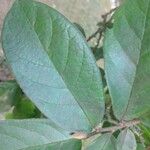
Antidesma bunius
Chinese-laurel · Herbert River-cherry · Queensland-cherry · Currant-tree · Salamander-tree
Description
Source: leafsnapAntidesma bunius is a species of fruit tree in the family Phyllanthaceae. It is native to Southeast Asia and northern Australia. Its common Philippine name and other names include bignay, bugnay or bignai, Chinese-laurel, Queensland-cherry, salamander-tree, wild cherry, and currant tree.
Care Guide
💧 Water
Bignay plants thrive in the humid environments of Southeast Asia. They prefer consistent moisture with occasional short dry periods. To keep the soil lightly moist, water the plants every 2-3 weeks. Ideally suited for outdoor growth, bignay benefits most from a watering schedule that matches the rainy season to ensure optimal hydration.
☀️ Light Full sun
Bignay grows best in full, unblocked sunlight all day, though it can tolerate intermittent periods of shade. Native to sun-drenched areas, it has adapted to use the wide light spectrum for nutrient production. Excessive light or insufficient light can harm the plant's health, reducing its growth and vibrancy.
What are the sunlight requirements for Bignay plants?
Bignay plants need full sun to thrive best, which means they require more than 6 hours of sunlight per day. However, they can also tolerate partial sun, roughly about 3-6 hours of sunlight daily. It's essential to observe how sunlight moves through your garden to find spots that offer the right balance of light and shade for your Bignay plants, ensuring they grow happily and healthily.
How does Bignay respond to artificial lighting?
Bignay plants can benefit from artificial lighting, especially indoor plants that don't receive adequate natural sunlight, such as during winter or in less sunny spaces. LED lights are recommended for their ability to mimic the wavelengths of light needed by plants. For full sun plants, 30-50W/sq ft of artificial light is needed; partial sun plants require 20-30W/sq ft, and full shade plants need 10-20W/sq ft. The artificial light source should be placed 12-36 inches above the plant and kept on for 8-12 hours per day to mimic natural daylight hours, promoting healthier growth.
What are common symptoms of insufficient light in Bignay and how can they be addressed?
When Bignay plants don't get enough light, they may exhibit several symptoms, including smaller new leaves, leggy or sparse growth, faster leaf drop, slower or no new growth, lighter-colored new leaves, chlorosis (leaves turning yellow), sunscald, leaf curling, wilting, and leaf scorching. To address these issues indoors, gradually move plants to sunnier locations or use artificial light if the plant is large or not easily movable. Outdoors, move plants to better sunlight gradually to avoid sunburn. Additionally, for ground plants, remove obstructions blocking sunlight or consider transplanting to a sunnier location during the plant's dormant period.
What essential conditions does Bignay need to grow well?
Bignay thrives best in maximum, unobstructed sunlight throughout the day but can also handle intermittent periods of shade. Originating from sun-drenched environments, Bignay is well-adapted to utilize ample sunlight for nutrient synthesis. Both overexposure and insufficient light can negatively impact the plant's health, growth, and vibrancy. Incorporating artificial lighting when necessary can help maintain optimal growth conditions, especially for indoor plants or during less sunny seasons.
🌡️ Temperature 20–37.8°C
Bignay is native to regions where temperatures range between 68 to 100 °F (20 to 38 ℃). It prefers warmer conditions consistent with its native habitat. In colder climates, seasonal temperature adjustments may be necessary.
What is the native temperature range for Bignay?
Bignay, scientifically known as Antidesma bunius, is native to regions with temperatures ranging from 68 to 100°F (20 to 38°C). The plant thrives in warmer conditions that align with its natural habitat. For those living in colder climates, adjusting the temperature seasonally is important to mimic these ideal conditions. Bignay is extremely heat-loving, and exposure to cold temperatures can harm the plant. It's recommended to bring Bignay plants grown outdoors indoors during autumn, placing them near a bright window but away from direct heat sources. Keeping the temperature above 20°C during winter supports the plant's growth, while temperatures nearing 5°C or lower can be detrimental.
How does low temperature affect Bignay, and what are the solutions?
Bignay prefers warm temperatures and does not tolerate low temperatures well, thriving best when the temperature remains above 20°C. During winter, it is advised to keep it above 5°C to avoid damage. Exposure to temperatures below 1°C can cause the leaves to lighten in color, and following frost, leaves may turn brown or black. Symptoms such as wilting and drooping can also occur due to cold damage. To address this, trim off the frost-damaged parts of the plant and move it indoors to a warm environment for protection against the cold. Place the plant near a south-facing window for ample sunlight, ensuring it's not too close to heaters or air conditioning vents to avoid air dryness.
How does high temperature affect Bignay, and what are the solutions?
During the summer, it's essential to keep Bignay below 38°C to prevent stress. Temperatures exceeding 43°C can lighten the color of the leaves and increase the risk of sunburn. To combat high temperature stress, trim away sunburned and dried-up parts of the plant. Move the plant to a shaded location, especially away from the midday and afternoon sun. Additionally, watering the plant in the morning and evening helps keep the soil moist, further reducing temperature stress.
💨 Humidity
🪴 Soil 5-7
🌱 Fertilizer
Choose organic fertilizers (for example, fish emulsion or compost) rather than chemical ones for Bignay. Supply young plants with higher nitrogen and phosphorus in spring. Work compost or fertilizer into the soil before or immediately after planting. For mature plants, add a balanced fertilizer in spring or one formulated for the specific nutrient deficiency. Nutrient deficiency leads to small leaves, short/stunted branches, yellow or bronze foliage, sour/acidic fruit, early fruit drop, and fruit splitting.
🪴 Pot & Repot
✂️ Pruning
Bignay trees need to be pruned from early to late winter. Begin by removing any dead or diseased branches and thinning out crowded areas to improve light and air circulation. Make your cuts just above the leaf nodes to encourage growth. Regular pruning helps maintain the tree's shape and size while promoting healthy fruit production, resulting in a vigorous plant.
🌿 Propagating
🐛 Diseases & pets
☠️ Toxicity
Characteristics
- Plant Type
- Tree
- Life Cycle
- Perennial
- Genus
- Antidesma
- Family
- Phyllanthaceae
- Hardiness Zone
- 10-12
- Mature Height
- 29.87 m
- Mature Spread
- 3.05 m to 4.88 m
- Leaf Color
- Green
- Leaf Type
- Evergreen
- Flower Color
- White
- Flower Size
- 6.35 cm to 17.78 cm
- Bloom Time
- Late spring, Early summer, Mid summer
- Planting Time
- Spring, Summer, Autumn
- Harvest Time
- Late summer, Early fall, Mid fall
- Native Area
- Sri Lanka, India, Malaysia, Indonesia, Vietnam, Myanmar, Philippines, Bangladesh, Laos, Brunei, Thailand, China