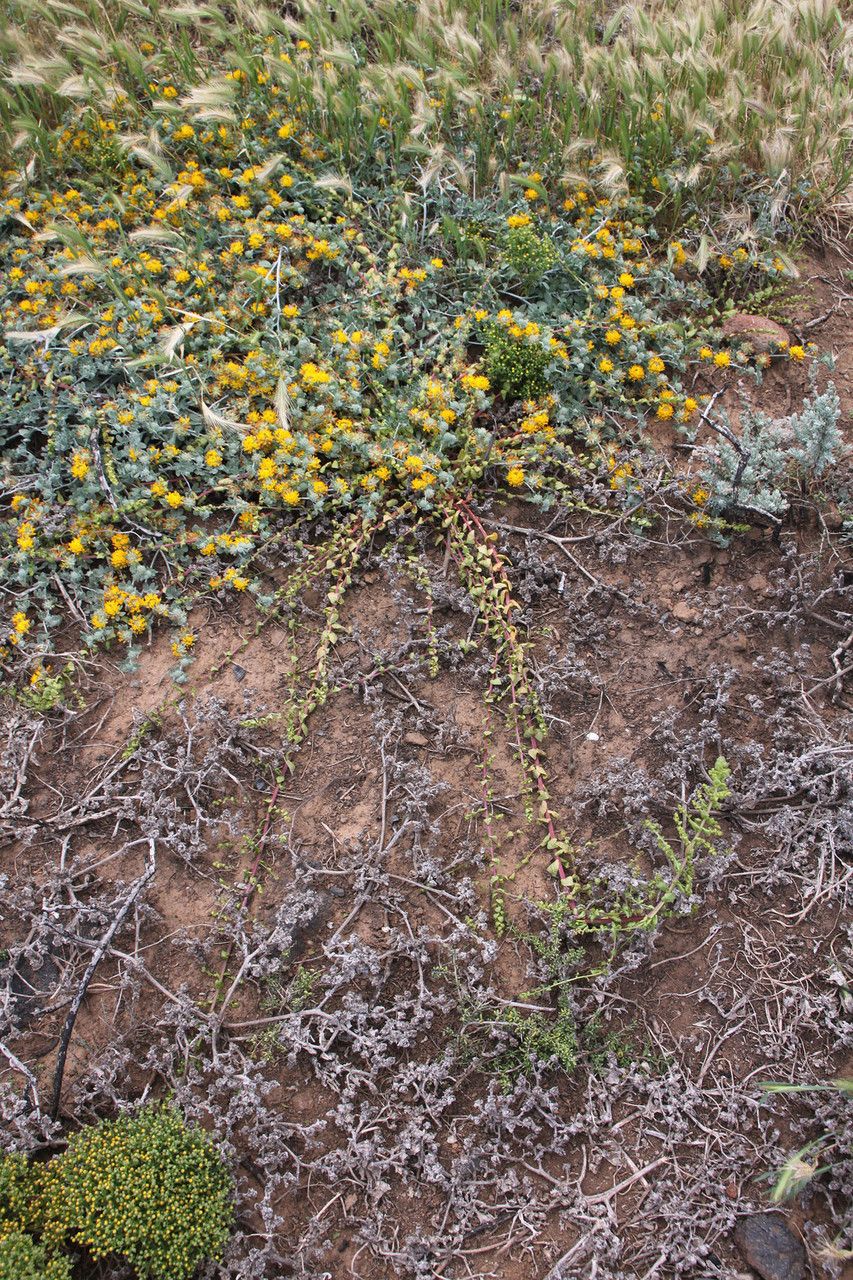
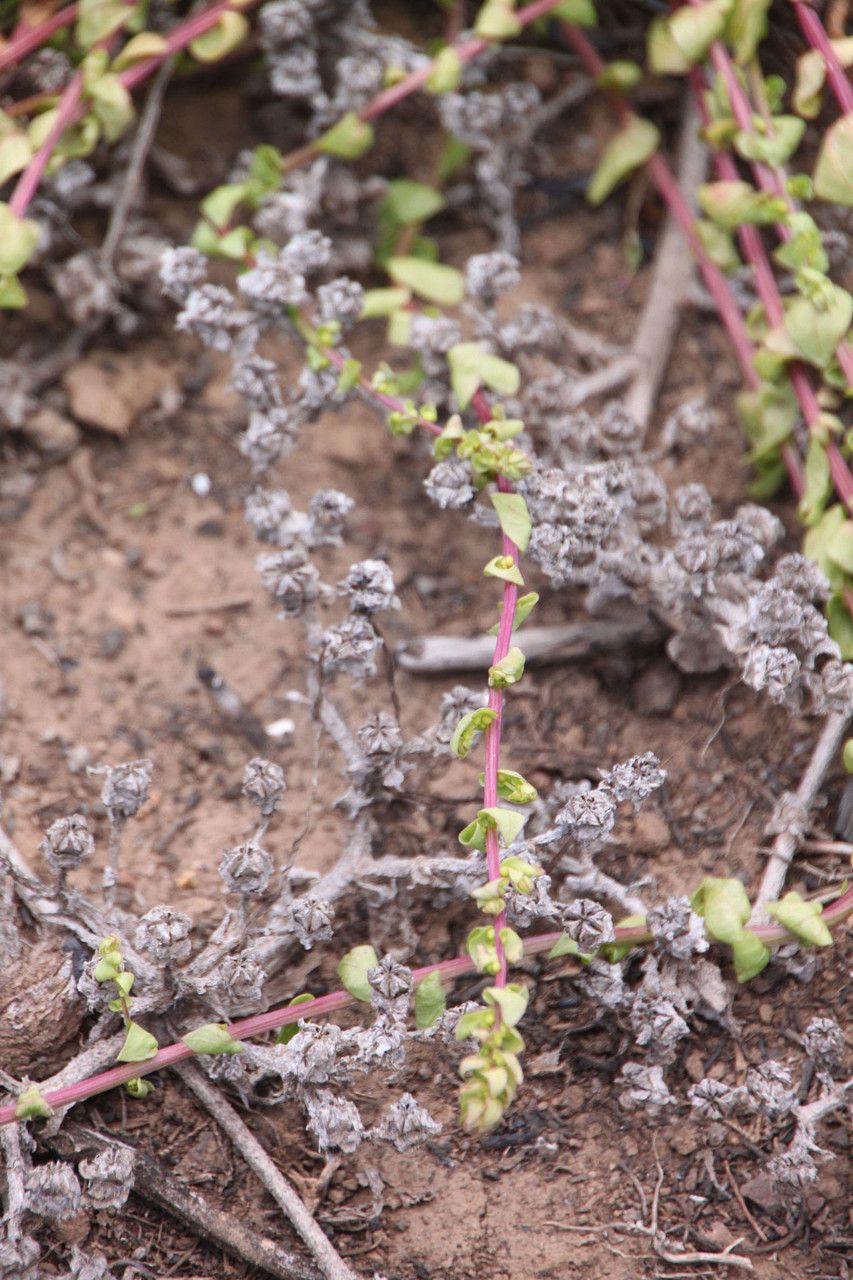
Aphanisma blitoides, commonly known as the beach saltwort, is a small succulent plant belonging to the Amaranthaceae family. Native to coastal regions of Europe and North Africa, it has also been introduced to various other parts of the world. This plant typically grows up to 10 cm in height and features cylindrical, fleshy leaves that are greenish-grey and coated with a waxy layer to retain moisture.
The beach saltwort is well-adapted to saline soils, making it an ideal plant for coastal regions where high salt levels hinder the growth of many other plants. It can also withstand drought conditions due to its ability to store water within its leaves.
During the summer months, Aphanisma blitoides produces small flowers that are greenish-yellow or pinkish-white, which attract bees and other pollinators.
This plant has several practical uses, including as an ornamental addition to landscaping, for erosion control on sandy beaches, and for medicinal purposes such as treating skin conditions like eczema or psoriasis.
Overall, Aphanisma blitoides is a resilient succulent with unique adaptations that make it well-suited for coastal environments with high salinity, where few other plants can thrive.
San diego coastal creeper has strong resistance to disease and is generally unlikely to suffer from illnesses. Still, it can be vulnerable to pests and diseases found in its environment. Such infections are typically mild. Regarding care, this plant needs a moderate level of maintenance. It should be pruned routinely to preserve a tidy appearance and promote healthy growth. Applying fertilizer can also encourage blooming. San diego coastal creeper is appropriate for anyone who has an outdoor area, like a garden or patio, and does not demand extensive plant-care experience. It may need extra attention when cultivated indoors.
How to keep Aphanisma Blitoides.
Light
The San Diego coastal creeper is native to luminous, open settings where it flourishes in unfiltered sunlight. While it can withstand some shade, it favors direct sun exposure for ideal development. This plant, which cycles annually or biannually, is recognized for its preference for sunlight.
Water
Native to coastal areas, the San Diego coastal creeper thrives in moderate humidity and benefits from consistent moisture. It should be watered weekly. This plant is well-suited for sandy soils and shows resilience to occasional variations in water availability, making it an ideal choice for gardens that experience sporadic rainfall.
Temperature
The San Diego coastal creeper is capable of adjusting to various temperature conditions, yet its spread may still be curtailed by assorted variations of water and heat settings. It flourishes predominantly in temperate climates when there is sufficient summer rainfall or irrigation. Extended durations of overcast and rainy climates, along with enduring high temperatures, can escalate the chances of the San Diego coastal creeper perishing. During winter, guarding it against the cold can enhance the plant's chances of surviving.
Fertilizer
San Diego coastal creeper may prosper from regular, mild portions of fertilizer to encourage vigorous leaf development. It's advised to fertilize San Diego coastal creeper around once a month throughout the summer season. Nitrogen is a key element for leaf growth, and providing it with sources rich in nitrogen aids in the healthy growth of San Diego coastal creeper.
Pruning
The San Diego Coastal Creeper flourishes as a dense groundcover and benefits from annual pruning in the spring. To keep it healthy and attractive, trim any overgrown areas and remove damaged stems. This will improve air circulation and sun exposure, reducing the risk of disease and helping maintain a lush appearance, making it a manageable and appealing feature in your landscape.
Botanical profile.
- Plant Type
- Herb
- Life Cycle
- Annual
- Genus
- Aphanisma
- Family
- Amaranthaceae
- Hardiness Zone
- 8-11
- Mature Height
- 61 cm
- Mature Spread
- 20 cm to 49 cm
- Leaf Color
- Light Green, Pale Green
- Leaf Type
- Semi-evergreen
- Flower Color
- Green, Red
- Flower Size
- 0.20 cm to 0.25 cm
- Bloom Time
- Spring
- Planting Time
- Spring
- Harvest Time
- Late spring, Early summer, Mid summer
- Native Area
- Mexico
Other names.