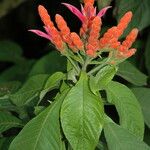
Aphelandra sinclairiana
Coral aphelandra · Sinclair's aphelandra
Description
Source: leafsnapAphelandra sinclairiana, commonly known as the Zebra plant, is a tropical evergreen shrub native to Brazil. This plant is a popular choice for houseplant enthusiasts due to its striking foliage and vibrant yellow flowers. The large, glossy leaves feature bold white stripes that resemble those of a zebra, giving the plant its name. To thrive, the Zebra plant needs bright, indirect light and consistently moist soil. Indoors, it can grow up to 3 feet tall, though it can be pruned if it becomes too large or leggy. In late summer, Aphelandra sinclairiana produces clusters of bright yellow flowers that attract pollinators such as bees and butterflies. However, it's important to note that this plant can be toxic if ingested by pets or humans. Exercise caution when handling it around children or animals to prevent any potential harm.
Care Guide
💧 Water Every 7 days
Orange shrimp plants have average water needs but need to be watered regularly. Water 1 to 2 times a week. Every winter, keep the soil damp and never let it dry out completely.
☀️ Light Partial sun
Coral aphelandra originates from habitats such as forest understories or rocky areas, where it grows in natural shade. It prefers partial sun but can adapt to full sun or full shade, illustrating its hardy and adaptable nature.
🌡️ Temperature 20–37.8°C
Coral aphelandra comes from tropical areas where the climate is generally warm and humid. Therefore, it is well adapted to high temperatures and humidity. It is sensitive to sudden temperature changes and prefers a stable thermal environment, so avoiding temperature fluctuations indoors is important. It usually does not tolerate cold conditions and requires high temperatures for growth. If the surrounding temperature falls too low, the plant may stop growing or even die.
💨 Humidity
🪴 Soil 6-7
🌱 Fertilizer
The best time to fertilize a Coral aphelandra is in early spring as it comes out of dormancy. This encourages overall growth and supports flower development. Fertilizing improves the foliage, stems, and branches, and promotes flowers that are larger, more vivid, and longer-lasting. It also helps transport nutrients from the roots to the blooms and boosts the plant’s health and resistance to disease.
🪴 Pot & Repot
✂️ Pruning
Remove dead flower heads at the end of the year. This will encourage new growth as spring comes. Pruning shrimp plants will also prevent them from becoming thin or leggy.
🌿 Propagating
🐛 Diseases & pets
☠️ Toxicity
This houseplant is non-toxic even for humans or pets. These plants do not need to be kept out of reach of children.
Characteristics
- Plant Type
- Shrub
- Life Cycle
- Perennial
- Genus
- Aphelandra
- Family
- Acanthaceae
- Hardiness Zone
- 10-12
- Mature Height
- 0.61 m to 1.22 m
- Mature Spread
- 30 cm to 61 cm
- Leaf Color
- Dark Green, Forest Green
- Leaf Type
- Evergreen
- Flower Color
- Yellow, Orange
- Flower Size
- 5.08 cm to 6.35 cm
- Bloom Time
- All year round
- Planting Time
- Spring, Summer, Autumn
- Harvest Time
- Late spring, Summer, Fall, Winter, Early spring, Mid spring
- Native Area
- Honduras, Nicaragua, Costa Rica, Panama