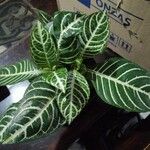
Aphelandra squarrosa
Zebraplant · Saffron spike
Description
Source: leafsnapAphelandra squarrosa, commonly known as the zebra plant or yellow zebra plant, is a tropical evergreen shrub from the Acanthaceae family. Native to Brazil, this plant can reach heights of up to 3 feet. It features large, glossy dark green leaves adorned with prominent white veins and striking yellow stripes. The bright yellow flowers bloom in clusters at the ends of long stems. To thrive, the zebra plant requires bright, indirect light and high humidity levels. It prefers well-draining soil that remains moist but not waterlogged. Propagation can be achieved through stem cuttings or division. Popular as a houseplant due to its striking appearance, the zebra plant also has medicinal properties in traditional Brazilian medicine, where it is used to treat respiratory issues such as asthma and bronchitis. In summary, Aphelandra squarrosa is an attractive tropical shrub with distinctive foliage, making it an excellent choice for indoor gardens or outdoor landscapes in warm climates, where it can be grown year-round without risk of frost damage.
💡 The flowers of the zebra plant last only a few days after they bloom, but the bracts can endure for about six weeks. To conserve the plant's energy and possibly encourage a second bloom, it is important to remove the remaining yellow crown once the bracts have faded.
🌳 The zebra plant is more than just an attractive houseplant with distinctive white, zebra-like stripes. It also appears in beauty products, providing astringent properties that help improve the skin. Beyond its visual appeal and dermatological benefits, local folklore treats the zebra plant as a bringer of good fortune and success, making it a sought-after gift for those hoping for a bit of luck.
🎭 Equilibrium, uniqueness
Care Guide
💧 Water Every 7 days
The zebra plant thrives in the high humidity typical of tropical rainforests and requires consistent moisture. Water it every 1-2 weeks to keep it healthy. As an evergreen that is often grown indoors, the zebra plant also needs good drainage to prevent waterlogging and mimic its natural environment.
What do I need to do if I give my Zebra plant too much or too little water?
Overwatering and underwatering can harm your Zebra plant, but overwatering is more common. Excessive water can cause wilting, yellowing, and diseases like root rot, mold, and mildew, which can be fatal. Zebra plants are fairly drought-tolerant, so underwatering is less likely, but it can still happen, resulting in brittle, brown leaves. It's important to identify signs of overwatering early and take action. Some diseases caused by overwatering may not be reversible if left unattended for too long. Reduce your watering schedule if you notice early signs of overwatering and ensure the soil drains well. If your Zebra plant shows signs of insufficient water, simply water it regularly until the signs resolve.
How many times a week should I water my Zebra plant?
If your Zebra plant is in a pot, the best way to know when it needs water is by sticking your finger into the soil. If the top two to three inches of soil are dry, it's time to water the plant. If you're growing the Zebra plant outside in the ground, you can use the same method to test the soil. Once the top few inches of soil have dried out, it's time to give it water. Generally, during spring and early fall, you'll need to water the plant about once a week using this method. However, when it gets extremely hot, you may have to increase watering to twice a week or more. Keep in mind that mature Zebra plants are able to tolerate drought well.
How much water does my Zebra plant require?
To properly water your Zebra plant, don't hold back on the amount of water you provide. Wait until the top two to three inches of soil are dry, and then give it a good, thorough watering. Make sure to add enough water to completely soak the soil, causing excess water to drain through the bottom of the pot. If you don't see any excess water draining, you might not have given enough water. However, be careful not to let the water accumulate in the soil, as this can harm the plant. On the other hand, if water isn't draining well through the pot, it could mean that the soil doesn't have good drainage, which is not good for the plant's health. If the plant is outside, about 1 inch of rain per week should be enough.
How do I water my Zebra plant at different times of the year?
The Zebra plant has different water needs depending on the season. In the hottest summer months, it may need to be watered more than once per week, depending on how quickly the soil dries out. During winter, it enters a dormant phase and requires much less water. In fact, you may not need to water it at all during this time. If you do decide to water it in winter, be careful not to do so more than once per month, as overwatering can lead to disease.
How do I water my Zebra plant during different stages of growth?
The water needs of the Zebra plant can change depending on its growth stages. In the early years or after transplanting, more water than usual is needed. This is because the plant is focused on developing new roots to support future growth, which requires additional moisture. As the plant matures, less water is required. Another stage that may require increased water is during the bloom period, as flower development utilizes a significant amount of moisture.
☀️ Light Partial sun
Zebra plant thrives when given moderate sunlight, similar to the dappled shade from overhead foliage. In its native habitat, light conditions are neither extremely low nor exceptionally strong. Too much sun can scorch its leaves, while too little light can lead to weak growth and poor leaf coloration.
What are the sunlight requirements for a Zebra plant?
The Zebra plant, or Aphelandra squarrosa, thrives under moderate sunlight, akin to the dappled shade provided by overhead foliage in its natural habitat. It requires a delicate balance of light, as excessive direct sun exposure can scorch its leaves, while too little light may lead to weak growth and poor leaf coloration. The plant performs well in partial sun, receiving about 3-6 hours of sunlight daily, but can also survive in full shade conditions where sunlight is less than 3 hours per day. Watch how sunlight gracefully travels through your garden, choosing spots that offer the perfect balance of light and shade for your plants, ensuring their well-being.
What artificial lighting requirements do Zebra plants have?
Indoor Zebra plants require adequate lighting, especially when natural sunlight is insufficient, such as during winter or in less sunny indoor spaces. Artificial lights serve as an essential solution, promoting faster and healthier growth. LED lights are popular for indoor plant lighting as they can provide specific wavelengths needed by the plants. Full sun plants need 30-50W/sq ft of artificial light, partial sun plants need 20-30W/sq ft, and full shade plants need 10-20W/sq ft. The light source should be placed 12-36 inches above the plant to mimic natural sunlight, and most plants require 8-12 hours of light per day.
What are the symptoms of inappropriate light conditions in Zebra plants?
Zebra plants may exhibit several symptoms when exposed to inappropriate light conditions. Insufficient light can lead to smaller new leaves, leggy or sparse growth, faster leaf drop, slower or no new growth, and lighter-colored new leaves, indicating a lack of chlorophyll and essential nutrients. Too much sunlight can cause chlorosis, where leaves lose their green color, sunscald with damaged tissues, leaf curling as a defense against excess sunlight, wilting due to increased water loss, and leaf scorching characterized by brown, dry edges or patches. These symptoms highlight the plant's struggle to adapt to its light environment.
What solutions are available for Zebra plants suffering from improper lighting?
For Zebra plants suffering from improper lighting, several solutions can improve their condition. Indoor plants can be gradually shifted to sunnier spots each week until they receive 3-6 hours of direct sunlight daily, or use artificial light by keeping a desk or ceiling lamp on for at least 8 hours a day. Outdoors, plants should be moved gradually to sunnier locations to prevent sunburn. Removing obstructions like pruning trees or transplanting smaller plants to brighter areas can also help. It's essential to ensure a gradual adaptation to new light conditions to prevent stress or damage to the plants. Although parts of the plant affected by insufficiency might not recover, implementing these solutions can foster healthy new growth.
🌡️ Temperature 20–37.8°C
Originating from warm, humid areas, the zebra plant performs best in temperatures of 68 to 100 ℉ (20 to 38 ℃). In winter, keep temperatures above 60℉ (15℃) to prevent possible dormancy or leaf drop. In the hotter months it can tolerate somewhat higher temperatures but should be kept out of direct sunlight and away from dry air.
What are the ideal temperature conditions for a Zebra plant?
The Zebra plant, native to warm and humid environments, thrives in temperatures between 68 to 100°F (20 to 38°C). It is vital to maintain a temperature above 60°F (15°C) during winter to prevent dormancy or leaf drop. While it can tolerate higher temperatures during warmer months, it should be shielded from direct sunlight and dry air. The Zebra plant loves heat, so cold temperatures can be harmful. It's advisable to move outdoor plants indoors in autumn to a bright window space, away from heaters, ensuring the temperature remains above 20°C. Temperatures nearing 5°C can be harmful to the plant.
How should you care for a Zebra plant in low temperatures?
Zebra plants prefer warm temperatures above 20°C and struggle with cooler conditions. During winter, temperatures should stay above 5°C. At temperatures below 1°C, leaves may lighten in color, turning brown or black after frost damage, which also can cause wilting and drooping. If frost damage occurs, trim off the damaged parts and move the plant to a warmer indoor area. Place it near a south-facing window for enough sunlight while avoiding placing it near heaters or air conditioning vents to prevent air dryness.
What steps should be taken if a Zebra plant is exposed to high temperatures?
During summer, it is important to keep the Zebra plant's environment below 38°C. Exposure to temperatures over 43°C can cause the leaves to lighten in color and increase susceptibility to sunburn. If sunburn occurs, trim away the sunburned and dried parts. Move the plant to a shaded location, especially during midday and afternoon, to protect it from direct sunlight. Additionally, watering the plant in the morning and evening will help keep the soil adequately moist.
💨 Humidity high (>60%)
This plant needs special care because it loves high humidity levels of 60-80% or more. The best way to achieve this is by placing a humidifier near the plant. Daily misting is also essential! Make sure the room has good ventilation.
🪴 Soil 6-7
🌱 Fertilizer
The zebra plant needs the most fertilizer during its active growth period, which is mainly in spring, summer, and early fall. Fertilizing supplies vital nutrients the soil may lack, encouraging strong root and stem growth and the attractive foliage that is a distinguishing feature of this plant.
Why should I put fertilizer on my Zebra plant?
The growth of all plants, including the Zebra plant, depends on soil nutrients. However, it's not always guaranteed that the soil will have all the necessary nutrients. To ensure the plants in your garden have the required nutrients, you can use fertilization and soil amendments. These will not only provide the basic nutrients but also the specific ones needed by each plant. For the Zebra plant, fertilizer is essential for healthy root and stem development throughout the growing season. It will also help the plant produce visually appealing leaves, which are the main attraction of this plant's appearance.
When should I fertilize my Zebra plant?
The Zebra plant requires the most fertilizer when it is actively growing, which is usually during the spring, summer, and early fall. After winter, you should feed the plant every two to four weeks until fall arrives. During fall, slowly decrease the amount of fertilizer you give until you completely stop feeding the plant in preparation for the less active growth in winter.
When is it not a good time to fertilize my Zebra plant?
During most of the year, it is important to consistently feed your Zebra plant, even during spring, summer, and most of the fall. However, if you notice that your Zebra plant has been over-fertilized or if you have mistakenly fertilized it incorrectly, causing issues like fertilizer burn, you will need to address and correct the problem before resuming regular feeding. The only exception to fertilizing a Zebra plant is during the winter. If you are growing this plant indoors in a cold winter climate, it will go into a dormant phase. Feeding the plant during this dormant phase is not necessary and actually harmful to its growth, as it is likely to cause fertilizer burn.
Which fertilizer should I use for my Zebra plant?
When fertilizing a Zebra plant, it is important to use a specific blend of nutrients in relatively low amounts. The ideal fertilizer will have an N-P-K ratio of 3-1-2, but a general-purpose fertilizer with an even blend of nutrients can also work. Regardless of the type of fertilizer chosen, it is recommended to keep the ratio number below 10. The two options for fertilizer are granular or liquid-based. If using liquid fertilizer, it is advisable to dilute it by half. While granular fertilizer has few downsides, it is generally more practical to use liquid fertilizer, especially if watering the Zebra plant simultaneously.
How should I take care of my Zebra plant's fertilization?
When purchasing fertilizer for your Zebra plant, it typically comes with application instructions that should be followed. For the Zebra plant, it is recommended to fertilize right before or during watering to prevent root burn. If you are using a slow-release granular fertilizer, sprinkle it on the soil and water immediately. If you are using a liquid-based fertilizer, dilute it with water, apply it to the soil, and then provide additional water. It is especially important to dilute the fertilizer by at least half in the spring and fall when the plant's growth is increasing or decreasing.
🪴 Pot & Repot 2-3 years
When repotting a Zebra plant, select a pot 1–2 inches (2.5–5.1 cm) larger that has ample drainage. Use a well-draining potting mix. Repot in spring or fall, ensuring the root ball sits slightly lower than the rim of the flower pot. Water thoroughly after repotting and place in a warm spot with indirect sunlight.
✂️ Pruning
The Zebra plant is known for its striking foliage with bold white veins. To encourage bushier growth, prune it in early spring and remove any damaged leaves. Light pinching can be done later to help shape the plant, promote new growth, improve air circulation, and prevent pest infestations. Always use clean tools when pruning to ensure quick healing and keep the Zebra plant healthy.
🌿 Propagating
🐛 Diseases & pets
☠️ Toxicity
The zebra plant is non-toxic to people and pets. However, the sap from the plant is known to irritate sensitive skin. Always wear protective gloves when handling this plant.
Characteristics
- Plant Type
- Herb, Shrub
- Life Cycle
- Perennial
- Genus
- Aphelandra
- Family
- Acanthaceae
- Hardiness Zone
- 10-11
- Mature Height
- 0.3 m to 1.83 m
- Mature Spread
- 1.52 m
- Leaf Color
- Green, White, Variegated
- Leaf Type
- Evergreen
- Flower Color
- Yellow, Gold
- Flower Size
- 2.54 cm to 5.08 cm
- Bloom Time
- Mid summer, Late summer
- Planting Time
- Spring, Autumn
- Harvest Time
- All year round
- Native Area
- Brazil