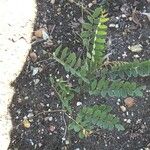
Apios americana
Apios · Ground-bean · Groundnut · Wild bean · American potato-bean
Description
Source: leafsnapApios americana, also known as the American groundnut or hopniss, is a perennial vine native to North America. It belongs to the Fabaceae family and can grow up to 3 meters in length. The plant has a tuberous root system that can extend up to 1 meter in length, and it has been used as a food source by Native Americans for centuries. The leaves of Apios americana are pinnately compound, featuring five leaflets. Its small flowers are purple or brownish-red and bloom from July through September. Apios americana thrives in moist soils and is commonly found along streams, rivers, wetlands, and other areas with high water content. It also grows along roadsides. The tubers of Apios americana are edible both raw and cooked, offering a nutty flavor akin to chestnuts or sweet potatoes. They were a significant food source for Native Americans, who used them as flour after drying them out. In addition to its use as a human food source, Apios americana provides habitat for wildlife. Deer feed on its leaves, and beavers use it for building dams. Overall, this plant has been an important part of North American ecosystems both ecologically and culturally. It holds a long history of use by indigenous peoples, primarily for its high nutritional value. Compared to other plants available at the time, such as maize, which had not yet been domesticated, Apios americana was a critical component of indigenous diets.
🌳 American Groundnut has been a hidden treasure within the wild edibles community because of its high protein content and its potential as a permaculture crop. Although not widely recognized, these beans provide an alternative source of protein and have been used traditionally by Indigenous peoples. There is research investigating their potential to address food security and nutrition.
Care Guide
💧 Water Every 7 days
The American groundnut thrives in moist, well-drained soils, particularly in its native wetland habitats. It requires weekly watering to stay hydrated but can tolerate short periods of drought. This plant is well-suited for outdoor cultivation, where it benefits from natural rainfall patterns that encourage robust growth during the growing season.
What is the most effective way to water my American Groundnut plant?
The American Groundnut has specific requirements for its water intake. Not only does it matter how much water it receives, but also how you provide that water. If you don't use the proper watering technique, your tomatoes could be harmed. The best way to water the American Groundnut is to apply water directly to the soil in a slow and gentle manner. It's important not to pour all of the water into the soil at once or to do overhead watering. While watering slowly, make sure to water deeply to ensure that all the soil surrounding the American Groundnut is adequately moist.
What should I do if I give my American Groundnut too much or too little water?
If you realize that you have provided too much water for your American Groundnut and are worried about the risk of disease, take immediate action. The best course of action is usually to remove the plant from its current location. After removing it from the ground, let the roots dry out a bit before replanting it in a new location with well-draining soil. If you are growing the plant in pots, you might also consider transferring it to a pot with better drainage. On the other hand, if you are underwatering your plant, simply increase the frequency of watering.
How often do I need to water my American Groundnut?
American Groundnut needs a lot of water throughout its growing season. To ensure it gets enough water, you should water it frequently in the spring and summer. Start by watering it once or twice a week at the beginning of the season and increase the frequency as the season progresses. In the summer, you might need to water it twice a day or even more, depending on the weather. Once the major growth periods are over, you can reduce the watering to once a week until the end of the growing season.
How much water does my American Groundnut plant need?
American Groundnut is a highly popular plant, grown successfully by both professional and amateur gardeners. Therefore, we have a good understanding of how to care for these plants, including their specific water requirements. On average, an American Groundnut plant should be given about 1 - 1.5 inches of water per week, which should be evenly distributed during each weekly watering session. As the weather gets hotter, it may be necessary to increase the amount of water supplied, but in general, providing two inches of water per week is a good starting point.
How do I know if I'm giving my American Groundnut enough water?
Both underwatering and overwatering can be problematic for your American Groundnut, and these problems can cause similar symptoms. For instance, both overwatering and underwatering can result in foliage discoloration and wilting. When your American Groundnut is underwatered, its leaves will initially curl and droop. You will notice a decrease in leaf vitality. Underwatering can also lead to stunted growth and poor overall development because this plant requires a significant amount of water. On the other hand, overwatering is more likely to cause diseases, such as rot, and you may observe unpleasant smells emanating from the soil. The symptoms of underwatering tend to appear faster than those of overwatering. Additionally, you can identify overwatering by examining the soil conditions. If there is an excess of standing water or waterlogged soil, it is likely that overwatering is occurring.
☀️ Light Full sun
American Groundnut is a plant that primarily thrives with abundant sunlight, though it can also tolerate moderately bright conditions. Its native habitat has enabled it to adapt to these light levels. The plant's health may deteriorate if exposed to too little or too much light.
What are the sunlight requirements for American Groundnut (Apios americana)?
American Groundnut thrives best in full sun, requiring more than 6 hours of sunlight per day, but it can also tolerate partial sun, which means about 3-6 hours of sunlight daily. It's essential to observe how sunlight moves through your garden to find spots that provide the right balance of light and shade, ensuring the plant's well-being. In its natural habitat, American Groundnut has adapted to a range of light conditions, although its health may suffer under too much or too little light.
How do artificial lights support plant growth indoors?
When natural sunlight is inadequate for indoor plants, especially in winter or less sunny spaces, artificial lighting becomes crucial. It promotes faster, healthier growth by compensating for the lack of sunlight. LED lights are preferred for their ability to offer specific light wavelengths needed by plants. Full sun plants need 30-50 W/sq ft of artificial light, partial sun plants require 20-30 W/sq ft, and full shade plants need 10-20 W/sq ft. The artificial light source should be placed 12-36 inches above the plant, mimicking natural sunlight, and kept on for 8-12 hours per day, depending on the plant species.
What are the symptoms of light deficiency in American Groundnut when grown indoors?
When grown indoors with insufficient light, American Groundnut may show several subtle symptoms of light deficiency, including smaller new leaves, leggy or sparse growth, faster leaf drop, slower or no new growth, and lighter-colored or chlorotic leaves. Excessive sunlight can cause symptoms like sunscald, leaf curling, wilting, leaf scorching, and chlorosis, indicating that the plant is stressed by too much direct light.
What solutions can help improve light conditions for American Groundnut both indoors and outdoors?
To optimize light conditions for American Groundnut, gradually introduce the plant to sunnier spots, aiming for at least 6 hours of direct sunlight daily. Indoors, use natural light from a south-facing window or supplement with artificial lights for 8 hours daily. Outdoors, move plants gradually to avoid sunburn. If areas are shaded by trees, consider pruning to improve sunlight exposure. For smaller plants, transplanting during their dormant season into sunnier spots with good drainage can also help. Remember, parts of the plant already affected by insufficient light may not recover, but new growth should be healthy with improved light conditions.
🌡️ Temperature 5–35°C
For American Groundnut, moderate temperatures are preferable, comparable to what people generally find comfortable. It performs best in conditions that are neither too hot nor too cold. The main concern with very high temperatures is the possibility of sunburn, so in summer it is advisable to provide some shade to prevent excessive heat. When temperatures fall, American Groundnut becomes dormant. If continuous growth is wanted, higher temperatures must be maintained during winter. Frost can damage the plant and should be avoided.
What are the ideal growing conditions for American Groundnut?
American Groundnut (Apios americana) thrives in moderate temperatures similar to what people generally find comfortable, ideally in temperatures that are not too hot nor too cold. They prefer temperatures between 5\u00b0C and 35\u00b0C. To ensure healthy growth, it's important to protect the plant from high temperatures and direct sunlight during the summer by providing some shade. In winter, maintaining temperatures above 5\u00b0C is beneficial for the plant's growth, avoiding frost damage by keeping the plant above freezing point. If temperatures dip below -5\u00b0C (25\u00b0F), consider moving the plant indoors or providing protection with a temporary greenhouse or insulating materials.
How does American Groundnut react to low temperatures?
American Groundnut has moderate tolerance to low temperatures but thrives best when kept within its ideal temperature range of 5\u00b0C to 35\u00b0C. During winter, temperatures should not fall below -20\u00b0C. Exposure to temperatures below -25\u00b0C can cause the leaves to darken, and severe cold can lead to water-soaked necrosis, wilting, drooping, and eventually, the leaves may turn brown. To manage frost damage, trim away the frost-damaged parts and move the plant to a warmer location indoors or set up a makeshift greenhouse for cold protection. Ensure the plant has ample sunlight, and use supplemental lighting if natural light is insufficient.
What should I do if my American Groundnut experiences high temperatures?
During the summer, it's essential to ensure that the American Groundnut is kept below 35\u00b0C to prevent heat stress. Exposure to temperatures above 41\u00b0C can slow the plant's growth, cause leaves to lighten in color, and increase susceptibility to sunburn. To mitigate high temperature stress, trim away any sunburned or dried-up parts and move the plant to a shaded area, especially away from the harsh afternoon sun. Water the plant during the morning and evening to keep the soil moist and help the plant stay cool.
💨 Humidity
🪴 Soil 6-7
🌱 Fertilizer
American Groundnut fixes nitrogen naturally via its root system, lessening the need for added fertilizers. It does well in well-draining soils, and fertilization may be unnecessary depending on the soil's make-up. However, low potassium or phosphorus can limit successful growth, while a nitrogen deficiency is not problematic.
Why should I put fertilizer on my American Groundnut?
American Groundnut can be grown in a variety of soils, as long as they have good drainage. Depending on the soil, you may or may not need to fertilize. If the soil lacks potassium or phosphorus, it may not be able to support the successful growth of American Groundnut. However, if the soil is only deficient in nitrogen, the crop should thrive even without fertilizer.
When should I fertilize my American Groundnut for the best results?
To ensure optimal growth of American Groundnut, it is recommended to use compost or manure at the time of planting. However, if you prefer using liquid fertilizer, a small amount can be added when the seedlings begin to emerge. It is generally advisable to fertilize American Groundnut only once throughout its growing cycle. Additionally, if you want to enhance the soil quality prior to planting, you can incorporate fertilizers that are high in phosphorus and potassium as a soil amendment in the year before planting American Groundnut.
When is the best time to not use fertilizer on my American Groundnut?
To ensure the health of the environment, it is important to be cautious when fertilizing American Groundnut. Adding excessive amounts of chemical or natural fertilizers can cause harm, especially by introducing too much nitrogen into the soil. It is generally recommended to use a minimal amount of fertilizer when cultivating American Groundnut. In fact, if possible, it is best to avoid using fertilizer altogether. By following this approach, you can enjoy a successful harvest while also saving time and effort in the growing process.
Which fertilizer is the best for my American Groundnut?
American Groundnut roots have the ability to produce their own nitrogen, which means they don't require additional nitrogen supplementation in their soil. Plants, particularly legumes, have root nodules that form a mutually beneficial relationship with nitrogen-fixing bacteria. In conditions where nitrogen is limited, certain plants form a symbiotic relationship with a specific strain of bacteria called rhizobia. Farmers sometimes grow American Groundnut varieties alongside other crops to increase nitrogen levels for other plants in the garden. When selecting a fertilizer, it's helpful to check the NPK number and opt for lower nitrogen ratios compared to phosphorus and potassium. Natural soil amendments like bone meal have naturally low nitrogen content. Worm castings and chicken manure are also excellent choices for natural fertilizers.
How can I give my American Groundnut plant nutrients?
If you want to add fertilizers to your American Groundnut due to a nutrient deficiency in your soil, there are two main ways to do it. The first method is to mix compost or other organic low-nitrogen materials into the top layer of soil before planting the American Groundnut. This helps to prepare the soil for seeds or seedlings to grow. Another option is to apply a small amount of chemical or natural organic fertilizer once the seedlings have grown a few inches tall. However, this step is usually not necessary.
🪴 Pot & Repot Every 12 months
✂️ Pruning
The American Groundnut is a plant known for its twining vines and nutritious tubers. To encourage a bushier growth and improve sunlight access, it's beneficial to prune the plant in early spring. Focus on removing dead or weak stems, as well as excessively long vines. Make sure to sanitize your tools to prevent infections and prune back to healthy nodes for the best results.
🌿 Propagating
🐛 Diseases & pets
☠️ Toxicity
Characteristics
- Plant Type
- Herb, Vine
- Life Cycle
- Perennial
- Genus
- Apios
- Family
- Fabaceae
- Hardiness Zone
- 3
- Mature Height
- 1.83 m to 3.05 m
- Mature Spread
- 10 cm to 49 cm
- Leaf Color
- Green
- Leaf Type
- Deciduous
- Flower Color
- Red, Brown, Pink, Purple
- Flower Size
- 2.54 cm
- Bloom Time
- Mid summer
- Planting Time
- Spring
- Harvest Time
- Mid summer, Late summer