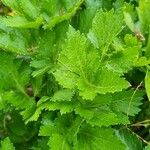
Apium graveolens
کرفس · Celery · Wild Celery · Celeriac · Smallage
Description
Source: leafsnapApium graveolens, commonly known as celery, is a biennial plant that belongs to the Apiaceae family. Native to the Mediterranean region, celery has been cultivated for its edible stalks and leaves for centuries. The plant can grow up to 1 meter tall and features long, fibrous stalks with green, pinnate leaves. Its small, white flowers are arranged in umbels at the top of the stem. Celery is a popular vegetable used in salads, soups, stews, and as a garnish due to its crisp texture and mild flavor. It is also valued for its medicinal properties, owing to its high content of vitamins A, C, K, and B6, as well as minerals such as potassium. Cultivating celery requires moist soil with good drainage, and it thrives in either full sun or partial shade. It can be grown from seeds or transplants during the spring or fall seasons. Overall, Apium graveolens (celery) is an important vegetable crop that offers numerous health benefits and serves as an essential ingredient in many culinary dishes around the world.
🌳 Celery's uses go beyond the kitchen. Essential oils obtained from celery have been used in aromatherapy and perfumery because of their distinctive scent. The plant also acts as a natural insect repellent, making it useful in organic gardening. With potential not yet fully tapped, celery may also have a role in sustainable approaches such as phytoremediation.
🎭 Mental abilities, Lust, Psychic abilities
Care Guide
💧 Water Every 7 days
Wild celery flourishes in marshy settings where it can receive consistent moisture. It needs regular watering, ideally twice a week. Although it can withstand brief periods of dryness, keeping the soil moist is crucial during its active growth phases.
How should I water my Wild celery?
Wild celery not only requires specific amounts of water, but also emphasizes the importance of how you water it. Failure to use the correct watering technique could potentially damage your tomatoes. The recommended approach for watering Wild celery involves applying water directly to the soil in a slow and gentle manner. Avoid pouring all the water into the soil at once and refrain from overhead watering. While it is important to water slowly, it is equally important to water deeply to ensure adequate moisture throughout the soil supporting your Wild celery.
What should I do if I give my Wild celery too much water or too little water?
If you notice that your Wild celery has been overwatered and you're worried about it getting sick, take action immediately. The best solution for an overwatered Wild celery is to remove it from its current spot and let its roots dry out a little bit before replanting it in a new area with well-draining soil. If you're growing it in a pot, you might also consider transferring it to a pot with more or bigger drainage holes. On the other hand, if you've been underwatering your plant, simply water it more frequently.
How often do I need to water my Wild celery?
Wild celery requires a significant amount of water throughout the growing season. To meet this need, it is important to water early and often during spring and summer. In the beginning of the growing season, watering once or twice per week is sufficient. However, as the season progresses, the watering frequency should be increased. During the summer, you may need to water Wild celery twice per day or even more frequently, depending on the weather. Once the major growth phases are complete, you can reduce the watering frequency to about once per week until the end of the growing season.
How much water should I give to my Wild celery plant?
Wild celery is a highly popular plant that many gardeners, both professional and amateur, grow successfully. This popularity means that we have a good understanding of how to care for these plants, including how much water they need. On average, a Wild celery plant should receive about 1 - 1.5 inches of water per week, which should be evenly distributed during each watering session. As the weather gets hotter, you may need to increase the amount of water to around two inches per week, but generally, the baseline amount of water needed is between 1 - 1.5 inches per week.
How can I know if I'm watering my Wild celery enough?
Both underwatering and overwatering can be problematic for your Wild celery, and they can both cause similar symptoms. For instance, both overwatering and underwatering may lead to foliage discoloration and wilting. When your Wild celery is underwatered, its leaves will curl and droop initially, with a decrease in leaf vitality. Stunted growth and poor overall development can also result from underwatering, as this plant requires a significant amount of water to thrive, including for its flowers. On the other hand, overwatering is more likely to create conditions for diseases, such as rot, and may produce unpleasant odors from the soil. The symptoms of underwatering tend to appear more quickly than those of overwatering. The presence of excessive standing water or waterlogged soils can indicate overwatering.
☀️ Light Full sun
Celery performs best when exposed to continuous sunlight all day. It also adapts well to locations where the sun is partially blocked for certain hours. However, very limited exposure can hinder its growth. Since it comes from regions with abundant sunshine, too much sun usually does not harm it unless the conditions are extremely harsh.
What are the sunlight requirements for wild celery?
Wild celery thrives best under continuous sunlight exposure throughout the day, making it crucial for its growth. It can adapt to areas with partial sun, where the sun is obscured for certain hours, but minimal sunlight exposure might impede its growth. Besides, it originates from environments abundant in sunshine, meaning overexposure rarely harms it unless extremely severe. For planning, full sun means the plant should receive above 6 hours of sunlight, while partial sun refers to about 3-6 hours of sunlight. Observing how sunlight moves through your garden helps in choosing spots that provide a balance of light and shade, ensuring plant happiness.
How can artificial lighting benefit indoor wild celery plants?
Indoor wild celery plants require adequate lighting for optimal growth, especially when natural sunlight is insufficient, such as in winter or less sunny spaces. Artificial lights offer a solution by promoting faster, healthier growth. LED lights, recommended for indoor plant lighting, can be tailored to provide specific wavelengths needed by plants. Full sun plants need 30-50W/sq ft of artificial light, partial sun plants 20-30W/sq ft, and full shade plants 10-20W/sq ft. The light source should be placed 12-36 inches above the plant, mimicking natural sunlight, and kept on for 8-12 hours per day to simulate natural daylight hours.
What are the common symptoms of light deficiency in wild celery?
When grown indoors with limited light, wild celery may show symptoms of light deficiency, including smaller new leaves than previous ones, leggy or sparse growth with longer spaces between leaves or stems, faster leaf drop to conserve resources, and slower or halted growth as the plant enters survival mode. Insufficient sunlight can also cause new leaves to develop irregular color patterns or appear pale, indicative of a lack of chlorophyll and essential nutrients. These symptoms can easily go unnoticed, making it important to observe your plants closely.
What are the symptoms of overexposure to sunlight in wild celery?
Symptoms of overexposure to sunlight in wild celery include chlorosis, where leaves lose their green color and turn yellow due to chlorophyll breakdown, negatively affecting photosynthesis. Sunscald can damage plant tissues, appearing as pale, bleached, or necrotic spots. Leaf curling serves as a defense mechanism to minimize water loss and damage by reducing surface area exposed to sunlight. Wilting, due to increased water loss through transpiration and leaf scorching characterized by brown, dry, crispy edges on leaves, can occur, impairing photosynthetic capacity and overall plant health.
How can you address sunlight-related issues for wild celery?
To ensure optimal growth for wild celery, gradually move plants to sunnier locations, aiming for at least 6 hours of direct sunlight daily. For indoor plants not easily moved, consider artificial light, keeping a desk or ceiling lamp on for at least 8 hours daily or use grow lights for adequate light. Outdoor plants should be moved gradually to avoid sunburn. Remove obstructions blocking sunlight, such as pruning trees. For smaller plants, consider transplanting during dormancy to a location with ample sunlight. Note, parts affected by insufficient sunlight may not recover, but new growth will be healthy after adjusting the light exposure.
🌡️ Temperature 0–35°C
Celery is a plant that typically prospers in a temperature range of 68 to 95 °F (20 to 35 ℃). Because it originates from temperate regions, it copes well with seasonal temperature changes. Care should be taken to keep these preferred temperatures.
What are the ideal temperature conditions for growing wild celery?
Wild celery thrives best in temperatures ranging from 68 to 95°F (20 to 35°C), originating from temperate zones. It adjusts well to seasonal temperature variations but prefers relatively warm conditions. To ensure optimal growth, temperatures should be kept above 20°C, especially during winter cultivation. The plant requires protection when outdoor temperatures drop to -5°C (25°F) to prevent freezing damage. Such protection can involve bringing wild celery indoors or using a temporary greenhouse, plastic film, or fabric wraps.
How does wild celery respond to low and high temperatures, and what are the solutions to these challenges?
Wild celery has a moderate tolerance to low temperatures but prefers to be in the 20°C to 35°C range. When temperatures drop below 0°C, ensuring they stay above freezing is crucial to prevent damage. Exposure to temperatures below -35°C may result in leaves darkening, with potential for water-soaked necrosis, wilting, and eventual browning. The solution for frost damage includes trimming frost-damaged parts and moving the plant indoors or into a greenhouse, with ample sunlight or supplemental lighting. In high temperatures, specifically above 35°C and more critically over 41°C, the plant's growth may slow, leaves may lighten in color, and it can suffer sunburn. To mitigate heat stress, trim sunburned areas, relocate the plant to shaded areas during peak sunlight, and maintain soil moisture with morning and evening watering.
💨 Humidity normal (40-60%)
This plant will thrive in moderate humidity, which is probably the level in your home. However, misting it a few times a week can be very beneficial. Make sure the room has good ventilation.
🪴 Soil 6-7
🌱 Fertilizer
For maximum yield, celery does well with regular applications of a balanced fertilizer, especially one high in nitrogen. Apply fertilizer before planting, at planting, and when seedlings are 2 inches tall. Adding compost or manure also offers a steady nutrient supply. Too few nutrients in the soil cause poorly developed leaves and stems, weaker flavor, thin stalks, and possible bitterness.
Why is it important to add nutrients to my Wild celery?
Wild celery is a plant cultivated for its edible leaves and shoots. In order to ensure optimal flavor and a bountiful harvest, it is crucial for this plant to receive sufficient nutrients. If grown in soil lacking in necessary nutrients, the leaves and stems of the plant will not fully develop, resulting in inferior flavors compared to those grown in more favorable conditions. Thinner stems and a potentially bitter taste can be expected in such cases. When growing wild celery in containers, fertilization becomes even more significant. This is because container plants have limited access to organic matter compared to those grown in the ground. To address this, it is recommended to supplement your wild celery grown in pots with a balanced liquid fertilizer.
When should I fertilize my Wild celery?
To ensure the best growth for your Wild celery, there are a few key points to keep in mind during the growing season. First, when preparing the ground for planting, it's recommended to apply fertilizer at least 2 to 8 weeks prior to planting. This can be done by thoroughly mixing nutrient-rich organic material, like compost or manure, into the soil. At the time of planting, it's beneficial to amend the soil again using the same method. After your seedlings emerge and reach a height of around 2 inches, you can apply another round of fertilizer. From there, it's advisable to regularly feed your Wild celery with rich organic matter or a commercial fertilizer until it's time to harvest. Generally, it's suggested to fertilize every two to three weeks. To provide a continuous supply of nutrients, it's also a good idea to add a layer of compost or manure around the plant. This will help provide the necessary nourishment for optimal growth.
When is it not a good idea to put fertilizer on my Wild celery?
To ensure proper absorption of nutrients, avoid fertilizing Wild celery during dry soil conditions. This plant thrives on ample water, and insufficient moisture in the soil can hinder nutrient absorption. Additionally, refrain from using chemical fertilizers on this plant outside of the growing season, as this may introduce more fertilizer than the plant requires. The excess chemical fertilizer can seep into groundwater and contaminate soil. It is crucial to only apply fertilizer during the active growing periods.
What kind of fertilizer does my Wild celery plant need?
To help Wild celery thrive, it's important to provide it with a balanced fertilizer. However, if the soil is already rich, it may not require much fertilization. Organic fertilizers like fish emulsion, well-rotted manure, compost, or compost tea are highly effective for growing Wild celery. For optimal foliage development, you may prefer using a fertilizer with a slightly higher nitrogen ratio compared to other macronutrients. To understand the ratio of nitrogen, phosphorus, and potassium in the mixture, look for the NPK number on the fertilizer label. To determine the best fertilizer for your Wild celery, perform a soil test and compare the results against the plant's requirements for successful growth in your garden.
How can I make my Wild celery grow better?
To ensure healthy growth of the seedlings, it is recommended to mix compost or other organic fertilizers into the soil before planting. This will provide them with a strong foundation for developing a healthy root system. Additionally, for nourishing the plants throughout the growing season, it is recommended to layer compost or organic fertilizers and soil amendments around the bed. This will gradually release nutrients into the soil over time. If necessary, a slow-release granular fertilizer can be sprinkled onto the soil to supplement nutrients and support leaf development. In case of using liquid fertilizers, it is important to be cautious, especially with chemical fertilizers, as applying too much could potentially harm the Wild celery by causing burns.
🪴 Pot & Repot 2-3 years
When repotting Celery, select a pot 1-2 inches (2.5–5.1 cm) larger with ample drainage. Use a well-draining potting mix. Repot in spring or fall, making sure the root ball sits slightly below the rim of the flower pot. Water thoroughly after repotting and place in a warm spot with indirect sunlight.
✂️ Pruning
To ensure healthy growth and prevent overgrowth, it's important to regularly prune wild celery. The best time for pruning is from early to late spring. Start by removing any damaged leaves and thinning out overcrowded areas. This will improve air circulation, resulting in stronger plants with enhanced flavor. By following these steps, you can achieve a healthier and more productive yield.
🌿 Propagating
🐛 Diseases & pets
☠️ Toxicity
Although this plant is edible, skin contact with the sap may cause dermatitis in sensitive people, particularly Caucasians, if the plant is infected with the fungus Sclerotinia sclerotiorum. In hypersensitive people, allergic reactions may lead to anaphylaxis. Avoid during pregnancy due to reports of emmenagogue, abortifacient, and uterine stimulant effects.
Characteristics
- Plant Type
- Herb
- Life Cycle
- Perennial, Annual, Biennial
- Genus
- Apium
- Family
- Apiaceae
- Hardiness Zone
- 3-10
- Mature Height
- 0.15 m to 1.52 m
- Mature Spread
- 15 cm
- Leaf Color
- Green, Blue
- Leaf Type
- Deciduous
- Flower Color
- White
- Flower Size
- 0.08 cm
- Bloom Time
- Late spring, Early summer, Mid summer
- Planting Time
- Spring, Summer, Autumn
- Harvest Time
- Mid summer
- Native Area
- Libya, Egypt, Turkey, India, Austria, Slovakia, Montenegro, Pakistan, Slovenia, Morocco, Croatia, Yemen, Uzbekistan, Russia, Iraq, Germany, Oman, Romania, Belgium, Portugal, Netherlands, Saudi Arabia, France, Tajikistan, Tunisia, Cyprus, Bulgaria, Poland, Armenia, Greece, Ukraine, Serbia, Lebanon, China, Afghanistan, Syria, Italy, Spain, Denmark, Myanmar, Iran, Albania, Ireland, United Kingdom, Algeria, Azerbaijan, Turkmenistan