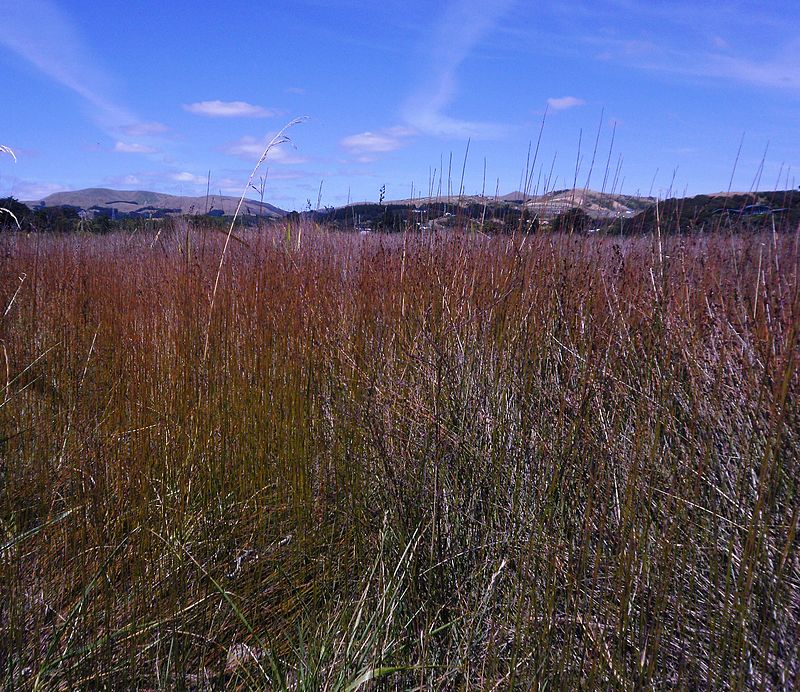
Apodasmia similis
Oi Oi
Description
Source: leafsnapApodasmia similis, also known as oioi or jointed wire rush, is a plant that is endemic to New Zealand. It is a coastal plant but is also found around peat bogs and hot springs. It flowers from October to December and bears fruit from December to March.
Care Guide
💧 Water
Jointed rush, which originates from wetlands, thrives in moist environments and can tolerate waterlogged soils. It needs consistent hydration, so watering it once a week is recommended. Typically found in outdoor settings, jointed rush grows best when its watering schedule is in sync with natural rainfall patterns, promoting optimal growth and health.
☀️ Light Full sun
Jointed rush is a sun-loving, perennial herbaceous species native to open habitats and commonly found in meadows and grasslands. It prefers full sun but can also tolerate partial sun.
What are the sunlight requirements for Jointed Rush?
Jointed rush, or Apodasmia similis, thrives best in locations that offer full sun, which means the plant should receive above 6 hours of sunlight daily. It can also tolerate partial sun conditions, where it gets about 3-6 hours of sunlight. It's important to observe the movement of sunlight through your garden to find spots that provide an ideal balance of light and shade, ensuring the plants grow healthy and happy.
What are some essential care tips for growing Jointed Rush indoors with artificial lighting?
For optimal growth of Jointed Rush indoors, especially when natural sunlight is insufficient, artificial lighting can be a crucial solution. LED lights are recommended due to their ability to be tailored to the specific light wavelengths needed by plants. Full sun plants require 30-50W per square foot of artificial light, while partial sun plants need 20-30W per square foot. The artificial light source should be placed 12-36 inches above the plant, simulating natural sunlight conditions, and most plants will benefit from 8-12 hours of light per day.
What are the signs of light deficiency in Jointed Rush?
Symptoms of light deficiency in Jointed Rush include smaller new leaves, leggy or sparse growth, faster leaf drop, slower or halted new growth, and lighter-colored or irregularly patterned new leaves. Additionally, chlorosis, or the yellowing of leaves due to a breakdown of chlorophyll, can occur, as well as sunscald, which is damage from excessive sunlight exposure, leaf curling as a defense mechanism against too much light, wilting from loss of water through transpiration, and leaf scorching characterized by brown, dry edges on leaves.
How can I address sunlight deficiency in my Jointed Rush?
To address sunlight deficiency in Jointed Rush, gradually increase the plant's exposure to sunlight. For indoor plants, move them to a sunnier spot each week until they receive at least 6 hours of direct sunlight daily, utilizing a south-facing window and keeping curtains open during the day. Artificial lighting, such as desk lamps or professional grow lights, can also supplement light for plants not easily moved. Outdoors, gradually acclimatize your plants to sunnier locations to avoid sunburn. If trees or other structures block sunlight, consider pruning or relocating smaller plants during their dormant period to a sunnier spot with good drainage. It's important to note that parts of the plant affected by insufficient sunlight may not fully recover, but new growth should be healthy once light exposure is improved.
🌡️ Temperature 15–37.8°C
Jointed rush can tolerate a wide range of temperatures, but its distribution may still be constrained by particular combinations of moisture and heat. It does best in warm summer climates with adequate rainfall or watering. Extended periods of cloudy, rainy weather or sustained high temperatures increase the likelihood of Jointed rush dying. In winter, protecting it from cold can improve the plant’s chances of survival.
💨 Humidity
🪴 Soil 5-7
🌱 Fertilizer
Generally, one fertilizer application in spring is adequate for Jointed rush, though several feedings can maximize growth. Fertilize at intervals of about one to one-and-a-half months. Fertilization improves the leaves' appearance and function, helping maintain even color and a healthy texture. It also encourages root development and nutrient uptake, supporting long-term plant health.
🪴 Pot & Repot
✂️ Pruning
Jointed rush has distinctive, reed-like stems that benefit from careful pruning between early and late spring. To promote new growth, improve air circulation, and reduce pest problems, trim up to one-third of the older stems. This encourages healthier and more vigorous growth.
🌿 Propagating
🐛 Diseases & pets
☠️ Toxicity
Characteristics
- Plant Type
- Herb
- Life Cycle
- Perennial
- Genus
- Apodasmia
- Family
- Restionaceae
- Hardiness Zone
- 8-11
- Mature Height
- 1.52 m
- Mature Spread
- 91 cm
- Leaf Color
- Dark Green
- Leaf Type
- Evergreen
- Flower Color
- Red, Brown, Orange
- Bloom Time
- Mid spring, Late spring, Early summer
- Planting Time
- Spring, Summer, Autumn
- Native Area
- New Zealand