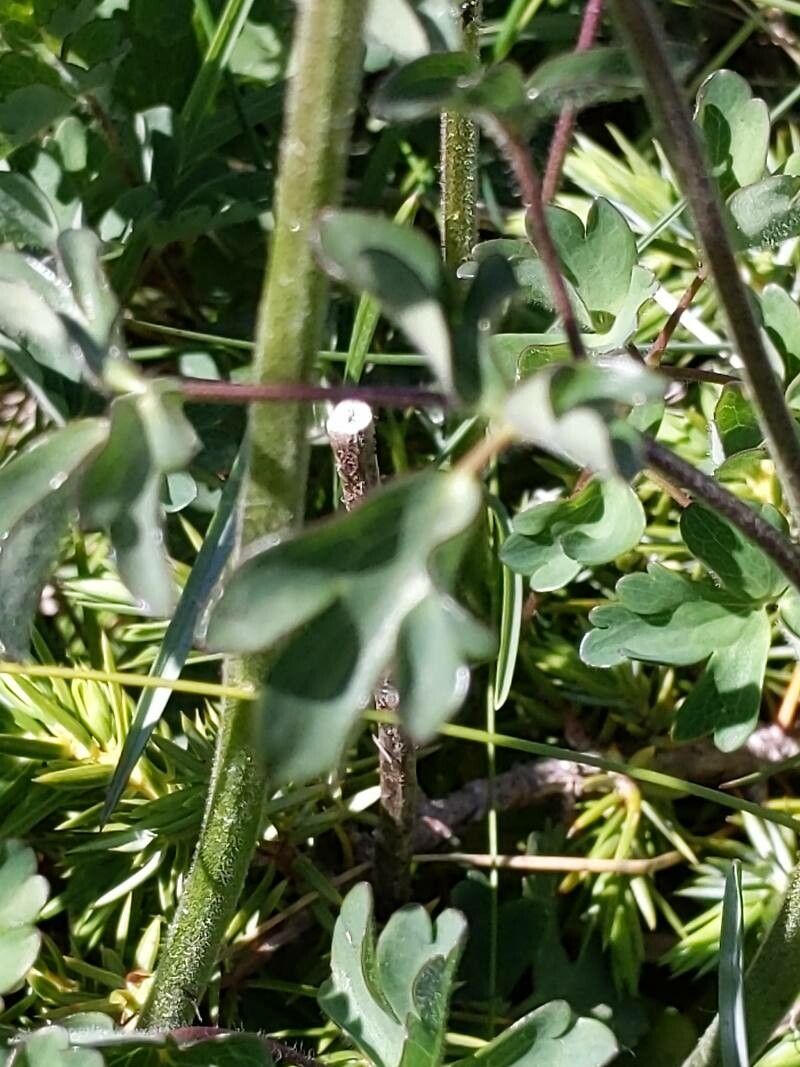
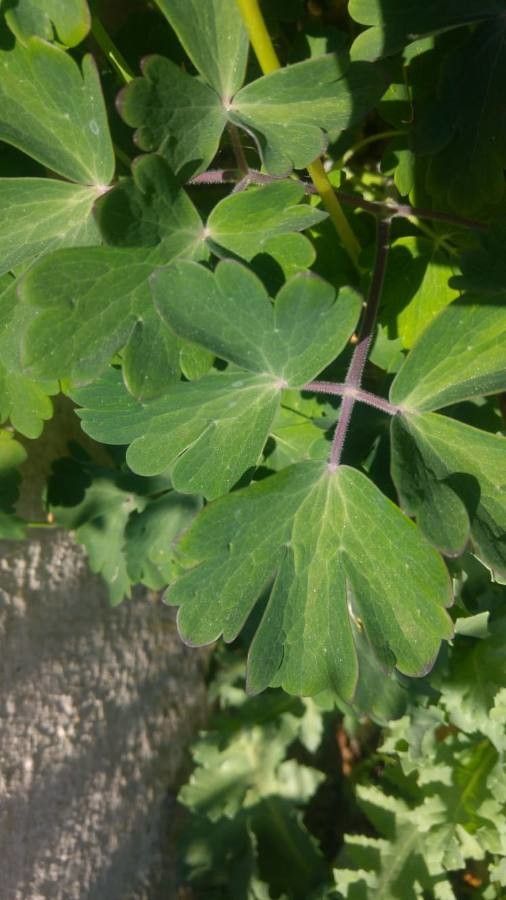
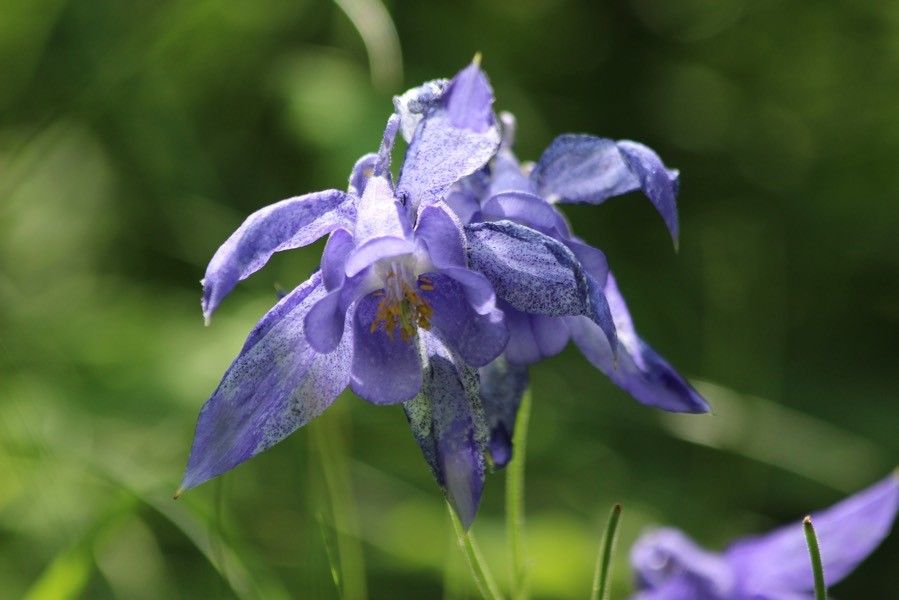
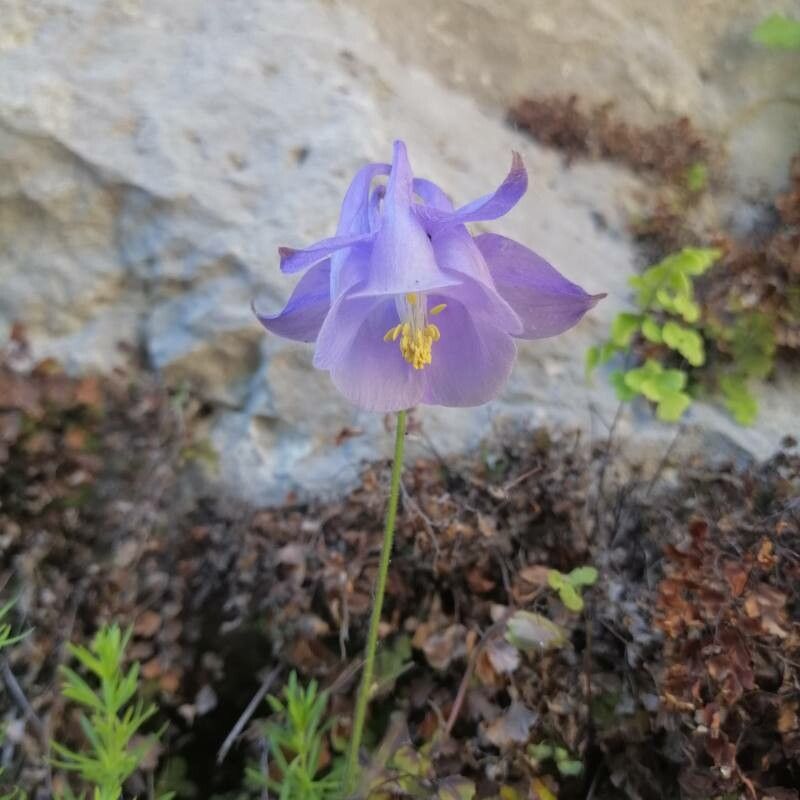
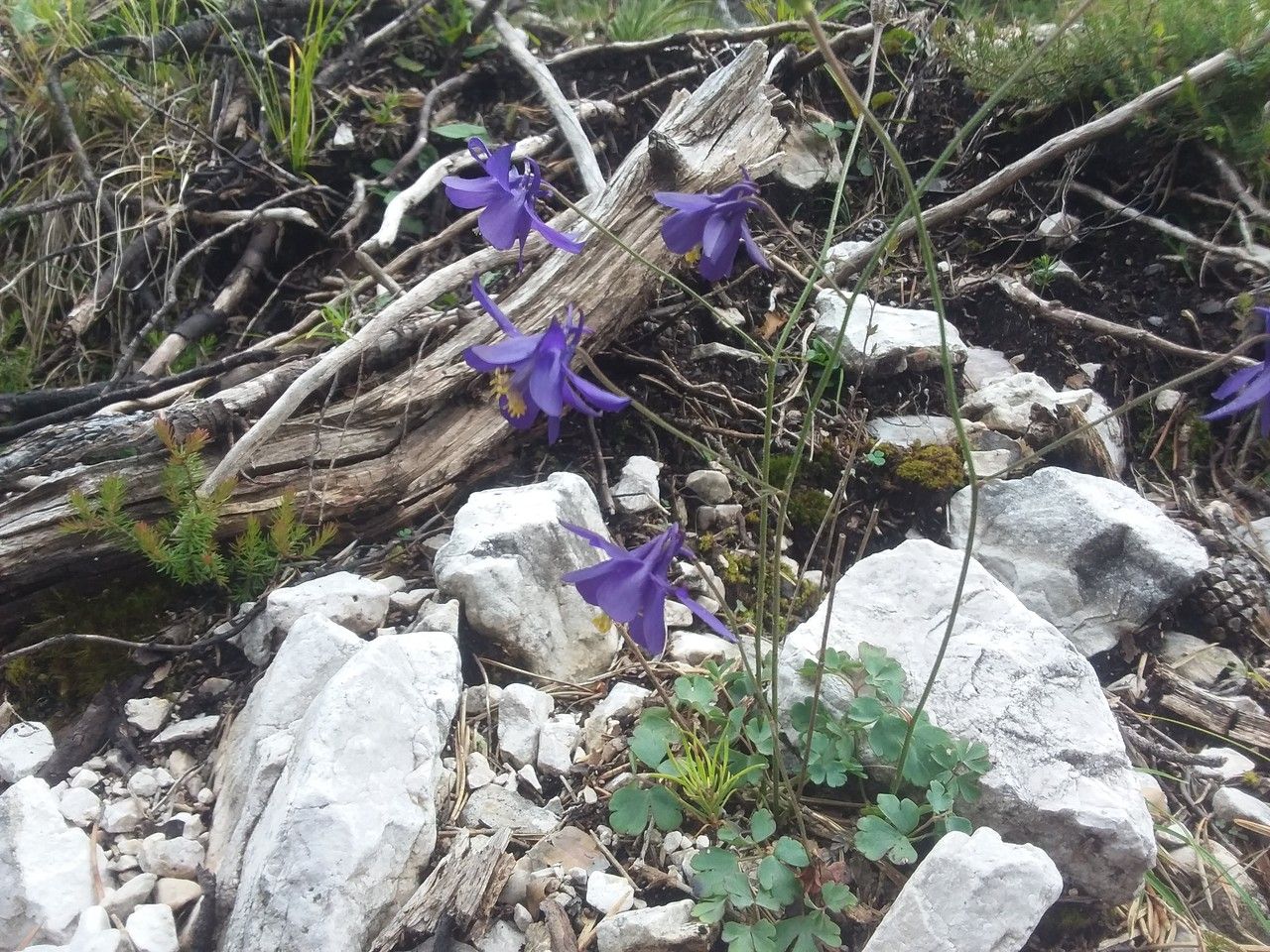
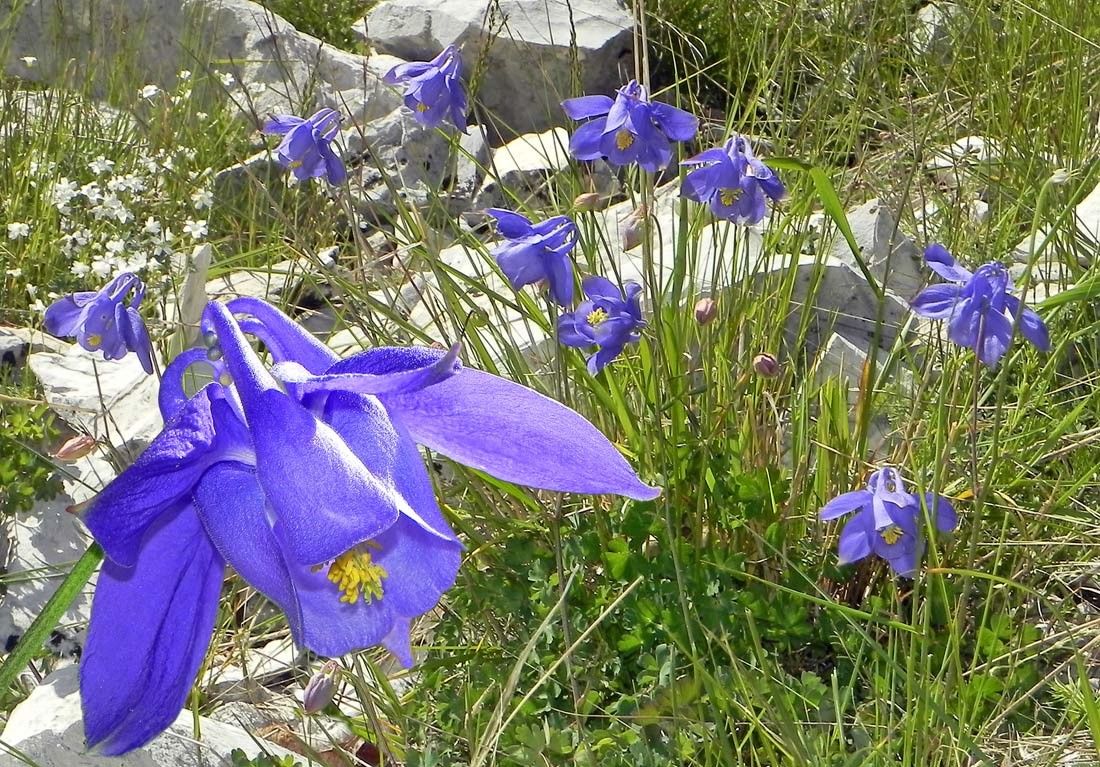
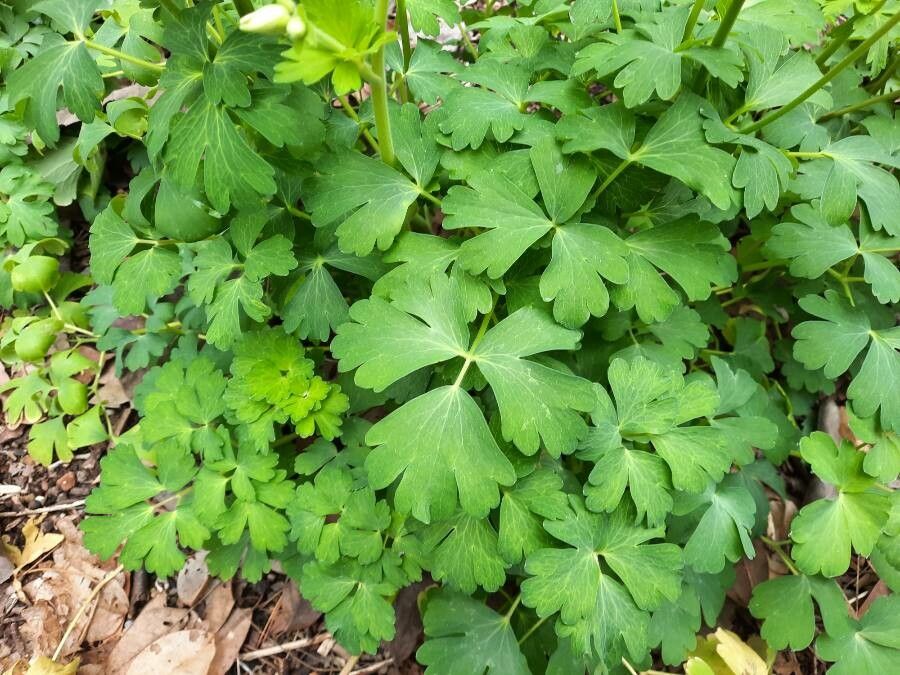
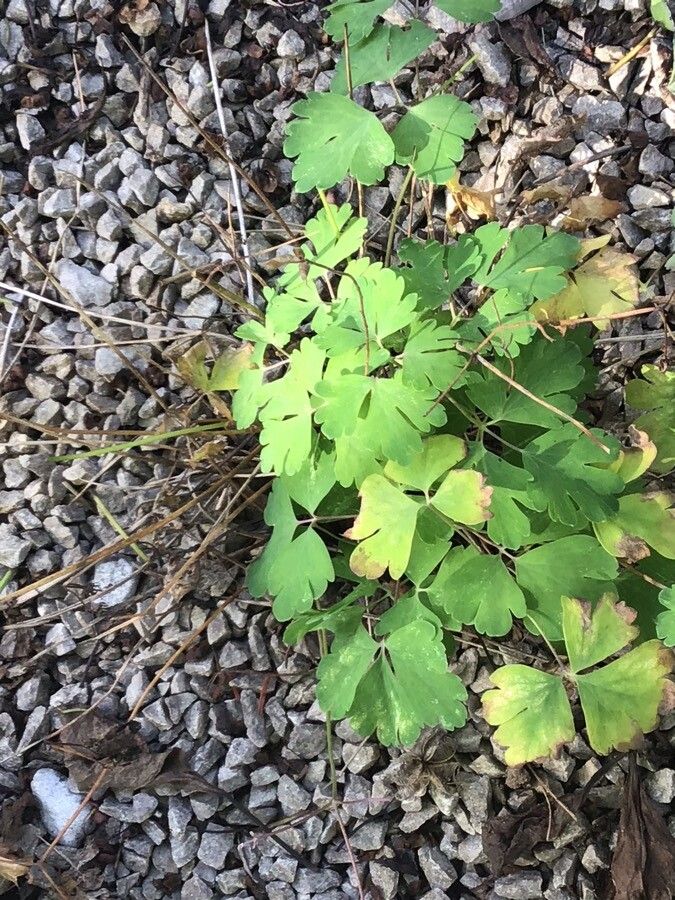
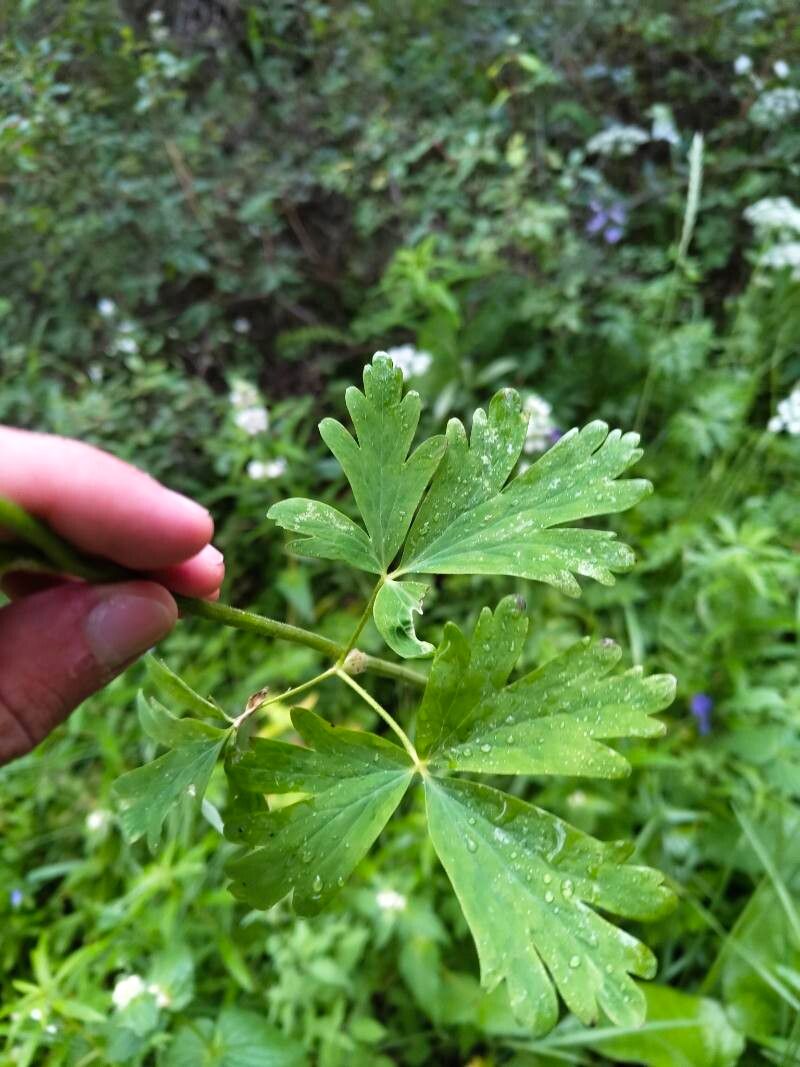
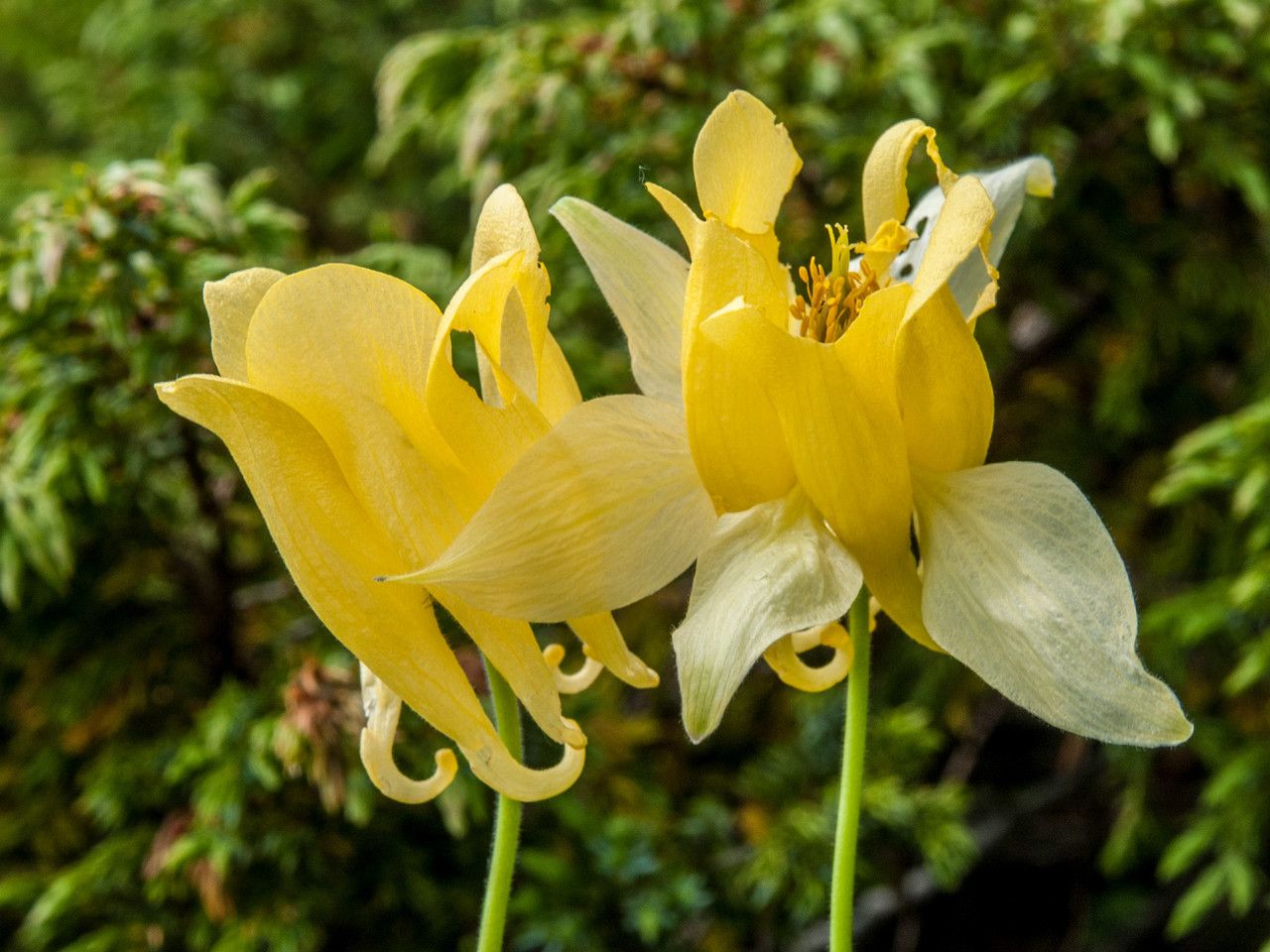
Aquilegia bertolonii, common name Bertoloni columbine, is a species of flowering plant in the family Ranunculaceae, native to Southern France and Italy. Growing to 30 cm (12 in) in height, it is an alpine herbaceous perennial. In early summer each erect stem produces up to four spurred, blue-purple flowers.In cultivation this dwarf columbine is a useful subject for the rockery or alpine garden. It has gained the Royal Horticultural Society's Award of Garden Merit.
Bertoloni's columbine has strong resistance to disease and is generally not prone to illnesses. However, it can be affected by pests and diseases present in its surroundings; these problems are usually mild. For care, the plant requires moderate maintenance. It should be pruned regularly to keep a good appearance and support healthy growth. Fertilizing can also help encourage flowering. Bertoloni's columbine is well suited to anyone with an outdoor area, such as a garden or patio, and does not need extensive care experience. When grown indoors, it may demand more attention.
How to keep Aquilegia Bertolonii.
Light
Bertoloni's columbine is native to habitats like forest understories or rocky areas, where it grows in natural shade. It prefers partial sun but can adjust to full sun or full shade, reflecting its adaptable and hardy nature.
Water
Bertoloni's columbine flourishes in a slightly moist, well-drained environment. It's best to water the plant weekly or whenever the soil feels dry. Given its delicate and fragile structure, be sure to water slowly to prevent over-saturating the plant.
Fertilizer
Usually a single fertilizer application in spring is enough for Bertoloni's columbine, though repeated feedings can boost growth. Fertilize roughly every month to a month and a half. Feeding improves the leaves' appearance and function, helping maintain even color and a healthy texture. It also promotes root development and nutrient uptake for the plant's long-term health.
Pruning
To promote healthy growth of Bertoloni's columbine, begin by pruning dead stems in early spring to enhance airflow. After the flowers bloom, trim away the spent blooms to extend the flowering period. At the end of the season, cut the plant back to ground level to prevent disease and encourage vigorous growth. Regular pruning not only improves the plant's appearance but also reduces the risk of pests.
Botanical profile.
- Plant Type
- Herb
- Life Cycle
- Perennial
- Genus
- Aquilegia
- Family
- Ranunculaceae
- Hardiness Zone
- 3-8
- Mature Height
- 20 cm to 30 cm
- Mature Spread
- 15 cm to 25 cm
- Leaf Color
- Dark Green, Green
- Leaf Type
- Deciduous
- Flower Color
- Lavender, Blue, Purple
- Flower Size
- 3.05 cm to 5.08 cm
- Bloom Time
- Mid spring, Late spring
- Planting Time
- Spring, Summer
- Harvest Time
- Early summer, Mid summer
- Native Area
- Slovenia, Italy, France
Other names.