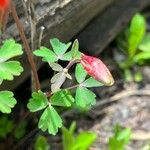
Aquilegia elegantula
Western red columbine
Description
Source: leafsnapAquilegia elegantula is a species of columbine known by the common name western red columbine. It is native to the southwestern United States, particularly the Four Corners states, and northern Mexico, where it grows in moist areas in mountain coniferous forests. It is a rhizomatous perennial herb growing 10 t 60 centimeters tall. The green leaf blades are borne on long, slender petioles and divided into three leaflets which each have rounded lobes along the front edges. The flower has five long petals up to 3 centimeters in length including their elongated, knob-tipped spurs. The petals are bright red in the spurs and lighten to yellow-green or orange at the tips. Between the petals are the oval-shaped sepals, which are reddish to yellowish in color and are held parallel to the petals. Flowers often droop such that the mouth is toward the ground and the spurs point up; the flowers are pollinated by the broad-tailed hummingbird (Selasphorus platycercus).
Care Guide
💧 Water
Western red columbine flourishes in moist conditions and needs consistent hydration with moderate moisture. To promote optimal growth, water it weekly during its active growing season. Make sure the soil stays evenly moist without becoming waterlogged.
☀️ Light Partial sun
Western red columbine is native to habitats such as forest understories and rocky areas, where it grows in natural shade. It prefers partial sun but can adapt to full sun or full shade, demonstrating its versatility and hardiness.
How much sunlight does the Western red columbine require?
The Western red columbine, or Aquilegia elegantula, thrives in areas that receive full sun to partial sun. Full sun locations are those that receive more than 6 hours of sunlight a day, while partial sun areas get about 3-6 hours of sunlight. It's important to monitor the light conditions in your garden carefully to choose the best spots for your plants. This ensures they receive the ideal balance of sunlight and shade, contributing to their health and growth.
🌡️ Temperature 0–32.2°C
💨 Humidity
🪴 Soil 6-7
🌱 Fertilizer
The best time to fertilize a Western red columbine is in early spring, when it is coming out of dormancy and starting active growth. Fertilizing supplies essential nutrients for healthy growth. Although Western red columbine has relatively low fertilizer needs, applying fertilizer annually can improve its survival and promote better, longer-lasting flowers.
🪴 Pot & Repot
✂️ Pruning
Western red columbine is known for its nodding red and yellow flowers. To promote growth and enhance flowering, it's important to prune the plant in early spring. Key pruning techniques include removing dead stems and cutting back spent blooms. Proper pruning improves airflow, reduces the risk of disease, and supports vigorous growth and prolonged blooming periods.
🌿 Propagating
🐛 Diseases & pets
☠️ Toxicity
Characteristics
- Plant Type
- Herb
- Life Cycle
- Perennial
- Genus
- Aquilegia
- Family
- Ranunculaceae
- Hardiness Zone
- 3-8
- Mature Height
- 0 cm to 91 cm
- Mature Spread
- 15 cm to 30 cm
- Leaf Color
- Green, Dark Green
- Leaf Type
- Deciduous
- Flower Color
- Red, Yellow
- Flower Size
- 2.03 cm to 3.05 cm
- Bloom Time
- Mid spring, Late spring
- Planting Time
- Spring
- Harvest Time
- Early summer, Mid summer
- Native Area
- Mexico