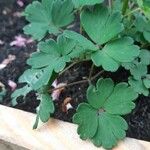
Aquilegia flabellata
Fan columbine · Dwarf Japanese columbine
Description
Source: leafsnapAquilegia flabellata, commonly known as Fan Columbine, is a perennial herbaceous plant in the Ranunculaceae family. Native to Japan, this plant grows to a height of 30-60 cm. It features appealing blue-green foliage and produces delicate flowers that bloom in late spring or early summer. The flowers of Aquilegia flabellata are uniquely shaped, with five petals fused at the base, forming a distinctive spur at the back. The petals come in shades of blue, purple, or white, with yellow centers. This plant prefers well-drained soil and partial shade but can also tolerate full sun if provided with adequate moisture. Its compact size makes it an excellent choice for rock gardens or as an accent plant in borders. Traditional Japanese medicine has utilized Aquilegia flabellata for its anti-inflammatory properties. However, it's important to note that all parts of the plant are toxic if ingested by humans or animals. Overall, Aquilegia flabellata is a visually appealing ornamental perennial that adds color and interest to any garden setting. It also carries some medicinal value when used appropriately under professional guidance.
Care Guide
💧 Water Every 7 days
Fan columbine flourishes in moist environments, needing consistent moisture and stable humidity. To maintain the right balance, water it weekly. This plant is best suited for outdoor growth, where it can benefit from natural rainfall. During its flowering period, pay close attention to irrigation to ensure vibrant blooms.
☀️ Light Partial sun
Fan columbine prefers a place with filtered sunlight, though it can tolerate full sun. Native to areas where light is partially diffused, it thrives at every stage of growth under these lighting conditions. Excessive exposure can damage its health, while too little light can hinder its development.
🌡️ Temperature 0–35°C
Fan columbine can tolerate a wide range of temperatures, but its distribution may still be restricted by particular combinations of moisture and heat. It does best in warm summer climates with sufficient rainfall or watering. Extended periods of cloudy, rainy weather, as well as prolonged high temperatures, can increase the chance that Fan columbine will die. In winter, protecting Fan columbine from severe cold can improve its survival rate.
💨 Humidity
🪴 Soil 6-7
🌱 Fertilizer
The ideal time to fertilize a Fan columbine is in early spring, as it comes out of dormancy and begins active growth. Fertilizing supplies essential nutrients for healthy growth. Although Fan columbine has relatively low fertilizer needs, applying fertilizer annually can enhance its survival and promote better, longer-lasting flowers.
🪴 Pot & Repot
✂️ Pruning
The fan columbine is a low-growing perennial known for its vibrant flowers. To maintain its health and appeal, prune the plant from early to late spring by trimming spent stems and removing any damaged foliage. This will encourage blooming and enhance the plant's vitality.
🌿 Propagating
🐛 Diseases & pets
☠️ Toxicity
Characteristics
- Plant Type
- Herb
- Life Cycle
- Perennial
- Genus
- Aquilegia
- Family
- Ranunculaceae
- Hardiness Zone
- 3-9
- Mature Height
- 30 cm
- Mature Spread
- 15 cm
- Leaf Color
- Green, Blue
- Leaf Type
- Deciduous
- Flower Color
- White
- Flower Size
- 3.05 cm
- Bloom Time
- Mid spring, Late spring, Early summer
- Planting Time
- Spring, Summer, Autumn
- Harvest Time
- Mid summer, Late summer, Early fall
- Native Area
- Russia, Koppen, Japan, China