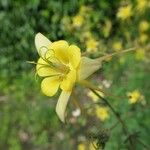
Aquilegia flavescens
Yellow columbine
Description
Source: leafsnapAquilegia flavescens, the yellow columbine, is a wildflower native to mountain meadows, open woods, and alpine slopes of the Rocky Mountains from Utah north to British Columbia and Alberta. The plant grows to 20–70 cm in height. While the most common flower color is yellow, portions of the flowers can also be yellow-pink, raspberry pink, white, and cream.
Care Guide
💧 Water
Yellow columbine flourishes in moist conditions, preferring soil that remains consistently damp with weekly watering. It is usually cultivated outdoors to take advantage of natural rainfall. As a herbaceous perennial, it requires adequate water during the active growing season to ensure vibrant blooms.
☀️ Light Full sun
The yellow columbine primarily prospers in full sunlight, taking in plenty of solar energy for optimal health and growth. It can, however, tolerate and thrive in moderately lit conditions as well. Depending on the habitat, too much exposure may cause it to wilt, while too little light can impede its development.
What are the sunlight requirements for the Yellow Columbine (Aquilegia flavescens)?
The Yellow Columbine thrives best under full sun, requiring more than 6 hours of sunlight daily for optimal health and growth. It can, however, also flourish under partial sun conditions, with about 3-6 hours of sunlight. It's crucial to observe the movement of sunlight through your garden to select areas that offer a balanced exposure to light and shade, ensuring the well-being of your plants. Overexposure can lead to withering, while insufficient light can stunt growth, indicating the importance of finding the perfect sunlight balance for the Yellow Columbine.
What essentials should be considered for growing Yellow Columbine indoors?
For the successful indoor cultivation of Yellow Columbine, adequate lighting is vital, especially when natural sunlight is insufficient. In such cases, artificial lighting becomes necessary to supplement growth, particularly during winter or in less sunny spaces. LED lights are recommended due to their adjustable wavelengths suited to plant needs. Full sun plants require 30-50W/sq ft, partial sun plants need 20-30W/sq ft, and full shade plants need 10-20W/sq ft of artificial light. The light source should be placed 12-36 inches above the plant, mimicking natural sunlight as closely as possible, with 8-12 hours of light per day being ideal for most plants.
What are symptoms of inadequate sunlight exposure in Yellow Columbine?
When Yellow Columbine receives inadequate lighting, several symptoms may indicate light deficiency. These include the development of smaller leaves than previous ones, leggy or sparse growth, accelerated leaf drop, delayed or ceased growth, lighter-colored new leaves, and various signs of distress like chlorosis, sunscald, leaf curling, wilting, and leaf scorching. These symptoms highlight the plant's struggle under poor light conditions, showing both direct consequences, such as reduced chlorophyll and essential nutrient acquisition, and defensive mechanisms like leaf curling to minimize water loss.
How can I address light deficiency symptoms in Yellow Columbine?
To combat symptoms of light deficiency in Yellow Columbine, consider gradually relocating your plants to areas with increased sunlight exposure, aiming for at least 6 hours of direct sunlight daily, especially for indoor plants near south-facing windows. If natural sunlight is inadequate, artificial grow lights can supplement light exposure for at least 8 hours a day. For outdoor plants, a gradual transition to sunnier spots is advised to prevent sunburn. Removing obstructions or transplanting to sunnier locales may be necessary for sufficient sunlight access. Note that parts of the plant already affected might not recover, but new growth should be healthy with improved light conditions.
🌡️ Temperature 5–32.2°C
Yellow columbine originates from temperate areas and prefers temperatures from 41 to 90 °F (5 to 32 ℃). During severe frost or intense heat, the plant should be relocated to maintain optimal growth.
What are the ideal temperature conditions for Yellow Columbine?
Yellow Columbine (Aquilegia flavescens) is native to regions with temperate climates and thrives in temperatures ranging from 41 to 90 °F (5 to 32 °C). It has strong cold resistance, so it usually does not need special frost protection measures during winter. However, for extremely cold winters with temperatures dropping below -30°C, it's important to protect the plant by covering it with soil or straw and ensuring the soil is moist before the first freeze of autumn. This assists in preventing drought and water scarcity during winter and early spring.
How should Yellow Columbine be cared for in low temperature conditions?
Yellow Columbine is cold-tolerant, doing best in temperatures above 5°C and should be kept above -25°C during winter. If temperatures fall below -30°C, there may not be noticeable changes in winter, but it might lead to decreased sprouting or even no sprouting in spring. To manage this, remove any parts of the plant that have failed to sprout in spring.
How does high temperature affect Yellow Columbine and how can it be managed?
In high temperatures, particularly above 32°C, Yellow Columbine may experience stress, with leaves becoming lighter in color, curling, and even getting sunburned in severe cases, leading to wilting and drying out of the plant. To manage this, trim away sunburned and dried parts. Move the plant to a shaded location to protect it from midday and afternoon sun, or use a shade cloth. Watering the plant in the morning and evening will help keep the soil moist and protect the plant in high temperatures.
💨 Humidity
🪴 Soil 6-7
🌱 Fertilizer
For Yellow columbine, the primary time to fertilize is early spring, when flowers are beginning to form. The appropriate fertilizer promotes better blooms and helps Yellow columbine produce attractive flowers. Fertilizing in early spring ensures strong flowering during the season and provides energy for dormant growth phases.
🪴 Pot & Repot
✂️ Pruning
The yellow columbine is adorned with delicate yellow flowers and fern-like leaves. To encourage growth and extend the flowering period, prune the plant in early spring by removing dead stems and spent blooms. Regular pruning helps improve air circulation, reduces the risk of disease, and enhances the plant's vigor and overall appearance.
🌿 Propagating
🐛 Diseases & pets
☠️ Toxicity
Characteristics
- Plant Type
- Herb
- Life Cycle
- Perennial
- Genus
- Aquilegia
- Family
- Ranunculaceae
- Hardiness Zone
- 4-8
- Mature Height
- 30 cm to 76 cm
- Mature Spread
- 20 cm to 40 cm
- Leaf Color
- Green, Dark Green
- Leaf Type
- Deciduous
- Flower Color
- Yellow
- Flower Size
- 1.27 cm to 2.29 cm
- Bloom Time
- Mid spring, Late spring, Early summer
- Planting Time
- Spring, Summer
- Harvest Time
- Mid summer, Late summer, Early fall