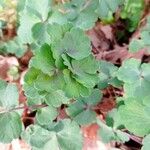
Aquilegia nigricans
Bulgarian Columbine · Columbine · Balkan Columbine · Granny's bonnet · Black Columbine
Description
Source: leafsnapAquilegia nigricans, commonly known as black columbine, is a perennial flowering plant in the Ranunculaceae family. Native to the western United States, it thrives in rocky areas and mountain meadows at elevations of up to 10,000 feet. The plant typically reaches a height of up to 2 feet and features delicate bluish-green foliage. Its distinctive flowers are deep purple-black with bright yellow stamens and bloom from late spring through early summer. Black columbine prefers well-drained soil, moderate moisture levels, and either partial shade or full sun exposure. It can be propagated by seeds or through the division of established plants. Besides its ornamental value in gardens, Aquilegia nigricans has been used medicinally by Native American tribes for its anti-inflammatory properties. However, the plant contains toxic compounds and should not be ingested without proper preparation by a trained herbalist or medical professional.
Care Guide
💧 Water Every 7 days
European crowfoot thrives in damp woodland environments, requiring consistently moist soil without becoming waterlogged. To maintain proper hydration, it should be watered weekly. As an herbaceous perennial, European crowfoot undergoes a period of dormancy, during which watering should be reduced to match its natural growth cycle.
☀️ Light Partial sun
European crowfoot is native to habitats such as forest understories and rocky areas, where it grows in natural shade. It prefers partial sun but can tolerate full sun or full shade, showing that it is versatile and hardy.
What are the sunlight requirements for European Crowfoot (Aquilegia nigricans)?
European Crowfoot (Aquilegia nigricans) thrives in conditions where it can receive varying amounts of sunlight throughout the day. The plant requires 'full sun,' meaning it should get more than 6 hours of sunlight daily, to flourish fully. However, it can also tolerate 'partial sun' conditions, where it would receive about 3-6 hours of sunlight each day. When planning your garden, it's essential to observe how sunlight moves through the area over the course of a day. Selecting the right spots that offer a harmonious balance of light and shade will ensure that your European Crowfoot plants grow healthily and happily.
🌡️ Temperature 0–32.2°C
European crowfoot can tolerate a wide range of temperatures, but its distribution may still be restricted by different combinations of moisture and heat. It does best in warm summer climates with sufficient rainfall or watering. Extended periods of cloudy, rainy weather, as well as prolonged high temperatures, increase the chance of European crowfoot dying. In winter, adequate protection from cold can boost the plant's survival rate.
What is European crowfoot?
European crowfoot, also known by its botanical name, Aquilegia nigricans, is a plant species with no additional specific details provided on its essentials or symptoms. Further research might be required to gather comprehensive information about its characteristics, habitat, and care.
💨 Humidity
🪴 Soil 6-7
🌱 Fertilizer
Early spring, as the European crowfoot comes out of dormancy and begins active growth, is the best time to fertilize. Fertilization supplies essential nutrients for healthy growth. Although European crowfoot has relatively low fertilizer requirements, an annual application can improve its survival and encourage higher-quality, longer-lasting flowers.
🪴 Pot & Repot
✂️ Pruning
The European crowfoot benefits from selective pruning between early and late spring. By removing dead stems and spent flower stalks, you can promote vigorous growth and extend the blooming period. Pruning also improves airflow, reduces the risk of disease, and encourages robust flowering. For optimal results, consult reliable horticultural sources for advice specific to this species.
🌿 Propagating
🐛 Diseases & pets
☠️ Toxicity
Characteristics
- Plant Type
- Herb
- Life Cycle
- Perennial
- Genus
- Aquilegia
- Family
- Ranunculaceae
- Hardiness Zone
- 3-8
- Mature Height
- 30 cm to 61 cm
- Mature Spread
- 20 cm to 30 cm
- Leaf Color
- Dark Green, Forest Green
- Leaf Type
- Deciduous
- Flower Size
- 3.05 cm to 5.08 cm
- Bloom Time
- Mid spring, Late spring, Early summer
- Planting Time
- Spring, Summer
- Harvest Time
- Mid summer, Late summer, Early fall
- Native Area
- Hungary, Austria, Italy, Slovakia, Romania, Montenegro, Bulgaria, Poland, Greece, Croatia, Slovenia, Ukraine, Serbia