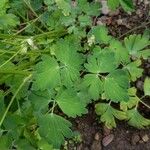
Aquilegia pubescens
Sierra columbine
Description
Source: leafsnapAquilegia pubescens, commonly known as the Sierra columbine, is a perennial herbaceous plant that belongs to the Ranunculaceae family. Native to western North America, it thrives in diverse habitats such as meadows, forests, and rocky slopes. The plant can grow up to 60 cm tall and forms clumps with deeply lobed, fern-like basal leaves. The flowers of Aquilegia pubescens are striking, featuring five petals fused at the base to create a distinctive spur. They bloom in shades of blue-violet or pinkish-red with bright yellow centers from late spring through early summer, attracting pollinators like bees and hummingbirds. This plant is easy to grow, favoring well-drained soil and either partial shade or full sun. It can be propagated by seed or by dividing clumps in early spring or fall. Historically, Native American tribes have used the Sierra columbine for its anti-inflammatory properties. However, it is important to handle the plant carefully, as all parts contain toxic compounds that can cause skin irritation. Overall, Aquilegia pubescens is an attractive addition to any garden due to its unique flower shape and vibrant colors, while also offering ecological benefits by attracting pollinators.
🎭 The symbol of betrayed lovers: ingratitude and faithlessness
Care Guide
💧 Water Every 7 days
Sierra columbine naturally grows in moist environments and thrives in conditions with high humidity. While it prefers consistent moisture, it can withstand moderate drought. For optimal hydration, it should be watered weekly. Typically grown outdoors, Sierra columbine benefits from natural rainfall during its active growing season.
How should I water my Sierra columbine plant?
To properly water the Sierra columbine, it is recommended to use filtered water at room temperature. Tap water should be avoided as it may contain harmful particles. The water temperature should be warm or slightly elevated to match the plant's natural environment. It is best to avoid overhead watering as it can cause issues with the foliage. Instead, pour the filtered room temperature water directly onto the soil until it is fully saturated. This helps moisten the roots and supports their growth and nutrient absorption.
What do I do if I give my Sierra columbine too much or too little water?
Overwatering and underwatering can harm your Sierra columbine, but overwatering is more common. Too much water causes wilting and yellowing of the stems and leaves. It can also lead to root rot, mold, and mildew, which are deadly for the plant. Underwatering is less likely, as this species can tolerate drought. If underwatering occurs, the leaves become brittle and brown. To care for your Sierra columbine, it's important to recognize the signs of overwatering early. Some diseases caused by overwatering, like root rot, may be irreversible if left untreated. If you notice early signs, reduce the watering schedule and check the quality of the soil. Replace poorly draining soil with a loose, well-draining potting mix. If your Sierra columbine lacks water, simply increase the frequency of watering until the signs subside.
How often should I give water to my Sierra columbine?
If your Sierra columbine is in a pot, the most accurate way to determine if it needs water is to stick your finger in the soil. If you find that the top two to three inches of soil are dry, then it's time to water it. If your Sierra columbine is planted outside in the ground, you can use a similar method to check the soil. Once again, if the top few inches of soil have dried out, then it's time to water. Typically, during the spring and early fall, watering once a week is sufficient using this method. However, during very hot weather, you may need to water twice a week or even more frequently. Nevertheless, mature and well-established Sierra columbines have an impressive ability to tolerate drought.
How much water does my Sierra columbine plant need?
When watering your Sierra columbine, it's important to give it a generous amount of water. Make sure the top two to three inches of soil are dry before watering. Water the plant thoroughly, making sure the soil is completely soaked. You'll know you've added enough water when you see excess water draining out of the pot's drainage holes. If there is no excess water draining, you have likely not watered enough. However, be careful not to let water accumulate inside the soil, as this can harm the plant. If there is a lack of water draining from the pot, it may indicate poorly draining soil, which is harmful to the plant's health. For outdoor plants, one inch of rain per week is sufficient.
How do I water my Sierra columbine when it is growing at different stages?
The water needs of the Sierra columbine vary depending on its growth stages. When the plant is young or recently transplanted, it requires more water because it is focused on developing roots for future growth. After a few seasons, the water needs decrease. Additionally, during the bloom period, the plant requires more water to support flower development.
☀️ Light Full sun
Sierra columbine grows best in bright light but can also tolerate somewhat shadier conditions. Light is essential for the plant's healthy growth and its various stages of development. Because it comes from habitats with abundant sunlight, both excessive and insufficient exposure can harm the plant.
What are the sunlight requirements for Sierra columbine?
Sierra columbine requires full sun exposure of above 6 hours of sunlight daily for optimal growth, but it can also thrive in partial sun conditions with about 3-6 hours of sunlight. It's essential to observe the movement of sunlight through your garden to select spots that offer a good balance of light and shade, ensuring the plant's well-being.
How essential is sunlight for the growth of Sierra columbine?
Sunlight is crucial for the growth and development stages of Sierra columbine. Originating from environments with abundant sunlight, the plant thrives best under ample illumination but can tolerate somewhat lighter environments. Both overexposure and underexposure to sunlight can harm the plant, highlighting the importance of finding the perfect lighting balance.
How can artificial lighting be utilized for Sierra columbine?
Indoor Sierra columbine plants require adequate lighting to grow optimally, especially when natural sunlight is insufficient, such as during winter or in less sunny spaces. Using artificial lights like LED lights, which can provide specific wavelengths needed by the plant, is beneficial. Full sun plants need 30-50W/sq ft, partial sun plants 20-30W/sq ft, and full shade plants 10-20W/sq ft of artificial light. The light source should be placed 12-36 inches above the plant for 8-12 hours per day to mimic natural daylight conditions.
What are the symptoms of improper lighting for Sierra columbine?
Sierra columbine exhibits several symptoms when exposed to inadequate lighting, including smaller new leaves, leggy or sparse growth, faster leaf drop, slower or halted growth, and lighter-colored new leaves. Excessive sunlight can cause chlorosis, sunscald, leaf curling, wilting, and leaf scorching. These symptoms underline the importance of providing the plant with the right amount of sunlight.
What solutions are available for managing Sierra columbine's light exposure?
To optimize Sierra columbine's light exposure, gradually acclimate the plant to more sunlight, aiming for at least 6 hours of direct sunlight daily. This can involve moving the plant closer to a south-facing window or providing artificial light for indoor plants. When dealing with outdoor plants, avoid sudden changes to prevent sunburn. Prune surrounding vegetation to reduce shade if necessary. For ground plantings, consider transplanting to sunnier locations during the plant's dormant period for better sun exposure. Though parts of the plant that have suffered from light deficiency may not recover, new growth should be healthy with proper light adjustments.
🌡️ Temperature 5–32.2°C
Sierra columbine naturally occurs in habitats with temperatures between 41 and 89.6 °F (5 to 32 °C). It prefers temperate climates, tolerates seasonal temperature changes fairly well, and is best planted in spring.
What is Sierra columbine and where is it native to?
Sierra columbine, scientifically known as Aquilegia pubescens, is native to environments that experience temperatures ranging from 41 to 89.6 °F (5 to 32°C). It thrives in a temperate climate and is well-adjusted to seasonal temperature changes, favoring spring planting. Sierra columbine exhibits strong cold resistance, indicating that it typically does not require special frost protection measures during winter. However, in conditions where winter temperatures are expected to fall below its growth temperature limit, it is essential to provide adequate cold protection to ensure the plant's health and survival.
How should Sierra columbine be cared for during winter?
For Sierra columbine, to ensure its well-being during winter, especially if temperatures are predicted to drop below its growth temperature limit, it is advised to implement cold protection strategies. This can involve covering the plant with insulating materials such as soil or straw. Additionally, it's recommended to water the plant abundantly before the first freeze in autumn. Keeping the soil moist allows it to enter a frozen state prepared, which helps prevent drought and ensures water availability for the plant during the winter and early spring months.
What are the symptoms of Sierra columbine being exposed to temperatures too low or too high for its tolerance, and how can they be managed?
Sierra columbine shows remarkable cold tolerance, but it should be kept above its minimum tolerable growing temperature during winter to avoid adverse effects. Exposure to temperatures below its growth limit may not manifest noticeable changes immediately, but could lead to a decrease in sprouting or a complete absence of it in spring. In such cases, pruning any parts that failed to sprout in spring is recommended. Conversely, during summer, it's crucial to ensure that the plant remains below its maximum suitable growth temperature to prevent the leaves from becoming lighter, curling, getting sunburned, or in severe cases, leading the entire plant to wilt and dry out. Providing shade during the intense midday and afternoon sun, trimming away damaged parts, and keeping the soil moist with morning and evening watering are effective strategies to manage high temperature stress.
💨 Humidity
🪴 Soil 5-7
🌱 Fertilizer
For Sierra columbine, the primary time to fertilize is in early spring when flowers are forming. The correct fertilizer promotes improved blooms and helps Sierra columbine produce lovely flowers. Fertilizing in early spring ensures excellent flowers during the season and supplies energy for dormant growth phases.
🪴 Pot & Repot
✂️ Pruning
To ensure the healthy growth and vibrant blooming of Sierra columbine, it's best to prune it from early to late spring. Focus on removing dead stems and spent flowers during this time. Rather than making heavy cuts, aim to maintain the plant's overall shape and health. Always use clean tools, and be sure to prune according to the appropriate season for the best results.
🌿 Propagating
🐛 Diseases & pets
☠️ Toxicity
Characteristics
- Plant Type
- Herb
- Life Cycle
- Perennial
- Genus
- Aquilegia
- Family
- Ranunculaceae
- Hardiness Zone
- 4-8
- Mature Height
- 49 cm
- Mature Spread
- 30 cm to 91 cm
- Leaf Color
- Green, Light Green
- Leaf Type
- Semi-evergreen
- Flower Color
- White
- Flower Size
- 5.08 cm
- Bloom Time
- Late spring, Early summer
- Planting Time
- Spring, Summer
- Harvest Time
- Mid summer, Late summer