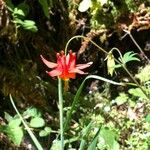
Aquilegia shockleyi
Wild Columbine
Description
Source: wikipedia (CC BY-SA)Aquilegia shockleyi, commonly known as Shockley's columbine, the Mojave columbine, and the desert columbine, is a species of perennial flowering plant of the genus Aquilegia (columbine) in the family Ranunculaceae. It is native to southern Nevada and southeastern California in the United States, where it congregates around wet areas.
🎭 The symbol of betrayed lovers: ingratitude and faithlessness
Care Guide
💧 Water
☀️ Light Full sun
Crimson Columbine grows best in locations that receive sunlight for most of the day, although it can tolerate places with some partial shade. In its natural range it inhabits bright, open areas. Insufficient or excessive sunlight can cause it to develop and grow poorly.
🌡️ Temperature 0–32.2°C
Crimson Columbine is native to regions where temperatures usually range from 32 to 90 °F (0 to 32 °C). It does best under those conditions. As the seasons change, it may require monitoring, particularly if temperatures become too low or too high.
💨 Humidity
🪴 Soil 5-7
🌱 Fertilizer
The best time to fertilize a Crimson Columbine is in early spring, as it breaks dormancy and starts active growth. Fertilization supplies essential nutrients needed for healthy development. Although Crimson Columbine requires relatively little fertilizer, applying it annually can improve its survival and encourage better, longer-lasting blooms.
🪴 Pot & Repot
✂️ Pruning
🌿 Propagating
🐛 Diseases & pets
☠️ Toxicity
Characteristics
- Plant Type
- Herb
- Life Cycle
- Perennial
- Genus
- Aquilegia
- Family
- Ranunculaceae
- Hardiness Zone
- 3-7
- Mature Height
- 0.2 m to 1.22 m
- Mature Spread
- 20 cm
- Leaf Color
- Green, Blue
- Leaf Type
- Deciduous
- Flower Color
- Red, Yellow
- Flower Size
- 2.54 cm to 5.08 cm
- Bloom Time
- Late spring, Early summer, Mid summer
- Planting Time
- Spring, Summer, Autumn
- Harvest Time
- Early summer, Mid summer
- Native Area
- Mexico