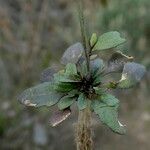
Arabidopsis thaliana
رشادی گوش موشی · Thale-cress · Mouse-ear cress · Wall cress · Common wall cress
Description
Source: leafsnapArabidopsis thaliana is a small flowering plant belonging to the mustard family (Brassicaceae). It is extensively used as a model organism in plant biology research due to its compact size, short life cycle, and ease of cultivation. Originally native to Europe, Asia, and northwestern Africa, Arabidopsis thaliana has now spread globally. The plant features a rosette of leaves at its base and produces small white or purple flowers. It typically reaches a height of 20-25 cm. Arabidopsis thaliana can thrive in various soil types but prefers well-drained soils with moderate fertility. The plant has been the focus of extensive research thanks to its genetic simplicity compared to other plants. Its genome was sequenced in 2000, making it one of the first plants to achieve this milestone. This genomic information has enabled researchers to explore various aspects of plant biology, such as development, metabolism, stress responses, and interactions with other organisms. Due to its significance as a model organism, Arabidopsis thaliana continues to be widely studied by scientists around the world.
🌳 Mouse-ear cress might not look remarkable at first sight, yet it serves as an overlooked champion in genetic research. It was one of the first plants to have its entire genome sequenced, opening the way for advances in plant genetics and molecular biology. Its short life cycle and easy cultivation make it perfect for laboratory experiments, yielding insights that reach well beyond its modest appearance. These contributions are driving breakthroughs in understanding plant development and gene function, which can lead to improved crop varieties and agricultural practices.
Care Guide
💧 Water Every 7 days
Mouse-ear cress, a plant native to temperate climates, thrives in environments with moderate moisture. To ensure healthy growth, it should be watered weekly to keep the soil moist but not waterlogged. Often cultivated indoors, this plant benefits from controlled humidity levels. As an annual herbaceous plant, proper hydration is essential for its growth cycle and overall development.
How should I water my Mouse-ear cress plant?
To water Mouse-ear cress, you have multiple options. You can use a garden hose with a spray nozzle, a watering can, or any common watering tool. Mouse-ear cress is not picky about the water source and can thrive with rainwater, tap water, or filtered water. Avoid watering this plant from overhead, as it can harm leaves, flowers, and possibly cause disease. A drip irrigation system is often the best choice for watering Mouse-ear cress, as it evenly and directly supplies water to the soil. When growing Mouse-ear cress in a container, use a cup, watering can, or tap to water the plant directly at the soil level.
What should I do if I give my Mouse-ear cress plant too much water or too little water?
To avoid underwatering Mouse-ear cress, simply water it more regularly when you notice it lacks moisture. Overwatering can be more serious, potentially causing diseases and death. To prevent this, choose a suitable location with plenty of sunlight and good drainage. If you overwater potted Mouse-ear cress, consider switching to a new pot with proper drainage and loose soil.
How often do I need to water my Mouse-ear cress plant?
Mouse-ear cress needs regular watering throughout the growing season. In spring, water it once a week. As the season progresses and it becomes warmer, increase watering to two to three times a week. However, do not exceed this frequency as it can harm the plant. It's important to keep the soil moist but not wet, regardless of how often you water. Watering mouse-ear cress in a pot is slightly different. Since pot soil can dry out faster, you may need to water container-grown mouse-ear cress a few times per week, compared to just once per week for an in-ground plant.
How much water does my Mouse-ear cress plant need?
There are a few different ways to figure out how much water to give your Mouse-ear cress. Some gardeners prefer to check the soil's moisture by feel, watering until the top six inches are damp. Alternatively, you can use a fixed amount of water, like around two gallons per week, adjusted for temperature and soil dryness. But be cautious not to overwater if your plant needs less. When growing in a container, you'll need a different method. Water enough to moisten all layers of dry soil, checking with your finger or until you see water draining from the pot.
How do I know if I'm giving enough water to my Mouse-ear cress?
Avoiding overwatering your Mouse-ear cress can be somewhat challenging due to a few reasons. Firstly, these plants have deep roots, so it is necessary to moisten the soil on a weekly basis. However, Mouse-ear cress are highly prone to root rot, which can be caused by excessive watering. Overwatering can also lead to browning of the plant. On the other hand, underwatering is less of a concern as Mouse-ear cress can survive for some time without additional watering. However, if you wait too long, the plant may start to wilt and its leaves may become dry.
☀️ Light Full sun
Mouse-ear cress grows best with abundant sunlight but also tolerates moderate light. It comes from sunny habitats, which boost its photosynthetic efficiency. Its light requirements remain fairly consistent through different growth stages. Intense sunlight is unlikely to cause harm, while too little light slows its growth.
What are the sunlight requirements for Mouse-ear cress?
Mouse-ear cress thrives under conditions of full sun to partial sun, necessitating above 6 hours of sunlight for full sun and about 3-6 hours for partial sun exposure. The plant originates from habitats abundant in sunshine, which enhances its capability for photosynthesis. Throughout its growth stages, the requirements for sunlight do not significantly change. Although excessive sunlight does not typically cause harm, a lack of sufficient light can impede its growth. Pay attention to the movement of sunlight through your garden to ensure you select locations that provide an optimal balance of light and shade for your plants.
How does artificial lighting affect Mouse-ear cress growth indoors?
For indoor Mouse-ear cress plants, especially during winter or in areas with less natural sunlight, artificial lighting serves as an essential substitute. Adequate lighting supports optimal plant growth, with LED lights being a popular choice due to their ability to provide specific light wavelengths needed for photosynthesis. The requirements suggest 30-50W/sq ft for full sun plants, 20-30W/sq ft for partial sun, and 10-20W/sq ft for full shade plants. Position the light source 12-36 inches above the plant to emulate natural sunlight, and ensure the plants receive 8-12 hours of artificial light daily to mimic natural daylight hours, fostering faster and healthier growth.
What symptoms indicate insufficient or excessive sunlight in Mouse-ear cress?
When Mouse-ear cress receives inadequate light, it may display symptoms such as smaller new leaves, leggy or sparse growth, accelerated leaf drop, halted new growth, pale new leaves, and general weakness. Conversely, excessive sunlight can lead to chlorosis (yellowing leaves), sunscald, curling leaves, wilting, and leaf scorching. These symptoms reveal the plant's struggle with either too little or too much sunlight, affecting its health and growth adversely.
What are the solutions for Mouse-ear cress suffering from insufficient or excessive sunlight?
If your Mouse-ear cress is suffering from insufficient sunlight, gradually transition it to a location with more direct sunlight, aiming for at least 6 hours daily. Use south-facing windows for indoor plants and ensure curtains remain open during the day. Artificial lighting, like desk lamps or grow lights, can supplement light for large or immovable plants for at least 8 hours daily. For outdoor plants, acclimatize them to brighter spots weekly to prevent sunburn. Pruning nearby trees or transplanting can also help maximize sunlight exposure. Note that parts of the plant damaged by light deficiency may not recover, but new growth should be healthy with better light conditions.
🌡️ Temperature 0–35°C
Mouse-ear cress originates from habitats where temperatures range from 68 to 95 °F (20 to 35 ℃). It favors warmer climates and tolerates seasonal temperature fluctuations. To promote optimal growth, keep this temperature range year-round.
What is the native environment and optimal temperature range for Mouse-ear cress to grow?
Mouse-ear cress, botanically known as Arabidopsis thaliana, thrives in environments with temperatures ranging from 68 to 95 °F (20 to 35 °C). It is native to warmer climates and adjusts well to seasonal temperature variations. Maintaining this temperature range throughout the year is advised for optimal growth. The plant exhibits strong cold resistance, meaning special frost protection measures are usually not necessary during winter. However, if temperatures are expected to fall below -35°C, providing cold protection by covering the plant with materials such as soil or straw is recommended. Additionally, watering the plant abundantly before the first freeze in autumn helps the soil remain moist through winter and early spring, preventing drought and water scarcity.
How does Mouse-ear cress respond to low temperatures and what measures should be taken?
Mouse-ear cress demonstrates a high level of cold tolerance and performs best when temperatures are maintained above 20°C. During winter, it's important to ensure the temperature remains above 0°C. When temperatures drop below -35°C, Mouse-ear cress may not exhibit immediate changes but could show a decreased ability to sprout or fail to sprout at all come spring. The recommended solution for this is to remove any parts of the plant that have failed to sprout in spring, thus promoting healthier growth.
What are the effects of high temperatures on Mouse-ear cress and how can they be mitigated?
During the summer months, it is crucial to keep the temperature below 35°C for Mouse-ear cress. Exceeding 41°C can lead to the plant's leaves becoming lighter in color, curling, suffering from sunburn, and in severe cases, the entire plant may wilt and dry out. To mitigate these effects, it's advisable to trim away sunburned and dried parts of the plant. Moving the plant to a location with shade during the midday and afternoon sun, or using a shade cloth, can protect it from excessive heat. Additionally, watering the plant in the morning and evening helps maintain soil moisture and supports the plant's health.
💨 Humidity
🪴 Soil 5-7
🌱 Fertilizer
Mouse-ear cress benefits from regular, light applications of fertilizer to encourage healthy leaf growth. Fertilize Mouse-ear cress about once a month throughout the summer. Nitrogen is vital for foliage, and supplying nitrogen-rich sources helps Mouse-ear cress thrive.
🪴 Pot & Repot
When repotting Mouse-ear cress, choose a pot that’s 1–2 inches (2.5–5.1 cm) larger in diameter and has good drainage. Use a well-draining potting mix, and consider adding perlite for extra drainage. Repot in spring or early summer, water thoroughly afterward, and keep it in a shady spot at first.
✂️ Pruning
🌿 Propagating
🐛 Diseases & pets
☠️ Toxicity
Characteristics
- Plant Type
- Herb
- Life Cycle
- Annual, Biennial
- Genus
- Arabidopsis
- Family
- Brassicaceae
- Hardiness Zone
- 3-10
- Mature Height
- 10 cm to 40 cm
- Mature Spread
- 20 cm
- Leaf Color
- Green, Purple
- Leaf Type
- Deciduous
- Flower Color
- White
- Flower Size
- 2.54 cm
- Bloom Time
- Mid spring, Late spring, Early summer
- Planting Time
- Spring, Summer
- Harvest Time
- Late spring, Early summer, Mid summer
- Native Area
- Libya, Turkey, Sweden, India, Slovakia, Montenegro, Pakistan, Slovenia, Morocco, Croatia, Uganda, Tanzania, Belarus, Germany, Ethiopia, Romania, Latvia, Belgium, Portugal, Netherlands, Saudi Arabia, Tunisia, Cyprus, Bulgaria, Ukraine, Lebanon, China, Afghanistan, Syria, Kyrgyzstan, Kazakhstan, Italy, Japan, Mongolia, Finland, Iran, Azerbaijan, Congo (DRC), Somalia, Austria, Eritrea, Kenya, Uzbekistan, Russia, Estonia, South Korea, France, Nepal, Tajikistan, Czech Republic, Sudan, Armenia, Poland, Greece, Serbia, Lithuania, Norway, Spain, Switzerland, Denmark, Bhutan, Albania, Ireland, United Kingdom, Hungary, Algeria, Turkmenistan