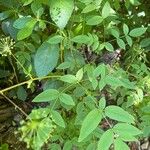
Aralia hispida
Dwarf-elder · Bristly-sarsaparilla · Bristly-spikenard
Description
Source: leafsnapAralia hispida, commonly known as Bristly Sarsaparilla, is a deciduous shrub in the Araliaceae family. Native to North America, it thrives in diverse habitats such as forests, meadows, and rocky slopes. The plant can grow up to 2 meters tall and has a spreading growth habit with multiple stems. The leaves are compound, featuring 5 to 9 ovate leaflets with serrated edges and a dark green color. In the fall, the leaves turn yellow before eventually falling off. Aralia hispida blooms from June to August, producing clusters of small, fragrant white or greenish-yellow flowers at the ends of branches. Following the flowering period, the plant develops small berries that transition from green to black as they ripen. These berries serve as a valuable food source for birds during the winter months. For centuries, Native Americans have used Aralia hispida for its medicinal properties, particularly its anti-inflammatory benefits that help alleviate pain associated with arthritis or rheumatism. Overall, this shrub adds visual appeal to any garden with its unique foliage and beautiful flowers, while also offering ecological benefits by providing food for wildlife during the colder months.
🌳 Bristly Sarsaparilla is an excellent choice for woodland or meadow gardens, offering a unique ornamental touch to beds and borders. It can serve as an accent plant or a striking specimen and, when planted in groups, makes an attractive border. This plant thrives in sandy soils, especially near water features. In spring and summer, it produces showy flowers, followed by striking clusters of berries.
🎭 Affection, Wealth
Care Guide
💧 Water Every 7 days
Bristly Sarsaparilla thrives in well-drained soil with moderate moisture and should be watered weekly. This plant, native to North America, adapts well to temperate climates. However, during its winter dormancy, it requires less water. Therefore, adjusting the watering schedule is crucial for maintaining its optimal health.
How should I water my Bristly Sarsaparilla plant?
When watering the Bristly Sarsaparilla plant, it is important to use filtered water at room temperature. Tap water may have harmful particles, so filtered water is preferred. Furthermore, the water should not be cold as the plant is accustomed to warm environments and cold water may be too much of a shock. It is also recommended to avoid overhead watering, which can cause issues with the foliage. Instead, simply soak the soil with filtered room temperature water until it is completely saturated. This helps to moisten the roots and supports their growth and nutrient absorption.
What do I do if I give my Bristly Sarsaparilla plant too much water or not enough water?
Overwatering is a more common problem than underwatering for Bristly Sarsaparilla plants. When overwatered, the stems and leaves may wilt and turn yellow. Over time, this can lead to diseases like root rot, mold, and mildew, which can be fatal for the plant. Underwatering is less likely, as these plants are somewhat drought-tolerant. However, if underwatering occurs, the leaves may become brittle and brown. It is important to quickly recognize signs of overwatering to prevent irreversible damage. Reduce watering immediately if you notice these signs and consider replacing poorly draining soil with a loose, well-draining potting mix. If signs of underwatering are present, simply water more regularly until the symptoms improve.
How much water does my Bristly Sarsaparilla plant need?
If your Bristly Sarsaparilla plant is in a pot, you can determine if it needs water by checking the soil with your finger. If the top two to three inches of soil are dry, it's time to water it. If you're growing the plant outdoors in the ground, you can use the same method to test the soil. When the top few inches of soil have dried out, it's time to water it. Usually, in spring and early fall, watering once a week is sufficient. However, in extremely hot weather, you may need to water it twice or more per week. Despite this, mature, well-established Bristly Sarsaparilla plants can withstand drought well.
How much water does my Bristly Sarsaparilla plant need?
To properly water your Bristly Sarsaparilla, make sure you don't hold back. Wait until the top two to three inches of soil are dry, then give the plant a good, deep watering. The goal is to wet the soil completely, so add enough water that it flows out of the drainage holes in the bottom of the pot. If you don't see any excess water coming out, it means you haven't watered enough. However, be careful not to let the water collect inside the soil, as this can harm the plant. Similarly, if water doesn't drain properly from the pot, it could mean the soil isn't draining well, which is bad for the plant's health. If the plant is located outside, 1 inch of rainfall per week should be enough.
How do I water my Bristly Sarsaparilla as it grows?
The water needs of the Bristly Sarsaparilla can vary based on its growth stages. When the plant is young or has been recently transplanted, it requires more water than usual. During these stages, the Bristly Sarsaparilla focuses on establishing new roots to support future growth, so it needs additional moisture. As the plant matures, it will require less water. Additionally, during the bloom period, the flower development process requires a significant amount of moisture, so you may need to provide more water at this time.
☀️ Light Full sun
Bristly Sarsaparilla grows best when it gets a generous amount of sunlight each day. However, this resilient plant can tolerate partial sun, showing some flexibility in its light needs. Having come from sun-drenched habitats, it has adapted to accept a certain degree of shade. Too little or too much light can slow its growth or cause the leaves to become discolored.
What are the sunlight requirements for Bristly Sarsaparilla?
Bristly Sarsaparilla thrives best under full sun conditions, which means it requires more than 6 hours of sunlight daily. However, it can also tolerate partial sun, requiring about 3-6 hours of sunlight. This adaptability indicates a light versatility that was developed as the plant evolved from its original, sun-drenched habitats. It's important to monitor the sunlight your garden receives closely and choose spots that offer a good balance of light and shade, ensuring your plants' health and happiness.
How does artificial lighting affect indoor Bristly Sarsaparilla plants?
When natural sunlight is insufficient, especially during winter or in areas that receive less sunlight, artificial lighting becomes essential for the optimal growth of indoor Bristly Sarsaparilla plants. LED lights are recommended because they can be customized to provide specific wavelengths needed for growth. The requirements vary based on the type of plant: full sun plants need 30-50W/sq ft, partial sun plants require 20-30W/sq ft, and full shade plants should have 10-20W/sq ft of artificial light. The light source should be placed 12-36 inches above the plant, mimicking natural sunlight conditions, and most plants need 8-12 hours of light per day to thrive.
What are the symptoms of light deficiency in Bristly Sarsaparilla?
Symptoms of light deficiency in Bristly Sarsaparilla include smaller new leaves compared to mature ones, leggy or sparse growth, faster leaf drop, slower or halted new growth, lighter-colored new leaves indicating a lack of chlorophyll, chlorosis where leaves lose their green color and turn yellow, sunscald marked by pale, bleached, or necrotic areas on the plant, leaf curling as a defense against extreme sunlight to minimize water loss, wilting due to overexposure and increased transpiration, and leaf scorching characterized by brown, dry edges on leaves due to excessive sunlight.
What solutions can mitigate light deficiency symptoms in Bristly Sarsaparilla?
To mitigate light deficiency in Bristly Sarsaparilla, consider gradually moving plants to sunnier locations indoors or outdoors, ensuring at least 6 hours of direct sunlight daily. Use south-facing windows and keep curtains open for maximum sunlight. Artificial lights, such as desk lamps or professional grow lights, can supplement light for larger plants or those not easily moved. Outdoor plants should be acclimatized to prevent sunburn. Reducing obstructions like pruning trees can help, and for smaller plants, consider transplanting during their dormant period to a location with ample sunlight and good drainage. Note that parts of the plant affected by insufficient sunlight may not recover, but new growth will be healthy.
🌡️ Temperature 0–32.2°C
As a seasoned inhabitant of temperate regions, bristly Sarsaparilla prospers in temperatures ranging from 32 to 89.6 °F (0 to 32 °C). Drastic swings in temperature must be avoided for its optimal growth.
What are the ideal temperature conditions for Bristly Sarsaparilla to thrive?
Bristly Sarsaparilla, known botanically as Aralia hispida, is best suited for temperate climates, thriving in temperatures ranging from 32 to 89.6 °F (0 to 32 °C). It is important to maintain steady temperature conditions, as drastic swings can negatively impact the plant's growth. Bristly Sarsaparilla is remarkably cold-tolerant, not requiring extra frost protection. To prepare for winter, it is advisable to water the plant abundantly before the first freeze, ensuring the soil stays moist and freezes, this aids in preventing drought and water scarcity during the colder months.
How does Bristly Sarsaparilla handle low temperature conditions?
Bristly Sarsaparilla is exceptionally cold-tolerant and can withstand winter temperatures down to -35°C. While it may not show noticeable changes over the winter, extremely low temperatures below this threshold could lead to reduced or even absent sprouting in spring. To manage this, it's recommended to remove any parts of the plant that have failed to sprout as spring arrives.
What should be done if Bristly Sarsaparilla is exposed to high temperatures?
Bristly Sarsaparilla struggles in high temperatures, particularly when the mercury rises above 32°C. Its growth may halt under such conditions, and it becomes more prone to rot. If exposed to excessive heat, you should trim away any sunburned or dried-out portions of the plant. Relocate it to a shaded area away from direct midday and afternoon sun or place it under a shade cloth. Also, watering the plant during the cooler morning and evening hours helps keep the soil suitably moist.
💨 Humidity
🪴 Soil 6-7
🌱 Fertilizer
One application of fertilizer in spring is generally enough for Bristly Sarsaparilla, although extra feedings can boost growth. Apply fertilizer about once a month to every six weeks. Fertilizing improves leaf appearance and function, helping keep color even and texture healthy. It also encourages root development and nutrient uptake, supporting the plant’s long-term health.
🪴 Pot & Repot
✂️ Pruning
🌿 Propagating
🐛 Diseases & pets
☠️ Toxicity
Characteristics
- Plant Type
- Herb, Shrub
- Life Cycle
- Perennial
- Genus
- Aralia
- Family
- Araliaceae
- Hardiness Zone
- 3-7
- Mature Height
- 30 cm to 91 cm
- Mature Spread
- 30 cm to 61 cm
- Leaf Color
- Green, Dark Green
- Leaf Type
- Deciduous
- Flower Color
- White
- Flower Size
- 2.54 cm
- Bloom Time
- Early summer, Mid summer
- Planting Time
- Spring, Summer, Winter
- Harvest Time
- Late summer, Early fall