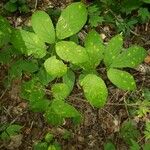
Aralia nudicaulis
Wild sarsaparilla · Virginia-sarsaparilla · Shotbush · American-sarsaparilla · Small-spikenard
Description
Source: leafsnapAralia nudicaulis, commonly known as wild sarsaparilla or false sarsaparilla, is a perennial herbaceous plant native to North America. A member of the Araliaceae family, it can be found in the eastern and central regions of Canada and the United States. Typically, the plant grows to a height of 30-60 cm and features large leaves divided into three leaflets. Its small, greenish-white flowers blossom in clusters at the top of the stem. By late summer or early fall, the plant produces small black berries. The root of Aralia nudicaulis has been used for centuries by indigenous peoples for medicinal purposes, including treating coughs, colds, rheumatism, and skin conditions. Additionally, it has been used as a substitute for sarsaparilla root due to its similar taste. Aralia nudicaulis thrives in shaded areas with moist soil, such as forests or woodlands, but it can also grow well in open fields if sufficient moisture is available. The plant can be propagated through seed germination or by dividing established plants. Overall, Aralia nudicaulis is an intriguing plant with both medicinal uses and ornamental value. Its attractive foliage and berries make it an excellent addition to any garden, where it will thrive under proper conditions.
🌳 Wild sarsaparilla serves an ecological function as a potential larval host plant for certain butterfly and moth species. This often-overlooked role supports biodiversity and highlights the plant's importance for native habitat conservation.
🎭 Affection, Wealth
Care Guide
💧 Water Every 7 days
Wild sarsaparilla, a plant native to North American woodlands, thrives in moist soil and partial sunlight. To maintain its lush foliage, it needs to be watered weekly and does best in humid environments that help retain moisture and support its growth. This hardy perennial is also resilient to short periods of dryness.
How should I water my Wild sarsaparilla?
When watering the Wild sarsaparilla, it is important to use filtered water at room temperature. Tap water may have harmful particles, so filtered water is preferred. The plant is used to a warm environment, so avoid using cold water to prevent shocking the plant. Do not water from above, as it can cause problems with the foliage. Instead, apply filtered room temperature water directly to the soil until it is fully soaked. This will benefit the plant by moistening the roots and helping them spread and collect nutrients in the soil.
If I put too much water or too little water on my Wild sarsaparilla, what should I do?
Overwatering is a common problem for Wild sarsaparilla, while underwatering is less common. When overwatered, the plant's stems and leaves wilt and turn yellow. Overwatering for a long time can also lead to diseases like root rot, mold, and mildew that can kill the plant. On the other hand, underwatering is rare because this plant can tolerate drought. However, when it does happen, the leaves become brittle and brown. It's important to recognize the signs of overwatering early on to prevent irreversible damage. If you notice these signs, reduce your watering schedule and check the soil's drainage. If it doesn't drain well, replace it with a loose, well-draining potting mix. If you see signs of underwatering, simply increase your watering until the signs improve.
How much water does my Wild sarsaparilla need?
If your Wild sarsaparilla plant is in a pot, the best way to determine if it needs water is to check the soil by sticking your finger into it. If the top two to three inches of soil are dry, it's time to water it. If you have your Wild sarsaparilla planted in the ground, you can use the same method. Once again, if the top few inches of soil are dry, it's time to water. Typically, during the spring and early fall, watering once a week is enough. However, during hot weather, you may need to water twice or even more per week. That being said, fully grown and well-established Wild sarsaparilla plants can handle drought quite well.
How much water does my Wild sarsaparilla plant need?
To properly water your Wild sarsaparilla, don't hold back on the amount of water you give. Make sure the top two to three inches of soil are dry before watering. Give it a deep watering, enough to completely saturate the soil. Watch for excess water draining out of the bottom of the pot – this shows you've watered enough. But be careful not to let water build up in the soil, as that can harm the plant. If you don't see enough water draining, it could mean the soil doesn't drain well, which is not good for the plant's health. If the plant is outside, it should receive about 1 inch of rain per week.
How do I water my Wild sarsaparilla at different stages of growth?
The water requirements of Wild sarsaparilla change with different growth stages. During the first few years or when transplanting to a new location, extra water is needed. This is because during these stages, the plant focuses on developing new roots for future growth, which require more moisture. As the plant matures, it requires less water. Another stage that might require increased watering is during the bloom period, as the flowers need a significant amount of moisture.
☀️ Light Full sun
Wild sarsaparilla prefers locations with sunlight present throughout the day, though it can tolerate areas where the sun is occasionally blocked. Plentiful sun supports healthy growth. Conditions that resemble its native habitat, with generous sunlight, are ideal. Heavy shade can limit growth, while extra sun exposure does not harm it.
What are the sunlight requirements for Wild Sarsaparilla?
Wild Sarsaparilla requires full sun, meaning it thrives best in environments that provide more than 6 hours of sunlight daily. However, it can also manage in partial sun, with about 3-6 hours of sunlight. It's essential to watch how sunlight moves through your garden to choose spots that offer the right balance of light and shade, ensuring the plants' health and happiness. This species prefers locations where sunlight is abundant throughout the day, even if there's some intermittent shading. Too much shade can hinder its growth, though it tolerates excessive exposure well.
How can artificial lighting benefit indoor Wild Sarsaparilla plants, and what are the best practices?
Indoor Wild Sarsaparilla plants require adequate lighting for optimal growth, especially when natural sunlight is insufficient. Artificial lights, such as LED, serve as an excellent solution for promoting faster, healthier growth by providing specific wavelengths needed by plants. For full sun plants, 30-50W/sq ft of artificial light is recommended, 20-30W/sq ft for partial sun plants, and 10-20W/sq ft for full shade plants. The light source should be placed 12-36 inches above the plant and kept on for 8-12 hours per day to mimic natural daylight hours.
What are the symptoms of inadequate light exposure in Wild Sarsaparilla?
Symptoms of inadequate light in Wild Sarsaparilla include smaller new leaves compared to older ones, leggy or sparse growth, faster leaf drop, slower or halted new growth, lighter-colored new leaves indicating a lack of chlorophyll, and conditions such as chlorosis, sunscald, leaf curling, wilting, and leaf scorching. These symptoms arise from either too little or too much sunlight exposure, affecting the plant's ability to grow healthily.
What solutions can help manage sunlight exposure for Wild Sarsaparilla?
To optimize sunlight exposure for Wild Sarsaparilla, gradually move plants to sunnier locations to receive at least 6 hours of sunlight daily. For indoor plants, utilize a south-facing window or artificial lighting, like desk or ceiling lamps, for at least 8 hours daily. Outdoor plants also benefit from gradual relocation to sunnier spots to prevent sunburn. If sunlight is obstructed, consider pruning or transplanting during the dormant period to locations with ample sunlight. Note that damaged parts may not recover, but new growth will be healthy with improved light exposure.
🌡️ Temperature 5–35°C
In its native habitat, wild sarsaparilla does best in moderate temperatures of 5 to 35℉ (-15 to 35℃). It favors cooler conditions in winter and can adjust to warmer conditions in summer. In spring and fall, it is important to monitor and regulate temperatures to keep them within its preferred range.
What are the essential growing conditions for wild sarsaparilla?
Wild sarsaparilla thrives in moderate temperatures, favoring a range between 5 to 35°C (-15 to 35°F). It possesses strong cold resistance, thus special frost protection measures are typically not needed, though in temperatures below -30°C, it is advisable to protect the plant with soil or straw coverings. To prepare for winter, it's recommended to water the plant abundantly before the first freeze in autumn to ensure the soil remains moist, helping prevent water scarcity during the colder months.
How does low temperature affect wild sarsaparilla and what are the solutions?
Wild sarsaparilla is cold-tolerant, thriving best when temperatures stay above 5°C. However, during winter, it's important to prevent temperatures from falling below -25°C to avoid damage. Exposure to temperatures below -30°C doesn't show immediate effects but can lead to decreased sprouting or failure to sprout in spring. If this occurs, it is recommended to remove any parts of the plant that have failed to sprout as a solution.
What impact does high temperature have on wild sarsaparilla and how can it be mitigated?
During the summer, it's crucial to keep wild sarsaparilla's temperature below 35°C. Temperatures exceeding 38°C can cause the leaves to lighten, curl, become susceptible to sunburn, and in severe cases, lead to the wilting and drying of the entire plant. To mitigate these issues, trim away the sunburned and dried-up parts. Moving the plant to a shaded location or using a shade cloth to protect it from midday and afternoon sun is beneficial. Ensuring that the plant is watered in the morning and evening will help keep the soil moist and healthy.
💨 Humidity
🪴 Soil 5-7
🌱 Fertilizer
Usually one fertilizer application in spring is enough for Wild sarsaparilla, although repeated feedings can boost growth. Feed about once every month to six weeks. Fertilization improves the leaves' appearance and function, helping maintain an even color and a healthy texture. It also promotes root development and enhances nutrient uptake for the plant's long-term health.
🪴 Pot & Repot
✂️ Pruning
Wild sarsaparilla has broad, compound leaves and clusters of white flowers. To promote healthy growth and enhance its appearance, it is beneficial to prune the plant from early to late spring. This involves removing dead stems and shaping the plant. Pruning helps prevent overcrowding, supports robust development, and reduces the risk of disease throughout the growing season.
🌿 Propagating
🐛 Diseases & pets
☠️ Toxicity
Characteristics
- Plant Type
- Herb
- Life Cycle
- Perennial
- Genus
- Aralia
- Family
- Araliaceae
- Hardiness Zone
- 4-9
- Mature Height
- 30 cm to 61 cm
- Mature Spread
- 30 cm
- Leaf Color
- Green, Yellow, Red, Bronze
- Leaf Type
- Deciduous
- Flower Color
- White
- Flower Size
- 4.06 cm to 5.08 cm
- Bloom Time
- Late spring, Early summer
- Planting Time
- Spring, Summer
- Harvest Time
- Mid summer