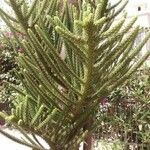
Araucaria heterophylla
حدیث · Norfolk Island pine · Araucaria · Star Pine · House pine
Description
Source: leafsnapAraucaria heterophylla, commonly known as the Norfolk Island Pine, is a tall evergreen tree native to Norfolk Island in the South Pacific. It belongs to the Araucariaceae family and can reach up to 200 feet in its natural habitat. However, when cultivated as a houseplant or in gardens outside its native range, it typically grows to a modest height of 6-8 feet. The tree is easily recognizable due to its distinctive symmetrical shape and tiered branches, which form whorls around the trunk. The leaves are needle-like, ranging from short and sharp to long and soft, depending on their location on the tree. Araucaria heterophylla is popular as an ornamental plant owing to its unique appearance. It thrives in bright but indirect light and requires regular watering—though care should be taken not to overwater, as this can cause root rot. Besides its decorative appeal, Araucaria heterophylla holds cultural significance for some indigenous communities, who use it for medicinal purposes and in traditional ceremonies. In summary, Araucaria heterophylla is a fascinating plant with unique characteristics, making it an interesting addition both indoors and outdoors.
💡 The Norfolk Island pine is a popular gift during the holiday season, often decorated as a miniature Christmas tree. This slow-growing tree can be kept in a container for several years. In Florida, gardeners sometimes plant them outdoors, but they should exercise caution. The Norfolk Island pine is not resistant to strong winds and may be uprooted during tropical storms or hurricanes.
🌳 Although commonly known as an ornamental conifer for homes and gardens, the Norfolk Island pine also serves a distinct role in environmental cleanup. This conifer can absorb toxic metals such as lead and cadmium, thereby purifying the soil. Additionally, its foliage contains undeveloped potential for essential oil production — a promising but still unexplored commercial possibility.
🎭 emblem of Norfolk Island
Care Guide
💧 Water Every 7 days
The Norfolk Island pine, which comes from the humid subtropical climate of Norfolk Island, thrives in consistent moisture and humidity. Water it every 1-2 weeks, allowing the soil to dry out slightly between waterings. Regular misting is beneficial, especially indoors, as it helps maintain the preferred humidity levels.
When Should I Water My Norfolk Island Pine?
Proper watering is crucial for the health and growth of a Norfolk Island Pine. To determine the right time to water, check if the top inch of the soil is dry; this is a clear sign that the plant needs water. Observing the foliage for signs of drooping or a dull appearance can also indicate that the plant requires hydration. Additionally, testing the resilience of the lower branch needles by gently lifting them can show if they're dehydrated, as they may snap off easily. Be wary of overwatering and underwatering, as both can harm the plant. The plant's watering needs increase during warmer seasons or when it receives more sunlight than usual, due to faster evaporation and higher water usage for growth.
How Should I Water My Norfolk Island Pine?
Watering your Norfolk Island Pine correctly involves keeping the soil consistently moist but not waterlogged. Avoid both underwatering and overwatering. Employing the bottom-watering method, where the pot is placed on a tray of water allowing the soil to absorb moisture from the bottom, can be particularly effective. If using a watering can, opt for one with a narrow spout to focus the water at the base of the plant, preventing water from getting on the foliage which could cause fungal diseases. Utilizing a moisture meter can help determine when the plant needs water. After watering, ensure any excess water is drained away to prevent the plant from sitting in water, as overwatering is detrimental.
How Much Water Does Norfolk Island Pine Really Need?
The amount of water required by a Norfolk Island Pine depends on various factors, including pot size, root depth, and plant size. Generally, the soil should be watered until the top few inches are moist, and an average mature plant in a 10-inch pot might need about 1-2 cups of water. Small pots require less water, and larger pots may need more to ensure the soil is adequately moistened. Properly hydrated, the plant will display lush, vibrant foliage and firm, upright stems. Overwatering can lead to symptoms like yellowing foliage or mushy stems, while underwatering can cause the leaves to wilt or become brittle. Always check the moisture level of the soil before watering, ensuring it's not too wet or too dry.
What Kind of Water is Best for Norfolk Island Pine?
Norfolk Island Pine thrives best when watered with rainwater or filtered water, as these are free from harmful elements. Tap water is acceptable if chlorine has been allowed to evaporate, but distilled water is not the most recommended despite the plant's tolerance. Be mindful of chlorine, fluoride, and minerals in tap water, which can negatively affect the plant's health. Letting tap water sit for 24 hours before use can help evaporate chlorine and fluoride. Room temperature water is ideal to avoid shocking the plant's roots or causing damage with hot water. Additionally, maintaining a slightly acidic to neutral pH level (6.1 to 7.0) in the water is beneficial.
How Do Norfolk Island Pine's Watering Needs Change with the Seasons?
With the change of seasons, the watering needs of a Norfolk Island Pine vary. In spring, as the plant awakens from winter dormancy, increase watering but monitor to avoid waterlogging. During summer's peak growth phase, ensure the soil remains moist due to quicker evaporation from heat and increased sunlight exposure. In autumn, reduce watering as growth slows, ensuring the soil is just moist to prevent root rot. Winter calls for minimizing watering to avoid root freezing and rot, especially considering indoor heating can dry out the air. Adjusting watering habits seasonally keeps the plant healthy throughout the year.
☀️ Light Partial sun
The norfolk island pine prefers a moderate amount of sunlight throughout the day and can tolerate both substantial shade and bright, well-lit conditions. It originates from regions where daily sunlight is plentiful, regardless of intensity. Excessive exposure can cause desiccation, while extended underexposure may hinder optimal growth.
What are the sunlight requirements for plants?
Plants require different amounts of sunlight depending on their type. Partial sun plants need about 3-6 hours of sunlight, while full sun or full shade plants require more than 6 hours of sunlight. It's important to observe the movement of sunlight in your garden to find spots that provide the right balance of light and shade, ensuring plants thrive.
How does the Norfolk Island Pine respond to different lighting conditions?
The Norfolk Island Pine, or Araucaria heterophylla, thrives in conditions that offer a fair share of sunlight throughout the day, but it can also withstand considerable shade or well-lit indoor environments. Originating from climates with abundant daily sun, the Norfolk Island Pine can suffer from overexposure leading to desiccation, or underexposure that might impede its optimal growth.
What should I do if natural sunlight is insufficient for my indoor plants?
When natural sunlight is insufficient, especially in winter or less sunny spaces, artificial lighting can be a lifesaver for indoor plants. LED lights are recommended because they can be adjusted to provide specific light wavelengths needed by plants. Full sun plants require 30-50W/sq ft, partial sun plants need 20-30W/sq ft, and full shade plants should get 10-20W/sq ft of artificial light. Ensure the light source is placed 12-36 inches above the plant and mimic natural daylight hours, generally 8-12 hours per day, to promote healthy plant growth.
What are the symptoms of insufficient light in Norfolk Island Pines?
Norfolk Island Pines may exhibit several symptoms when exposed to insufficient light, including slower or halted growth as the plant enters survival mode, leggy or sparse growth with increased distances between leaves or stems, chlorosis or yellowing of leaves from reduced chlorophyll production, sunscald from intense light exposure leading to damaged tissues, leaf curling as a defense mechanism against excessive sunlight, wilting due to increased water loss, and leaf scorching characterized by brown, dry edges on leaves.
How can I improve light conditions for my Norfolk Island Pine?
To optimize light conditions for your Norfolk Island Pine, gradually shift the plant to sunnier spots each week to allow it to adapt to the increased light exposure, aiming for 3-6 hours of direct sunlight daily. For large or immobile plants, consider using artificial lighting like desk or ceiling lamps for at least 8 hours daily, or invest in professional plant grow lights. If relocating outdoor plants, do so gradually to prevent sunburn. Minimize light obstructions by pruning or transplanting smaller plants to sunnier locations ensuring they receive ample sunlight and have good drainage.
🌡️ Temperature 20–37.8°C
The Norfolk Island pine prefers warm conditions and naturally grows in tropical and subtropical regions, which informs its temperature requirements. It can tolerate a wide range of temperatures but favors 68 to 100 ℉ (20 to 38 ℃). In winter it may do better with somewhat cooler conditions, though temperatures should not fall below 50 ℉ (10 ℃).
What are the ideal temperature conditions for Norfolk Island Pine?
The Norfolk Island Pine flourishes in warm temperatures, thriving best in tropical and subtropical environments. Its ideal temperature range lies between 68 to 100°F (20 to 38°C). Even in winter, it's important to maintain temperatures above 50°F (10°C) for the plant's well-being. These plants are extremely sensitive to cold and should be protected by bringing them indoors during autumn to a spot near a bright window, away from direct heat sources. Making sure the temperature stays above 20°C during winter months supports the plant's growth, as temperatures nearing 0°C can be harmful.
How does low temperature affect Norfolk Island Pine and what are the solutions?
Norfolk Island Pine has a low tolerance for cold temperatures, preferring environments above 20°C. Exposure to temperatures below 0°C can be detrimental, and frost can cause leaves to lighten in color before turning brown or black, with wilting and drooping potentially occurring. To manage frost damage, it's advised to trim off affected parts and move the plant to a warm indoor space. Positioning the plant near a south-facing window will ensure it gets enough sunlight, but avoid placing it too close to heaters or air conditioning vents to prevent the air from becoming too dry.
What should I do if my Norfolk Island Pine experiences high temperatures?
During the hotter months, it's crucial to keep the Norfolk Island Pine below 100°F (38°C) as temperatures above 109°F (43°C) can lead to lighter leaf colors and increase the risk of sunburn. If sunburn occurs, trim away the damaged areas and relocate the plant to a spot where it can receive shade during the most intense midday and afternoon sun. Watering the plant in the early morning and evening will help keep the soil adequately moist, providing relief from high temperatures.
💨 Humidity dry (<40%)
This plant prefers dry conditions, so don't mist it. However, watering it less often can also thrive in higher humidity.
🪴 Soil 5-6
🌱 Fertilizer
Norfolk island pine has specific nutrient needs and does not require heavy fertilization. Spring is the best time to fertilize for optimal growth. Supplying nutrients improves its health, increases resistance to pests and diseases, and helps sustain its long lifespan.
Why should I put fertilizer on my Norfolk island pine?
To promote the healthy growth of Norfolk island pine, it is recommended to fertilize it in the spring. Considering the plant's long lifespan, it requires support. Enhancing the soil with nutrients not only improves the plant's overall health, but also helps it resist common pests and diseases that can impede growth and decrease its lifespan.
What is the right time to fertilize my Norfolk island pine?
The growing medium may not always provide enough nutrients for healthy growth, but Norfolk island pine is unique compared to garden annuals and perennials. It doesn't need a lot of extra nutrients, and the ideal time to fertilize it is in the spring, before new growth begins.
When should I not put fertilizer on my Norfolk island pine?
While some plants benefit from monthly or weekly fertilization, the Norfolk Island Pine does not need excessive nutrients. Over-fertilizing can actually cause it to deteriorate. It is best to only apply fertilizer in the spring and refrain from doing so in the summer, fall, and winter. Additionally, avoid adding any fertilizer or organic matter to the soil during those seasons.
What kind of plant food does my Norfolk island pine need?
The age of your plant affects the fertilizer you should use. Keep in mind that Norfolk island pine doesn't need much extra nutrients. Look for a balanced plant food that promotes healthy root development and growth, avoiding fertilizers with high nitrogen contents.
How should I fertilize my Norfolk island pine tree?
To properly fertilize Norfolk island pine, it is crucial to understand the timing and technique. In the spring, apply the fertilizer at the base of the plant. Be careful not to get any fertilizer on the trunk. If using granulated fertilizer, cover the pellets with a thin layer of soil to ensure absorption into the soil.
🪴 Pot & Repot 2-3 years
When repotting a Norfolk island pine, select a pot 1–2 inches (2.5–5.1 cm) larger with ample drainage. Use a well-draining potting mix. Repot in spring or fall, making sure the root ball sits slightly lower than the rim of the flower pot. Water thoroughly after repotting and place it in a warm spot with indirect sunlight.
✂️ Pruning
The Norfolk Island pine is an evergreen conifer with a symmetrical shape and soft, needle-like leaves. For best results, prune it between early and late winter, concentrating on removing any dead branches. Light trimming promotes density and improves air circulation. Be careful to avoid heavy pruning, as this can stress the plant due to its slow growth rate.
🌿 Propagating
🐛 Diseases & pets
☠️ Toxicity
The Norfolk Island Pine is considered mildly toxic to dogs and cats when ingested. Your pet may experience nausea, abdominal pain, vomiting, diarrhea, and lethargy.
Characteristics
- Plant Type
- Tree
- Life Cycle
- Perennial
- Genus
- Araucaria
- Family
- Araucariaceae
- Hardiness Zone
- 9-11
- Mature Height
- 49.99 m to 64.92 m
- Mature Spread
- 6.1 m to 7.62 m
- Leaf Color
- Green
- Leaf Type
- Evergreen
- Flower Color
- Green, Red, Brown
- Bloom Time
- Late winter, Early spring, Mid spring
- Planting Time
- Spring, Autumn
- Harvest Time
- All year round
- Native Area
- Norfolk Island in the Pacific