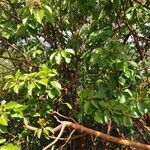
Arbutus andrachne
Greek Strawberry-tree · Eastern Strawberry-tree · Oriental strawberry tree · Cyprus strawberry tree · Medronho tree
Description
Source: leafsnapArbutus andrachne, commonly known as the Greek strawberry tree, is a small evergreen tree or shrub from the Ericaceae family. It is native to the Mediterranean region, thriving in countries such as Greece, Turkey, and Cyprus. The Greek strawberry tree typically grows up to 10 meters tall, although it generally remains smaller when cultivated. It features a dense crown of glossy, oval-shaped green leaves with serrated edges. The bark is smooth and reddish-brown, adding to its visual appeal. From October to December, the tree produces small white or pinkish bell-shaped flowers. These blossoms give way to round red berries that resemble strawberries, although they are not edible for humans. Arbutus andrachne prefers well-drained soils with moderate moisture levels but can tolerate drought once established. It thrives in full sun but can also grow in partial shade. This plant is popular for ornamental purposes due to its attractive foliage, bark texture, flowers, and fruit. Its hardwood is also utilized in making furniture. In traditional medicine practices in Greece, Turkey, and Cyprus, the leaves of Arbutus andrachne are used to treat ailments such as coughs, colds, and digestive issues due to their anti-inflammatory properties. Additionally, some studies have found that the fruit extract may have anti-cancer properties. Overall, the Arbutus andrachne plant serves both ornamental and medicinal purposes, making it a valuable species within its native range.
Care Guide
💧 Water Every 7 days
The Greek strawberry tree thrives in the dry Mediterranean climate, demonstrating high drought tolerance. It is best to water the tree every 2 to 3 weeks, and it prefers well-drained soil to prevent waterlogging. As an evergreen, the Greek strawberry tree retains its leaves year-round, which helps conserve water.
How should I water my Greek strawberry-tree?
Your Greek strawberry-tree is not picky about how you water it. You can use any common watering tool, such as watering cans, hoses, or cups. It's best to water the soil directly, making sure to evenly moisten all areas to provide water to the entire root system. Using filtered water is recommended to avoid harmful particles in tap water. Additionally, using water that is at or slightly above room temperature is beneficial to prevent shocking the plant. However, the Greek strawberry-tree generally responds well to any water given to it.
What should I do if I give my Greek strawberry-tree too much or too little water?
When planting outdoor plants, especially new ones or seedlings, it's important to ensure they receive enough water. This is particularly crucial for a few months while the tree is still small or has just been planted. Once the roots are established, the Greek strawberry-tree can rely on rainfall most of the time. When growing a Greek strawberry-tree in a pot, be cautious not to overwater it. In case of accidental overwatering, take immediate action to fix the situation. First, stop watering the plant right away to minimize the impact of overwatering. Next, remove the Greek strawberry-tree from its pot and inspect the roots. If none of the roots show signs of root rot, you can return the plant to its container. However, if there are signs of root rot, trim away the affected roots and consider applying a fungicide to prevent further damage. Finally, repot the Greek strawberry-tree in well-draining soil. On the other hand, if the Greek strawberry-tree is underwatered, it's a simple fix. Water the plant more frequently if you notice the leaves drooping, drying out, or falling off. The leaves will quickly regain their fullness with sufficient watering, so adjust your watering frequency accordingly.
How frequently should I give water to my Greek strawberry-tree?
If your area lacks rainfall, it's important to give your outdoor plants adequate watering. During the spring and fall, water every 2 weeks. In the summer, more frequent watering is needed. In the slower growth period of winter, water sparingly or not at all. Young or newly planted plants, like the Greek strawberry-tree, need more frequent watering to help establish themselves and become drought tolerant. For potted plants, there are two ways to determine watering frequency for the Greek strawberry-tree. The first is a predetermined schedule of once every week or once every other week. However, this may not account for unique growing conditions. Watering frequency can also change depending on the season, with higher needs during summer. Another approach is to check soil moisture and water when the top two to four inches have dried out completely.
How much water does my strawberry-tree from Greece need?
When watering your Greek strawberry-tree, you might be surprised to learn that it doesn't always require a lot of water. Instead, if only a few inches of soil have dried since the last watering, you can support healthy growth by giving it about five to ten ounces of water. You can also determine the amount of water based on the moisture content of the soil. To make sure your Greek strawberry-tree is adequately hydrated, water enough to moisten all the dry soil layers since the last watering. If more than half of the soil is dry, you should consider giving more water than usual. In such cases, continue watering until you see excess water draining from the pot's drainage holes. If your Greek strawberry-tree is planted in a location that receives sufficient rain, it may not require additional watering. When the tree is young or newly planted, ensure it receives 1-2 inches of rain per week. As it grows and establishes itself, it can rely solely on rainwater, except during hot weather with no rainfall for 2-3 weeks. In such cases, provide a full watering to prevent the tree from experiencing stress.
How do I know if I am giving enough water to my Greek strawberry-tree?
The Greek strawberry-tree commonly faces issues with overwatering. There are noticeable signs that indicate overwatering, such as yellowing leaves and leaf drop. Overwatering can also cause the plant's structure to shrink and lead to root rot. Conversely, an underwatered Greek strawberry-tree will also start to droop and may have brown or brittle leaves. Regardless of whether you see signs of overwatering or underwatering, it's important to take action and restore the plant's health.
☀️ Light Full sun
The greek strawberry-tree does best in places with strong, unobstructed sunlight, which promotes healthier growth. Originating from areas that are continuously sunlit, the greek strawberry-tree can tolerate environments with no shade at all. Too little light may limit its development, while too much can scorch the leaves.
What are the sunlight requirements for a Greek strawberry-tree?
The Greek strawberry-tree thrives in environments that provide significant and unobstructed exposure to sunlight, originating from habitats that are constantly bathed in sunshine. For optimal growth, it requires above 6 hours of sunlight daily. However, it's essential to observe how sunlight moves through your garden and select spots that offer a balance of light and shade, ensuring the plant's happiness and preventing issues related to both insufficient and excessive light exposure.
How do you compensate for insufficient natural light for Greek strawberry-trees indoors?
When natural sunlight is insufficient indoors, especially during winter or in less sunny spaces, artificial lighting can be essential for the growth of Greek strawberry-trees. It's advisable to choose the right type of artificial light, such as LED lights, which can provide specific wavelengths needed by your plants. The ideal artificial light intensity is 30-50W/sq ft for full sun plants. Additionally, the light source should be placed 12-36 inches above the plant, mimicking natural sunlight conditions for a duration of 8-12 hours per day to promote faster, healthier growth.
What are the key symptoms of inadequate lighting for Greek strawberry-trees?
Greek strawberry-trees may show symptoms like small or lighter-colored new leaves, leggy or sparse growth, faster leaf drop, and slower or no new growth when exposed to suboptimal lighting. Conditions like chlorosis and leaf scorch may occur due to excessive sunlight, while leaf curling, wilting, and sunscald can result from intense sun exposure. These symptoms indicate the plant's inability to photosynthesize effectively, affecting overall health and growth.
What solutions can be implemented to address lighting issues for Greek strawberry-trees?
To address lighting issues, gradually acclimate your Greek strawberry-tree to receive at least 6 hours of direct sunlight daily by moving it closer to a sunnier location each week. For indoor plants, ensure ample sunlight exposure through south-facing windows or use artificial light sources, such as professional grow lights for at least 8 hours daily. For outdoor plants, minimize obstructions or transplant in early spring to sunlight-rich locations. Note that some parts of the plant affected by inadequate light may not recover, but new growth will be healthy with improved lighting.
🌡️ Temperature 15–35°C
The Greek strawberry-tree adapts well to temperature, tolerating higher heat and broader temperature fluctuations. In hot weather, care should be taken with watering and providing adequate shade to prevent sunburn. Conversely, the Greek strawberry-tree is relatively sensitive to cold; while it can endure some chill, excessively low temperatures may result in frost damage.
💨 Humidity
🪴 Soil 6-7
🌱 Fertilizer
Timing is important when fertilizing the Greek strawberry-tree. Apply fertilizer in early spring and continue monthly up to early summer. Fertilizer encourages lovely blooms and supplies energy during both dormant and active growth phases.
Why should I put fertilizer on my Greek strawberry-tree?
No matter which type of Greek strawberry-tree you own, regularly fertilizing it will promote overall plant health. The proper supply of nutrients encourages strong growth and improves the tree's ability to withstand challenging conditions and fend off pests and diseases. The foliage of the Greek strawberry-tree is particularly appealing, so it's important to maintain it. To achieve this, create and follow a regular fertilization schedule tailored to your specific tree. This will result in vibrant, lush leaves with a deep color.
When should I fertilize my Greek strawberry tree for the best results?
To properly fertilize your Greek strawberry-tree, you should start in late winter or early spring. This will supply the tree with the necessary nutrients for healthy growth when the weather becomes warm enough. Additionally, if you live in a warm climate, it's beneficial to give your tree another round of fertilizer in early fall. This will provide extra nutrients for the soil, which the tree can use in the next growing season. It will also help the tree endure the winter cold without any foliage damage. Fertilizing earlier will give the new branches ample time to grow and withstand the cold winter.
When is the best time to not fertilize my Greek strawberry-tree?
There are specific times of the year when you should avoid fertilizing your Greek strawberry-tree. The first instance is in the early and mid-winter when the tree is dormant and does not require any nutrients. Additionally, it is not recommended to fertilize the plant in late spring and throughout the summer due to the hotter and drier weather during these months. This type of weather can have a negative impact on the tree if fertilized. To prevent any issues, it is best to adhere to a fertilization schedule that only includes feeding in early spring and early fall.
What kind of plant food does my Greek strawberry-tree require?
Greek strawberry-trees primarily require nitrogen, but phosphorus and potassium are still important. A balanced fertilizer with a 10-10-10 ratio can meet the tree's needs, but a more detailed nutrient ratio tends to result in better growth. Fertilizers higher in nitrogen, like a 10-6-4 ratio, often yield good results. Both granular and liquid-based fertilizers are suitable options for providing nutrients to the tree.
How do I provide nutrients to my Greek strawberry-tree?
To fertilize your Greek strawberry-tree, you have two options: granular fertilizer or liquid fertilizer. If you choose granular fertilizer, simply sprinkle it on the soil at the right time. The slow-release nature of granular fertilizer will gradually release nutrients into the soil. It's best to lightly water your tree before applying the fertilizer. On the other hand, if you prefer liquid fertilizer, mix it with water and pour the mixture onto the soil at the base of the tree. This method is less common, though. It can be helpful to test your soil beforehand to check if any pH adjustments are needed.
🪴 Pot & Repot
✂️ Pruning
The Greek strawberry tree is known for its reddish bark and bell-shaped flowers. To maintain its health, prune the tree from early to late winter. This will remove any dead wood and improve air circulation. Trimming back dense branches will allow more light to penetrate, which helps prevent fungal growth and encourages overall development. Always use sharp, sterilized tools to ensure clean cuts.
🌿 Propagating
🐛 Diseases & pets
☠️ Toxicity
Characteristics
- Plant Type
- Tree
- Life Cycle
- Perennial
- Genus
- Arbutus
- Family
- Ericaceae
- Hardiness Zone
- 7-10
- Mature Height
- 6.1 m
- Mature Spread
- 6.1 m
- Leaf Color
- Dark Green
- Leaf Type
- Evergreen
- Flower Color
- White
- Flower Size
- 0.76 cm
- Bloom Time
- Early spring, Mid spring
- Planting Time
- Spring
- Harvest Time
- Late summer, Early fall, Mid fall
- Native Area
- Russia, Turkey, Syria, Cyprus, Albania, Azerbaijan, Greece, Croatia, Lebanon