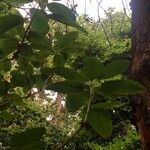
Arbutus menziesii
Pacific madrone · Madroña · Strawberry Tree · Pacific arbutus · Laurelwood
Description
Source: leafsnapArbutus menziesii, commonly known as the Pacific madrone or madrona, is a broadleaf evergreen tree native to the western coast of North America. It belongs to the Ericaceae family and can reach heights of up to 30 meters, with trunk diameters extending up to 2 meters. Its bark is smooth and reddish-brown, peeling away in thin sheets as the tree matures. The leaves of the Pacific madrone are glossy and leathery, oval-shaped, and taper at both ends. They are dark green on the upper surface and lighter underneath, measuring between 7 to 15 cm in length. During late spring to early summer, the Pacific madrone produces small white or pink flowers that bloom in clusters. These flowers are followed by round, berry-like fruits that turn bright red when ripe. This tree prefers well-drained soils, though it can tolerate some moisture as long as the soil is not waterlogged. It thrives best in full sun but can also grow in partial shade. Arbutus menziesii holds cultural significance for many indigenous peoples along the west coast of North America. They use the tree's bark for medicinal purposes and its wood for carving ceremonial objects such as masks and paddles. Overall, Arbutus menziesii is an iconic species known for its striking appearance, cultural importance, and ecological value within its native range along the western coast of North America.
🌳 Pacific madrone is valued for practical uses beyond its visual appeal. Indigenous Native American tribes historically worked its wood into hunting tools and everyday objects, while modern craftsmen turn its vivid, textured timber into custom furniture. Its acoustic qualities also make the wood a favored choice for making musical instruments. The tree's production of tasty red berries broadens its use in the kitchen, where they add a distinctive element to traditional cider-making.
🎭 You are the only person I love.
Care Guide
💧 Water Every 7 days
The Pacific madrone is well-suited to environments with dry summers and wet winters, as it can withstand both drought and moderate humidity. Watering it every 1-2 weeks ensures that the soil has time to dry out properly. Its resilience makes the Pacific madrone an excellent choice for outdoor cultivation, xeriscaping, and low-water gardens in a variety of climate zones.
How can I water my Pacific madrone tree effectively?
Your Pacific madrone is not particular about how you water it. You can use any common watering tool, such as a watering can, hose, or even a cup. It's important to directly apply the water to the soil and ensure that all areas of the soil are moistened evenly to provide adequate water to all parts of the root system. Using filtered water is beneficial, as tap water may contain harmful particles. It's also a good idea to use water at or slightly above room temperature, as extremely cold or hot water can shock the plant. However, the Pacific madrone generally responds well to any type of water.
What should I do if I give my Pacific madrone too much or too little water?
For outdoor plants, especially newly planted ones or seedlings, it's common for them to not get enough water. It's important to keep watering them consistently for a few months when they are small or recently planted. Once the roots are established, Pacific madrone plants can rely on rain most of the time. When you have a Pacific madrone planted in a pot, overwatering is more likely to happen. If you accidentally overwater your Pacific madrone, it's important to act quickly to fix the situation. First, stop watering the plant right away to minimize the impact of overwatering. Then, remove the Pacific madrone from its pot to check its roots. If you don't find any sign of root rot, you can put the plant back in its container. However, if you do see signs of root rot, trim away the affected roots and consider applying a fungicide to prevent further damage. Finally, repot the Pacific madrone in well-draining soil. In the case of underwatering, simply water the Pacific madrone more frequently. Underwatering is usually an easy problem to fix. If the plant's leaves start to droop, dry out, or fall off, they will quickly recover and become full again with sufficient watering. Make sure to adjust your watering schedule as soon as you notice signs of underwatering.
How often do I need to water my Pacific madrone?
To ensure the proper growth of most outdoor plants, they typically rely on natural rainfall. However, if your area lacks sufficient rainfall, you'll need to provide regular watering. During the spring and fall, watering every two weeks is usually sufficient, while the summer months may require more frequent watering. In winter, plants need less water, so it's best to water them sparingly or not at all. For young or newly planted Pacific madrone plants, more frequent watering is necessary to help them establish and grow into adaptable and drought-tolerant plants. When it comes to potted plants, you have two options for determining how often to water your Pacific madrone. One approach is to follow a set schedule, such as watering once a week or every other week. However, this method doesn't account for the specific conditions of your growing environment. Another option is to monitor the soil moisture. It's generally recommended to wait until the top two to four inches of soil have completely dried out before watering again. Keep in mind that during the summer, when the water needs of the Pacific madrone are at their highest, a predetermined watering schedule may not be sufficient. Adjusting your watering frequency based on the season and soil moisture will ensure proper hydration for your plant.
How much water does my Pacific madrone tree need?
To water your Pacific madrone effectively, you don't always need to use a lot of water. If only a few inches of soil have dried since the last watering, giving the plant about five to ten ounces of water each time will support healthy growth. You can also gauge the water volume based on the moisture in the soil. Keep track of how many inches of soil have dried between waterings. To ensure your Pacific madrone receives sufficient moisture, provide enough water to moisten all the dry soil layers since the last watering. If more than half of the soil has dried, consider giving more water than usual. In such cases, continue watering until you see excess water draining from the pot's holes. If your Pacific madrone is planted in an area that receives ample rainfall, it may not need additional watering. For young or newly established Pacific madrone, ensure they receive 1-2 inches of rain per week. As the plant grows and becomes established, it can rely solely on rainwater. Only during hot weather with no rainfall for 2-3 weeks should you give your Pacific madrone a full watering to prevent stress.
How do I know if I'm giving enough water to my Pacific madrone tree?
The Pacific madrone commonly suffers from overwatering, which can be identified through yellowing leaves and leaf drop. Overwatering can also lead to shriveling and root rot. Conversely, an underwatered Pacific madrone will wilt, with brown or brittle leaves. In either case, it is important to take action and restore the plant's health.
☀️ Light Full sun
The Pacific madrone does best with abundant daily sunlight, reflecting its native environment where light is plentiful. It can tolerate somewhat reduced light levels, offering flexibility in dimmer locations. Too much sun may cause leaf scorching, while too little light can lead to stunted growth.
What are the sunlight requirements for Pacific madrone?
Pacific madrone requires full to partial sun exposure to thrive, specifically above 6 hours of sunlight for 'Full sun' conditions and about 3-6 hours for 'Partial sun'. It's important to observe the sunlight's movement through your garden to find the best spots that offer a balance of light and shade, ensuring the plants' well-being. This species is adaptable, flourishing in its native, light-rich ecosystems but can also tolerate lower light levels. Nonetheless, too much sun can lead to leaf scorching, and too little can cause stunted growth.
How can artificial lighting be used for indoor Pacific madrone plants?
For indoor Pacific madrone plants, adequate lighting is crucial, especially when natural sunlight is insufficient, such as in winter or darker spaces. Artifical lights, including LEDs, are beneficial as they can be customized to the plant's needs, with full sun plants requiring 30-50W/sq ft, partial sun plants 20-30W/sq ft, and full shade plants 10-20W/sq ft of artificial light. The light source should be placed 12-36 inches above the plant, mimicking natural sunlight conditions, and left on for 8-12 hours daily depending on the plant species to promote healthier growth.
What are symptoms of inadequate light for Pacific madrone?
Pacific madrone may show various symptoms under suboptimal lighting conditions, such as smaller new leaves, leggy or sparse growth, faster leaf drop, slowed or halted growth, lighter-colored new leaves, chlorosis, sunscald, leaf curling, wilting, and leaf scorching. These symptoms indicate that the plant is not receiving enough sunlight, affecting its health and growth. Moving the plant to a location with adequate sunlight or using artificial lighting can help alleviate these symptoms.
What are effective solutions for improving light conditions for Pacific madrone?
To optimize growth in inadequate light conditions, gradually acclimate Pacific madrone to a sunnier spot, aiming for at least 6 hours of direct sunlight daily. For indoor plants, this may involve using a south-facing window or artificial grow lights for the required duration. For outdoor plants, a gradual move to increase sunlight without causing sunburn is advised. Additionally, reducing obstructions that block sunlight or transplanting smaller plants during their dormant period to a sunny location with good drainage can be beneficial. It's crucial to note that parts of the plant affected by previous poor light conditions may not recover, but new growth should be healthy once the light exposure is improved.
🌡️ Temperature 15–35°C
The pacific madrone is native to a broad range of temperature zones, from temperate to subtropical. It grows well in temperatures between 59 and 95 °F (15 to 35 °C). During hot summer months the plant benefits from light shade and extra watering. In colder months it can tolerate temperatures as low as 23 °F (-5 °C), but protecting it from frost is recommended.
What are the temperature preferences and cold resistance of the Pacific Madrone?
The Pacific Madrone, also known as Arbutus menziesii, thrives in a wide range of temperature zones, catering from temperate to subtropical climates. It grows well in temperatures that range between 59 to 95°F (15 to 35°C). During the hot summer months, the Pacific Madrone can benefit from light shade and occasional additional watering to combat the heat. Conversely, in the colder months, it can tolerate temperatures as low as 23°F (-5°C). Although it possesses strong cold resistance, protection from frost is recommended if winter temperatures are expected to plunge below -15°C. This protection can involve wrapping the trunk and branches with non-woven fabric or cloth. Additionally, it's advisable to water the plant abundantly before the first freeze in autumn to keep the soil moist, which helps prevent drought and water scarcity in the winter and early spring.
How does low temperature affect the Pacific Madrone and what are the solutions?
Pacific Madrone demonstrates a notable tolerance for cold, ideally thriving in temperatures above 15°C. During the winter, it is crucial to keep the temperature above -10°C. Exposure to temperatures below -15°C may not immediately show detrimental effects during the winter; however, come spring, the branches might turn brittle, dry, and fail to produce new shoots. To mitigate these effects in spring, it is recommended to prune any dead branches that did not produce new leaves, fostering the plant's resilience and recovery from the winter's cold.
How does high temperature affect the Pacific Madrone and what are the recommended solutions?
In summer, it's essential to ensure that the Pacific Madrone's environment remains below 35°C. Exposing the plant to temperatures above 38°C could lead to lighter-colored leaves, dried and withered tips, and increased susceptibility to sunburn. To address these symptoms, trimming away the sunburned and dried-up parts of the plant is advised. Furthermore, relocating the plant to a shaded area or utilizing a shade cloth to shield it from midday and afternoon sun can significantly reduce stress. Watering the plant in the early morning and late evening also helps maintain soil moisture, providing relief from the high temperatures.
💨 Humidity
🪴 Soil 5-6
🌱 Fertilizer
Fertilize your Pacific madrone in early spring to encourage healthy growth. Regular feeding boosts overall health, producing vigorous growth, better tolerance of harsh conditions, and greater resistance to pests and disease. Follow a consistent fertilization schedule for your Pacific madrone to maintain lush foliage with deep color and a vibrant appearance.
Why should I put fertilizer on my Pacific madrone?
If you own a Pacific madrone, no matter what type, regular fertilization can greatly improve its overall health. Supplying the right nutrients promotes strong growth and helps the plant withstand challenging conditions while also fending off diseases and pests. The foliage of your Pacific madrone is particularly appealing, so it's crucial to maintain it. To achieve this, establish and stick to a fertilization routine tailored to your specific Pacific madrone. This will encourage the development of vibrant, lush leaves.
When should I fertilize my Pacific madrone tree?
To ensure healthy growth, it is recommended to fertilize your Pacific madrone during late winter or early spring. This will provide the necessary nutrients for the tree to thrive once the weather warms up. Additionally, if you live in a warm climate region, it can be beneficial to fertilize again in early fall. This will not only supply extra nutrients for the upcoming growing season but also enhance the tree's ability to withstand winter cold without damaging its foliage. Fertilizing earlier in the season will allow enough time for the new branches to grow and be more resilient during winter.
When is it not a good idea to fertilize my Pacific madrone?
There are a few specific times throughout the year when you should avoid fertilizing your Pacific madrone. One of these times is during the early and mid-winter months when the plant is dormant and does not require any feeding. It is also not recommended to fertilize the plant during the late spring and summer months. This is because the weather during this time is typically hotter and drier, which can have a negative impact on the response of the Pacific madrone to fertilization. To prevent any issues, it is best to follow a fertilization schedule that involves feeding only during the early spring and early fall.
What kind of fertilizer does my Pacific madrone tree need?
For a Pacific madrone tree, nitrogen is typically the most important nutrient, but that doesn't mean phosphorus and potassium are unimportant. In fact, the tree needs a substantial amount of all three nutrients. That's why a balanced fertilizer, like a 10-10-10, can be effective. However, a more specific ratio of nutrients tends to promote optimal growth. In many cases, higher nitrogen ratios, such as 10-6-4, can be beneficial. When fertilizing, you have the option of using granular or liquid-based fertilizers.
How can I add fertilizer to my Pacific madrone?
To fertilize your Pacific madrone tree, there are two options: using a granular fertilizer or a liquid fertilizer. If you choose the granular option, simply sprinkle the fertilizer on the soil at the right time. The slow-release feature of granular fertilizer will gradually release nutrients into the soil. It's generally recommended to lightly water your tree before applying the fertilizer. On the other hand, using a liquid fertilizer is less common. To use this method, mix the fertilizer with water and pour the mixture onto the soil around the base of the tree. It can be helpful to perform a soil test to check if you need to adjust the soil's pH before applying fertilizer.
🪴 Pot & Repot
✂️ Pruning
The Pacific madrone is known for its distinctive peeling bark and evergreen leaves. To maintain its health, it is best to prune the tree from early to late winter. During this time, remove any dead wood and thin the branches to improve air circulation. Always use clean tools to prevent infections. Regular pruning not only enhances the tree's structural integrity and visual appeal but also supports its optimal growth and longevity.
🌿 Propagating
🐛 Diseases & pets
☠️ Toxicity
Characteristics
- Plant Type
- Tree
- Life Cycle
- Perennial
- Genus
- Arbutus
- Family
- Ericaceae
- Hardiness Zone
- 7-9
- Mature Height
- 21.95 m to 30.48 m
- Mature Spread
- 14.94 m
- Leaf Color
- Green
- Leaf Type
- Evergreen
- Flower Color
- White, Pink
- Flower Size
- 2.54 cm
- Bloom Time
- Mid spring, Late spring
- Planting Time
- Spring
- Harvest Time
- Mid summer, Late summer