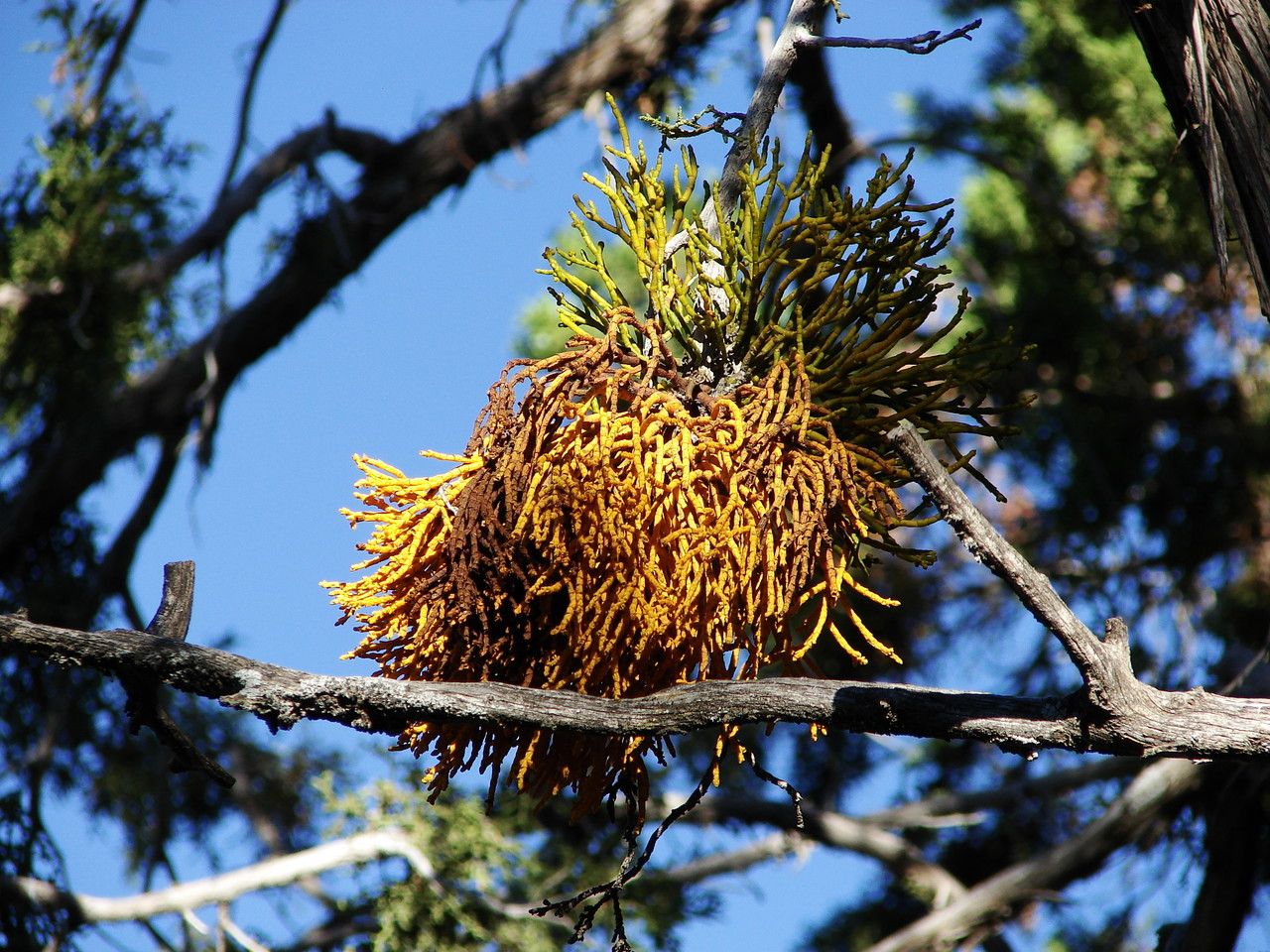
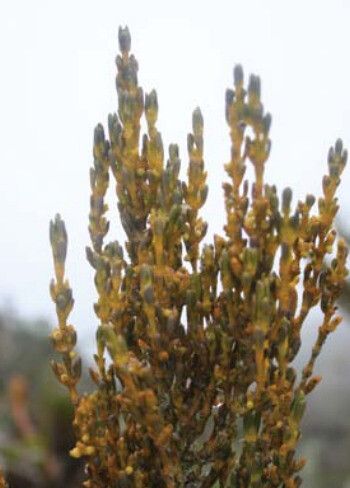
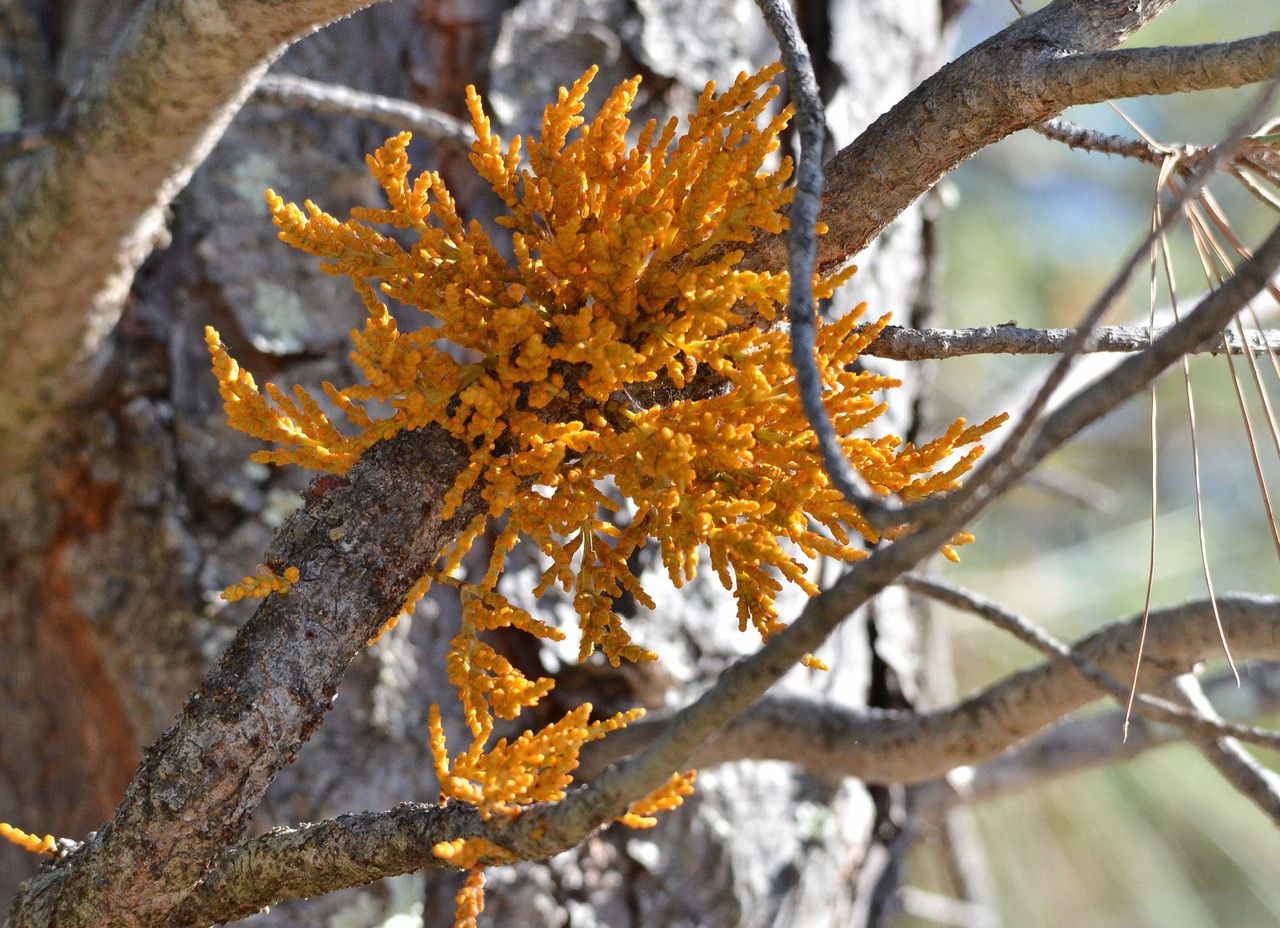
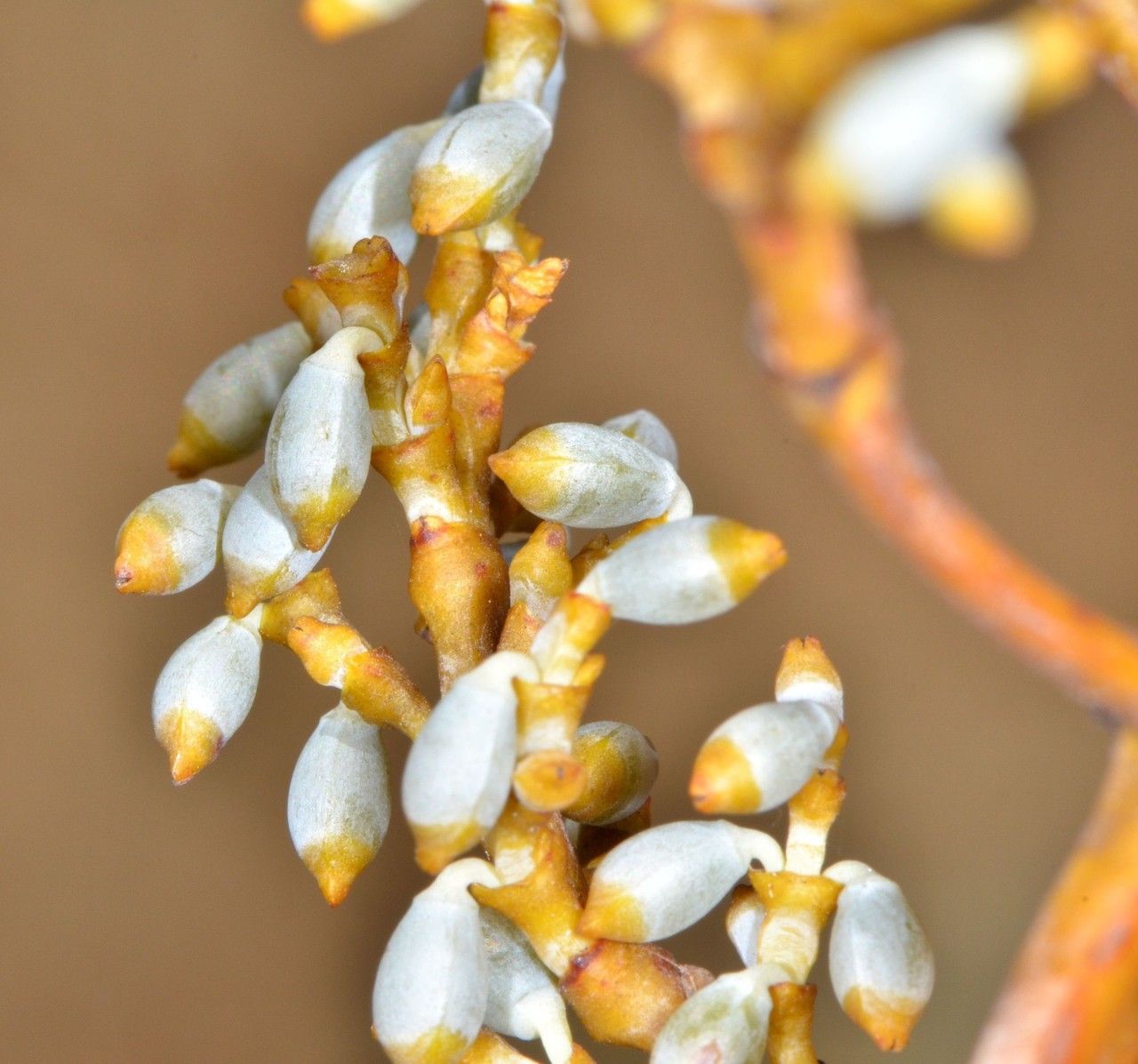
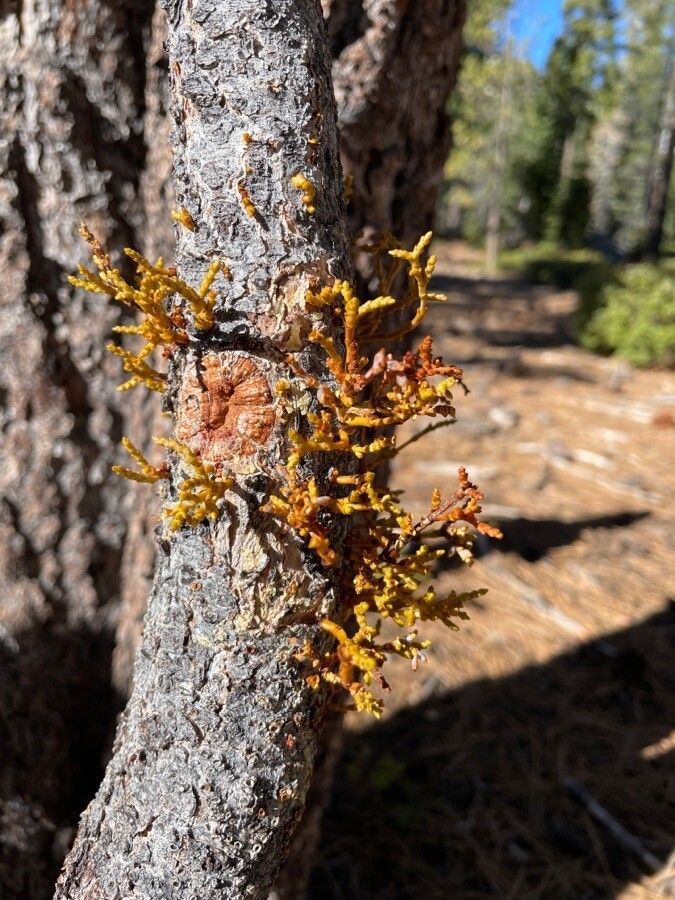
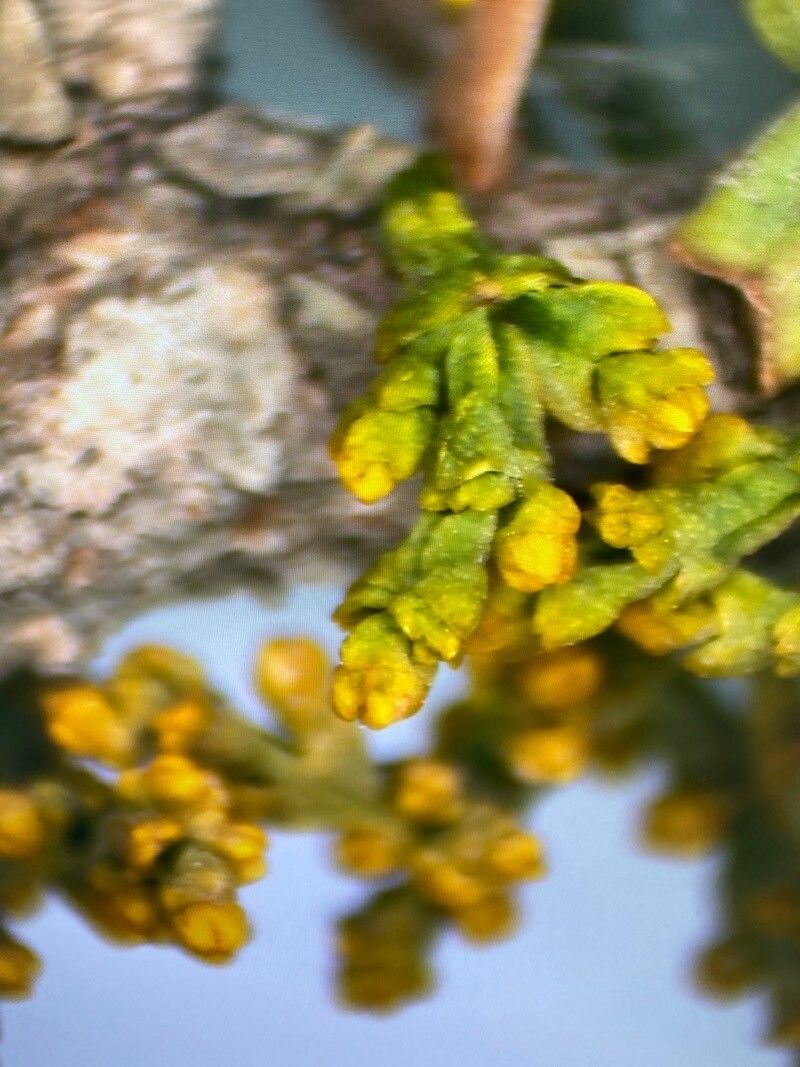
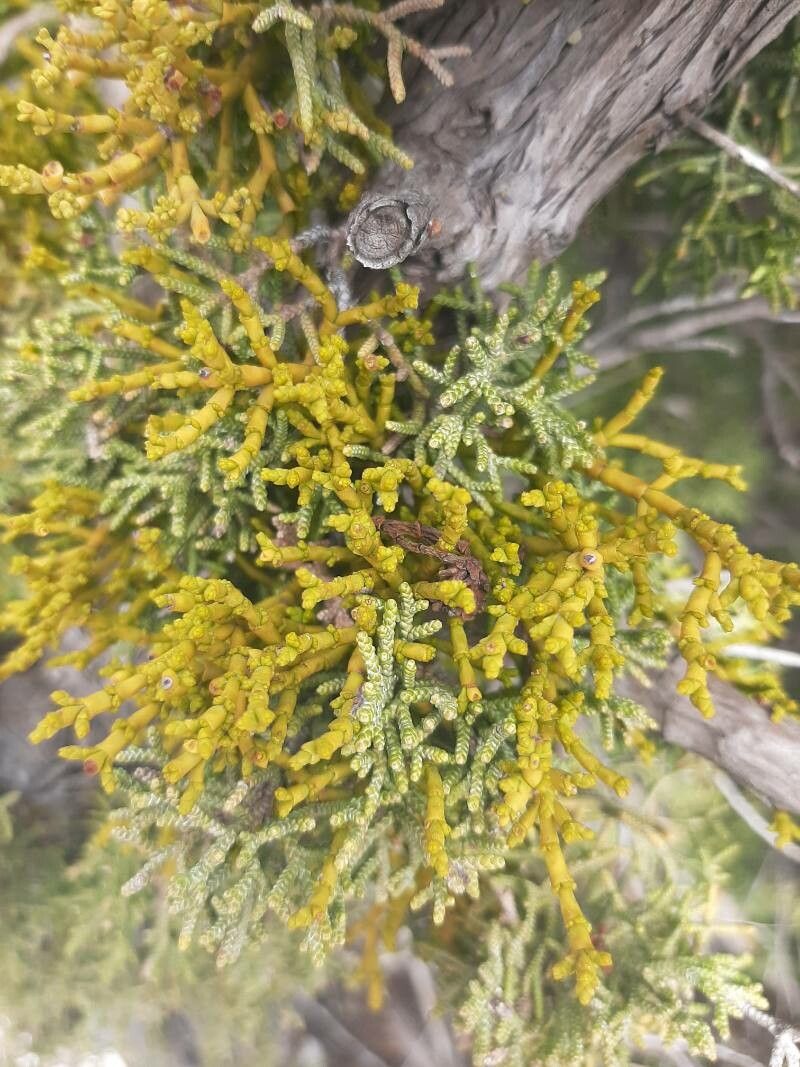
Arceuthobium campylopodum is a species of dwarf mistletoe known as western dwarf mistletoe. It is native to the low to moderate elevation coniferous forests of western North America. It is a common parasite of several species of pine tree, including Jeffrey Pine, Ponderosa Pine, and Coulter Pine. The dwarf mistletoe is a greenish-yellow structure above the bark of the tree, while most of the plant is beneath the bark. Seeds mature during the fall and disperse to nearby trees.
Western dwarf mistletoe is fairly disease-resistant and typically not vulnerable to illnesses. Still, it can be affected by pests and diseases present in its environment. Such infections are generally mild. As for maintenance, this plant needs moderate care. It should be pruned on a regular basis to preserve its appearance and support healthy growth. Applying fertilizer can also encourage flowering. Western dwarf mistletoe is appropriate for anyone with an outdoor area, like a garden or patio, and does not demand extensive care experience. It may call for greater attention when cultivated indoors.
How to keep Arceuthobium Campylopodum.
Light
Western dwarf mistletoe is native to habitats such as forest understories and rocky areas, where it is naturally shaded. It prefers partial sun but can tolerate full sun or full shade, reflecting its adaptable and hardy character.
Water
The western dwarf mistletoe is well-suited to arid environments, demonstrating its drought tolerance by requiring watering only once a week. This plant usually attaches itself to host trees, extracting moisture and nutrients from them. It also depends on rainfall for its growth cycle, establishing a symbiotic relationship with its tree hosts.
Temperature
Western dwarf mistletoe can tolerate a wide range of temperatures, though its range may still be constrained by various combinations of moisture and heat. It grows best in warm summer conditions with sufficient rainfall or watering. Extended periods of cloudy, rainy weather or prolonged high heat can raise the chance of Western dwarf mistletoe dying. In winter, adequate protection from cold can improve the plant's survival.
Fertilizer
One fertilizer application in spring is typically enough for Western dwarf mistletoe, although several feedings can help maximize growth. Apply fertilizer once every month to a month and a half. Fertilizing improves leaf appearance and function, encouraging uniform color and a healthy texture. It also promotes root development and nutrient uptake, supporting the plant's long-term health.
Pruning
The Western dwarf mistletoe is a parasitic plant that can be recognized by its small, yellow to green shoots, which primarily affect conifer trees. To manage this parasite, pruning should be done from early to late spring. Make sure to remove infected branches, cutting at least 30 centimeters below the infection points. Always use sanitized tools and properly dispose of the pruned material to prevent the spread of the disease.
Botanical profile.
- Plant Type
- Herb
- Life Cycle
- Perennial
- Genus
- Arceuthobium
- Family
- Santalaceae
- Hardiness Zone
- 5-9
- Mature Height
- 8 cm to 13 cm
- Mature Spread
- 5 cm to 15 cm
- Leaf Color
- Olive Drab, Dark Olive Green
- Leaf Type
- Evergreen
- Flower Color
- Yellow, Green
- Flower Size
- 0.25 cm
- Bloom Time
- Fall
- Planting Time
- Spring, Summer, Autumn
- Harvest Time
- Late fall, Early winter, Mid winter
Other names.
Reader questions.
What are the sunlight requirements for Western dwarf mistletoe?
Western dwarf mistletoe thrives in partial sun, requiring about 3-6 hours of sunlight daily. It can also tolerate full sun, which means it can grow in areas receiving more than 6 hours of sunlight. However, it's adaptable and can survive in full shade, making it suitable for various environments, from forest understories to rocky areas. Regardless of its preferred sunlight condition, it's important to watch how sunlight moves through your garden, choosing spots that offer a balance of light and shade to ensure your plants' happiness.
How can artificial lighting be used for indoor plants?
For indoor plants, especially during winter or in less sunny spaces, artificial lighting is essential for optimal growth. LED lights are recommended because they can be adjusted to provide specific light wavelengths needed by the plants. The required intensity depends on the plant's sunlight needs: full sun plants need 30-50W/sq ft, partial sun plants 20-30W/sq ft, and full shade plants 10-20W/sq ft. The light source should be placed 12-36 inches above the plant to simulate natural sunlight, and the duration should mimic natural daylight hours for the plant species, typically between 8-12 hours per day.
What are the symptoms of insufficient light in Western dwarf mistletoe?
When Western dwarf mistletoe doesn't receive enough light, several symptoms can occur: new leaves might grow smaller, the plant may exhibit leggy or sparse growth, experience faster leaf drop, and show slower or no new growth. The new leaves could also appear lighter in color or suffer from chlorosis, turning yellow due to a lack of chlorophyll. Excessive sunlight can lead to sunscald, leaf curling, wilting, or leaf scorching. These symptoms highlight the plant's struggle to adapt to its lighting conditions.
How can you address light conditioning issues for Western dwarf mistletoe?
To address light conditions for Western dwarf mistletoe, start by gradually exposing the plant to more sunlight each week until it adapts to receiving 3-6 hours of direct sunlight daily. If moving the plant isn't feasible, consider using artificial light, keeping a desk or ceiling lamp on for at least 8 hours daily or investing in professional plant grow lights. For outdoor plants, move them to sunnier spots gradually to avoid sunburn. If the plant is suffering from insufficient sunlight, parts of it that are already affected may not recover, but new growth will be healthy after increased light exposure. Additionally, to reduce obstructions like tree branches blocking sunlight, pruning can help. For smaller plants, transplant them during their dormant period in late winter or early spring to a location with better sunlight and drainage.