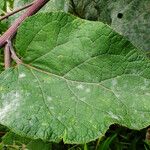
Arctium tomentosum
Woolly burdock · Hairy burdock · Cotton Burdock · Tomentose Burdock · Wooly Burdock
Description
Source: leafsnapArctium tomentosum, commonly known as the woolly burdock or downy burdock, is a species of burdock belonging to the family Asteraceae. The species was described by Philip Miller in 1768.
🌳 Woolly burdock's capacity to hyperaccumulate heavy metals can indicate soil contamination levels. Surprisingly, woolly burdock has been investigated in studies of phytoextraction, a process that uses plants to remove heavy metals from soils. Its distinctive burrs contain varying amounts of metals such as nickel, cadmium, and zinc. This characteristic could lead to a new, sustainable way to monitor and clean contaminated land, although additional research is necessary to clarify its full potential and how to implement it on a larger scale.
Care Guide
💧 Water Every 5-7 days
Woolly burdock thrives in a variety of climates, particularly in moist environments. For optimal growth, it needs to be watered weekly, which helps maintain a balance between its tolerance for drought and the issues caused by excessive humidity. As a herbaceous plant, woolly burdock also benefits from rainfall during its growing season.
How should I water my Woolly burdock plant?
When caring for the Woolly burdock, it is important to use filtered water at room temperature. Tap water should be avoided because it may contain harmful particles. The plant is accustomed to a warm environment, so using cold water can be shocking to its system. Additionally, overhead watering should be avoided to prevent foliage complications. Instead, it is best to soak the soil with filtered room temperature water until it is completely saturated. This helps moisten the roots and allows them to spread and collect nutrients more effectively.
What should I do if I give my Woolly burdock too much or too little water?
Overwatering is a common problem for Woolly burdock plants, whereas underwatering is less common. Too much water can cause wilting and yellowing of the stems and leaves, as well as diseases like root rot, mold, and mildew that can kill the plant. On the other hand, underwatering may cause brittle and brown leaves. It's important to recognize the signs of overwatering early on because some of the resulting diseases are difficult to correct if left untreated. If you notice early signs, reduce your watering schedule and check if the soil drains well. If the soil doesn't drain properly, replace it with a loose, well-draining potting mix. If you observe signs of too little water, simply increase your watering frequency until the signs improve.
How much water does my Woolly burdock need?
If your Woolly burdock plant is in a pot, the easiest way to check if it needs water is to stick your finger in the soil. If you feel that the top two to three inches of soil are dry, then it's time to water it. If you grow your Woolly burdock plant outside in the ground, you can use a similar method to test the soil. Once again, if the first few inches of soil have dried out, it's time to water the plant. Typically, during spring and early fall, you'll need to water this plant about once a week using this method. However, when it gets really hot, you may have to water it two or more times per week. That being said, mature and well-established Woolly burdock plants have a remarkable ability to tolerate drought.
How much water does my Woolly burdock plant need?
To effectively water your Woolly burdock, don't hold back on the amount of water you give. Wait until the first two to three inches of soil are dry, then generously water the plant, making sure to fully saturate the soil. Use enough water so that it drains out through the pot's drainage holes. If you don't see any excess water draining, it means you haven't watered enough. However, be careful not to let water accumulate in the soil, as this can harm the plant. On the other hand, if the water doesn't drain properly, it may be due to poorly draining soil, which is not good for the plant's health. In outdoor settings, the plant only needs about 1 inch of rain per week.
How do I water my Woolly burdock as it grows?
The water needs of the Woolly burdock can vary depending on its growth stages. In the first few years of its life, or after transplanting to a new location, it requires more water than usual. During this time, the plant focuses on sprouting new roots to support future growth, and these roots perform best with a bit more moisture. As the plant matures, it will require less water. Additionally, during the bloom period, the development of flowers requires significant moisture, so you may need to provide extra water to your Woolly burdock during this time.
☀️ Light Full sun
Woolly burdock performs best with abundant light, which promotes its healthy growth. At every stage of development, the plant benefits from being bathed in warmth and light. Coming from environments with plentiful sun, it tolerates strong light levels. Still, too much exposure can harm it, and too little sunlight can likewise negatively affect its health.
What are the sunlight requirements for Woolly burdock?
Woolly burdock (Arctium tomentosum) requires full sun, which means it needs above 6 hours of sunlight daily to thrive. It's crucial to observe your garden's sunlight distribution to find spots that offer a harmonious balance of light and shade, ensuring the plants stay healthy and happy. Woolly burdock, being native to environments rich in solar exposure, can handle high levels of light well. However, both too much and too little sunlight can negatively affect its growth and well-being.
How should artificial lighting be utilized for Woolly burdock if needed?
When Woolly burdock is grown indoors or in areas with inadequate natural sunlight, artificial lighting can be a key to maintaining optimal growth. LED lights are recommended because they can be tailored to provide specific light wavelengths needed by the plant. For full sun plants like Woolly burdock, 30-50W/sq ft of artificial light is ideal. Position the artificial light source 12-36 inches above the plant and ensure it receives 8-12 hours of light per day to mimic natural light conditions as closely as possible.
What are the key symptoms of inappropriate light exposure in Woolly burdock?
Woolly burdock shows several symptoms when exposed to incorrect lighting: Small and new leaves might appear smaller than older ones; leggy or sparse growth may occur; there could be faster leaf drop; growth might slow or halt; new leaves could look lighter or exhibit chlorosis (yellowing due to lack of chlorophyll), leading to insufficient photosynthesis. Excessive sunlight can cause sunscald, leaf curling, wilting, and leaf scorching, indicating damage or stress from too much light.
What solutions can be applied to address Woolly burdock's light-related issues?
To address light-related issues in Woolly burdock, indoor plants should be gradually moved to sunnier spots to eventually achieve at least 6 hours of direct sunlight daily, using south-facing windows for natural light or artificial lights for additional support. For outdoor plants, find the best sunlight spot and adjust the plant's location gradually, to prevent shock. Minimize obstructions to sunlight by pruning or transplanting smaller plants to sunnier locations with adequate drainage, if necessary. Note that while parts of the plant damaged by insufficient light may not recover, new growth should be healthy once correct light levels are established.
🌡️ Temperature 0–25°C
Woolly burdock is native to moderate climates and does best where temperatures range from 68 to 95 °F (20 to 35 ℃). When temperatures fluctuate, make sure summer conditions stay below 95 °F (35 ℃) while keeping it warm in winter.
What is the ideal temperature range for growing Woolly burdock?
Woolly burdock, botanically known as Arctium tomentosum, thrives best in temperate climates with an ideal temperature range of 68 to 95 °F (20 to 35 °C). It is important during temperature fluctuations to ensure summer temperatures do not exceed 95 °F (35 °C) while keeping it warm during the winter months. Woolly burdock is incredibly cold-tolerant, requiring no special frost protection measures. However, to prepare for winter, it is advisable to water the plant generously before the first freeze of autumn. This ensures the soil stays moist and helps the plant prevent drought and water scarcity during winter and early spring.
How does Woolly burdock react to low temperatures?
Woolly burdock is extremely tolerant of cold conditions and can withstand winter temperatures above -35°C (-31°F). However, if temperatures fall below this threshold, you might not notice any immediate changes during the winter, but there could be a decrease in sprouting or even complete failure to sprout in the spring. The recommended solution for plants affected by extreme cold is to remove any parts that have failed to sprout in the spring.
What should I do if Woolly burdock is exposed to high temperatures?
Woolly burdock is not tolerant of high temperatures. Its growth can halt, and the plant becomes more susceptible to rot if temperatures rise above 35°C (95°F). To mitigate damage from high temperatures, trim away any sunburned and dried-up parts of the plant. Relocate the plant to a shaded area, especially away from the harsh midday and afternoon sun, or use a shade cloth to provide protection. Ensure the soil remains moist by watering the plant in the morning and evening.
💨 Humidity
🪴 Soil 6-7
🌱 Fertilizer
Woolly burdock are regarded as heavy feeders with respect to nutrients. They require frequent, low doses of nitrogen and potassium fertilizers and periodic applications of phosphorus, micronutrients, sulfur, and magnesium to sustain good growth and bright coloration. Continuous fertilization throughout the growing season is needed to prevent deficiency symptoms and maintain optimal growth.
🪴 Pot & Repot
✂️ Pruning
Woolly burdock is characterized by its coarse, woolly leaves and spiny burrs. To maintain its health, pruning should be done between early and late spring. Remove any dead branches and overcrowded stems to improve airflow. Additionally, cut back flower stalks to prevent the plant from self-seeding. Regular pruning not only encourages healthy growth but also helps reduce the plant's invasiveness. Remember to sterilize your tools to prevent the spread of disease.
🌿 Propagating
🐛 Diseases & pets
☠️ Toxicity
Burdock is not thought to be toxic.
Characteristics
- Plant Type
- Herb
- Life Cycle
- Biennial
- Genus
- Arctium
- Family
- Asteraceae
- Hardiness Zone
- 3
- Mature Height
- 0.49 m to 1.52 m
- Mature Spread
- 61 cm to 91 cm
- Leaf Color
- Green, Blue
- Leaf Type
- Semi-evergreen
- Flower Color
- Pink, Purple
- Flower Size
- 1.02 cm to 1.27 cm
- Bloom Time
- Early summer, Mid summer
- Planting Time
- Spring, Autumn
- Harvest Time
- Mid summer
- Native Area
- Austria, Sweden, Slovakia, Montenegro, Croatia, Slovenia, Belarus, Uzbekistan, Russia, Germany, Estonia, Romania, Latvia, Belgium, Moldova, France, Netherlands, Tajikistan, Czech Republic, Bulgaria, Armenia, Poland, Greece, Ukraine, Serbia, China, Lithuania, Norway, Kyrgyzstan, Kazakhstan, Italy, Spain, Switzerland, Denmark, Finland, Hungary