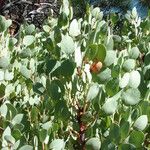
Arctostaphylos glauca
Bigberry manzanita · Big-berry manzanita
Description
Source: leafsnapArctostaphylos glauca is a species of manzanita known by the common name bigberry manzanita. It is native to California and Baja California, where it grows in the chaparral and woodland of coastal and inland hills.
Care Guide
💧 Water Every 1-2 weeks
The Bigberry Manzanita thrives in dry Mediterranean climates and is highly drought-tolerant. It requires deep watering only every 1 to 2 weeks. As an evergreen plant, it conserves water efficiently. Typically grown outdoors, it has a well-adapted root system that effectively absorbs and stores water during the growing season.
How should I water my Bigberry Manzanita plant in the best way possible?
Your Bigberry Manzanita can be watered with any common watering tool, such as watering cans, hoses, or cups. It is best to apply the water directly to the soil, making sure all areas are evenly moistened to provide sufficient water to all parts of the root system. To avoid harmful particles, filtered water is recommended instead of tap water. It is also ideal to use water that is at or slightly above room temperature, as extremely cold or hot water may shock the plant. Nonetheless, the Bigberry Manzanita usually thrives regardless of the type of water used.
What should I do if I give too much or too little water to my Bigberry Manzanita plant?
Outdoor plants, especially newly planted ones or seedlings, can suffer from lack of watering. It's important to consistently water them for the first few months, especially when the tree is small or newly planted. Once the roots are established, Bigberry Manzanita can rely on rain most of the time. However, when these plants are in pots, overwatering is more likely to happen. If you accidentally overwater your Bigberry Manzanita, you should act quickly to fix the situation. First, stop watering the plant immediately to minimize the impact of overwatering. Then, remove the plant from its pot to check the roots. If there are no signs of root rot, you can place the plant back into its container. However, if you notice any root rot, trim away the affected roots and consider applying a fungicide to prevent further damage. Finally, replant the Bigberry Manzanita in well-draining soil. On the other hand, if your Bigberry Manzanita is underwatered, simply water it more frequently. Underwatering is usually easy to fix - if the plant's leaves droop, dry out, or fall off, watering it adequately will restore its fullness. Correct your watering schedule as soon as you notice signs of underwatering.
How much should I water my Bigberry Manzanita?
Most plants can grow naturally with rainfall, but if your area lacks rain, here's how to water your plants
How much water does my Bigberry Manzanita plant need?
To water your Bigberry Manzanita effectively, it's important to consider its water needs. Contrary to expectations, this plant doesn't require a large amount of water. Instead, if only a few inches of soil have dried since the last watering, giving it around five to ten ounces of water each time should be enough for healthy growth. To determine the appropriate water volume, take note of the soil moisture between waterings - how many inches have dried out. To ensure the plant receives enough moisture, water until all the dry soil layers have been moistened since the last watering. If more than half of the soil is dry, watering more than usual may be necessary. In such cases, add water until you see excess water draining from the pot's drainage holes. If your Bigberry Manzanita is planted in an area that receives ample rain, additional watering may not be necessary. However, when the plant is young or still becoming established, ensure it receives 1-2 inches of rain per week. As it matures, it can rely solely on rainwater. Only during prolonged hot weather and a lack of rain for 2-3 weeks should you consider giving your Bigberry Manzanita a thorough watering to prevent it from suffering stress.
How can I know if I am giving enough water to my Bigberry Manzanita plant?
The Bigberry Manzanita is more likely to suffer from overwatering, and there are clear signs to watch for when this happens. Typically, an overwatered plant will have yellowing leaves and might even shed some. Moreover, excess water can cause the entire plant structure to shrink and may lead to root rot. Conversely, an underwatered Bigberry Manzanita will also start to wilt and exhibit brown or brittle leaves. Whether you notice signs of overwatering or underwatering, it is essential to take action and revive the health of your Bigberry Manzanita.
☀️ Light Full sun
The bigberry Manzanita prefers full sun but can also tolerate locations with moderate light. Native to a habitat with intense sunlight, the plant does well in those conditions. However, too much exposure can cause stress, while too little light prevents proper growth and flowering.
What are the sun requirements for Bigberry Manzanita?
Bigberry Manzanita requires full sun exposure, defined as above 6 hours of sunlight, but can also tolerate partial sun, which means about 3-6 hours of sunlight. It's important to watch how sunlight moves through your garden to find the perfect spot for your plant, ensuring it receives the right balance of light and shade for optimal growth and health.
What are the essential needs of Bigberry Manzanita regarding sunlight?
Bigberry Manzanita thrives best with full exposure to sunlight, which is crucial for its growth and flowering. Originating from environments with high solar radiation, it's adapted to such conditions but can also manage in areas with moderate sunlight. Excessive sun exposure can stress the plant, while insufficient light obstructs its growth and flowering. For indoor plants, adequate lighting is essential, especially in less sunny spaces or during winter. Artificial lighting, such as LED lights, is beneficial, providing necessary wavelengths for growth. For full sun plants, 30-50W/sq ft of artificial light is recommended; for partial sun plants, 20-30W/sq ft; and for full shade plants, 10-20W/sq ft. Proper artificial light placement and duration mirroring natural daylight hours are important for plant health.
What are the symptoms of improper sunlight exposure in Bigberry Manzanita?
When deprived of adequate sunlight, Bigberry Manzanita may display several symptoms: smaller new leaves, leggy or sparse growth, premature leaf drop, halted growth, pale or irregularly colored new leaves, leaf chlorosis, sunscald, leaf curling, wilting, and leaf scorching. These signs indicate stress from too little or too much sun. Chlorosis, for example, shows as yellowing leaves due to chlorophyll breakdown from excessive light, affecting photosynthesis. Sunscald appears as bleached areas on plant tissue, and leaf curling helps reduce surface area exposure to minimize water loss and damage.
How can I address sunlight-related issues in Bigberry Manzanita?
To address sunlight-related issues in Bigberry Manzanita, gradually increasing sun exposure until the plant gets at least 6 hours of direct sunlight is beneficial for indoor plants. Using a south-facing window or artificial grow lights can ensure ample light. For outdoor plants, avoid sudden changes in light intensity to prevent sunburn, and move them gradually to sunnier spots each week. If sunlight is blocked by obstacles like trees, pruning may help increase sun exposure. For plants that can be moved, transplanting during their dormant period to a spot with better light and drainage can also be effective. It's important to note that parts of the plant previously affected by inadequate light may not recover, but new growth should be healthy after adjusting light conditions.
🌡️ Temperature 15–35°C
Bigberry Manzanita is indigenous to areas with mild temperatures throughout the year and prefers a range of 59 to 95 °F (15 to 35 ℃). To keep it healthy, alter temperatures seasonally by providing a cool, winter-like environment when necessary.
What is the native environment of Bigberry Manzanita?
Bigberry Manzanita is native to environments with moderate year-round temperatures, thriving in ranges between 59 to 95 °F (15 to 35 °C). It flourishes in conditions where the temperature is carefully adjusted seasonally, ensuring a cooler, winter-like atmosphere when necessary. This plant possesses a strong resistance to cold, typically not requiring special frost protection. However, during winters where temperatures are expected to drop below -15°C, protective measures should be taken, such as wrapping the trunk and branches with insulating materials. Additionally, watering the plant abundantly before the first freeze in autumn is recommended to maintain soil moisture and support the plant's needs during winter and early spring.
How does Bigberry Manzanita respond to low temperatures?
Bigberry Manzanita is cold-tolerant and prefers temperatures above 15°C. During the winter, it's crucial to keep the plant above -10°C. If temperatures fall below -15°C, the plant might not show immediate distress, but its branches can become brittle and dry by spring, leading to a lack of new shoots. To mitigate damage from low winter temperatures, it's advised to prune away any dead branches that have failed to produce new leaves come springtime.
How does Bigberry Manzanita react to high temperatures?
During the summer months, it's important to keep Bigberry Manzanita's exposure below 35°C to prevent stress from high temperatures. When the mercury climbs above 41°C, the plant may exhibit signs of distress such as leaves lightening in color, tips drying and becoming withered, and an increased susceptibility to sunburn. To care for a plant affected by high temperatures, trim away any sunburned or dried-up parts of the plant. Relocating the plant to a shaded area, especially during the midday and afternoon sun, or using a shade cloth can provide necessary relief. Additionally, maintaining soil moisture by watering the plant in the morning and evening is beneficial.
💨 Humidity
🪴 Soil 6-7
🌱 Fertilizer
Timing is important when fertilizing Bigberry Manzanita. Apply fertilizer in early spring and continue monthly until early summer. Fertilizer encourages attractive blooms and supplies energy during both dormant and active growth periods.
Why do I have to put fertilizer on my Bigberry Manzanita plant?
No matter what type of Bigberry Manzanita you have, regular fertilization is key for its overall health. Providing the right nutrients will result in stronger growth and make your Bigberry Manzanita better equipped to handle tough conditions and resist diseases and pests. Keeping the foliage intact is important as it is one of the plant's most attractive features. To achieve this, establish and stick to a regular fertilization schedule that suits your specific Bigberry Manzanita. This will encourage the development of deeply colored leaves and a vibrant appearance.
When should I fertilize my Bigberry Manzanita?
To ensure healthy growth for your Bigberry Manzanita, fertilize it for the first time in late winter or early spring. This provides the necessary nutrients for the plant to thrive once the weather warms up. In warm climate regions, it's also beneficial to fertilize again in early fall. This second feeding not only adds additional nutrients for the next growing season, but also helps the plant withstand winter cold and prevents foliage damage. Fertilizing earlier in fall ensures that new branches have enough time to grow and be resilient during the cold winter.
When should I not put fertilizer on my Bigberry Manzanita?
To ensure the health of your Bigberry Manzanita, there are a few times throughout the year when you should avoid fertilizing it. The first is during the early and mid-winter months, when the plant is dormant and doesn't need any additional nutrients. Additionally, it's not recommended to fertilize the plant during late spring and summer because the weather is usually hotter and drier during this time. Both of these conditions can negatively impact the plant's response to fertilization. To prevent any issues, it's best to stick to a fertilization schedule that focuses on feeding the plant only during early spring and early fall.
Which fertilizer should I use for my Bigberry Manzanita plant?
The most important nutrient for a Bigberry Manzanita is usually nitrogen, but phosphorus and potassium are also important. It is best to use a balanced fertilizer like a 10-10-10 which contains all three nutrients in a decent amount. However, a more nuanced ratio of nutrients with higher nitrogen content, like 10-6-4, often leads to optimal growth. You can use either granular or liquid-based fertilizers for this purpose.
How should I give nutrients to my Bigberry Manzanita plant?
To fertilize your Bigberry Manzanita, you have two options: using a granular fertilizer or a liquid fertilizer. If using granular fertilizer, simply sprinkle it on the soil at the right time. This type of fertilizer releases nutrients slowly over time. It's recommended to lightly water your plant before applying the granular fertilizer. On the other hand, using liquid fertilizer is less common but still an option. To do this, mix the fertilizer with water and pour it around the base of your Bigberry Manzanita. Sometimes, it's helpful to conduct a soil test before fertilizing to determine if any adjustments to the pH are needed.
🪴 Pot & Repot
✂️ Pruning
The Bigberry Manzanita is a plant known for its evergreen leaves and striking red bark. To keep it healthy and thriving, prune it between early and late winter. Focus on removing dead branches and thinning out dense areas to improve air circulation. Pruning during the dormant season helps reduce stress on the plant, encourages new growth, and supports its overall health and longevity.
🌿 Propagating
🐛 Diseases & pets
☠️ Toxicity
Characteristics
- Plant Type
- Shrub
- Life Cycle
- Perennial
- Genus
- Arctostaphylos
- Family
- Ericaceae
- Hardiness Zone
- 7-10
- Mature Height
- 0.91 m to 6.1 m
- Mature Spread
- 4.57 m to 6.1 m
- Leaf Color
- Green, Blue
- Leaf Type
- Evergreen
- Flower Color
- White, Pink
- Flower Size
- 0.76 cm
- Bloom Time
- Late winter, Early spring, Mid spring
- Planting Time
- Spring, Summer
- Harvest Time
- Late summer, Early fall, Mid fall
- Native Area
- Mexico