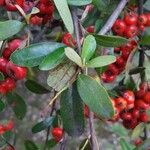
Arctostaphylos pungens
Mexican manzanita · Point-leaf manzanita · Pointleaf manzanita
Description
Source: leafsnapArctostaphylos pungens, commonly known as the Manzanita plant, is an evergreen shrub belonging to the Ericaceae family. Native to California, it thrives in various habitats including chaparral, coastal sage scrub, and oak woodlands. Typically growing up to 6 feet tall, the plant has a spreading habit characterized by twisted branches covered in smooth, reddish-brown bark. The leaves of Arctostaphylos pungens are small, leathery, and glossy dark green. They are elliptical in shape with pointed tips and serrated edges. The plant produces small, white or pinkish, urn-shaped flowers that bloom in clusters from late winter through early spring. Manzanita plants also produce edible berries, which are sweet when ripe but can be bitter when unripe. These berries were traditionally used by Native Americans for both food and medicinal purposes, such as treating stomach ailments. Arctostaphylos pungens is a crucial component of California's native flora. It provides habitat for various wildlife species, including birds, insects, and mammals. Additionally, its extensive root system plays a critical role in preventing soil erosion. Overall, Arctostaphylos pungens is a beautiful evergreen shrub with significant ecological importance, adding aesthetic and functional value to its natural habitat.
🌳 Pointleaf Manzanita fulfills a vital role in arid ecosystems, supplying essential sustenance and resources for a variety of wildlife. Its berries feed animals, and its evergreen foliage provides shelter. Furthermore, indigenous people have fashioned tools from pointleaf Manzanita and used its hardy wood for smoking meats, highlighting its cultural and practical importance.
Care Guide
💧 Water Every 7 days
Pointleaf Manzanita is a drought-tolerant plant that thrives in arid conditions. It needs watering only every 2 to 3 weeks. To prevent root rot, it prefers well-draining soil, which reflects its adaptation to the infrequent moisture availability of its native dry climate.
How should I water my Pointleaf Manzanita plant?
Your Pointleaf Manzanita is not picky about how you water it. You can use any common watering tool, such as watering cans, hoses, or even cups. Regardless of the tool you choose, make sure to water the soil directly. It's important to evenly moisten all areas of the soil to ensure the entire root system receives enough water. Using filtered water is recommended to avoid any harmful particles present in tap water. It's also good practice to use water that is at or slightly above room temperature, as very cold or hot water can shock the Pointleaf Manzanita. However, this plant generally responds well to any type of water you provide.
What should I do if I give my Pointleaf Manzanita plant too much or too little water?
For outdoor plants, especially new ones or seedlings, lack of watering can be a problem. Remember to water enough for the first few months when the tree is small or newly planted. Once the roots are established, the Pointleaf Manzanita can rely on rain most of the time. If you have a potted Pointleaf Manzanita, overwatering is more likely. If you accidentally overwater your plant, here's what you can do to fix it: 1. Stop watering your plant immediately to minimize the effects of overwatering. 2. Take the plant out of its pot and inspect its roots. If there is no root rot, you can return the plant to its container. 3. If you find signs of root rot, trim away the affected roots and consider applying a fungicide to prevent further damage. 4. Repot your Pointleaf Manzanita in well-draining soil. If your Pointleaf Manzanita is underwatered, simply water it more frequently. Underwatering is usually an easy fix. If the leaves droop, dry out, or fall off, they will usually return to fullness after sufficient watering. Remember to adjust your watering frequency as soon as you notice that the plant is underwatered.
How frequently should I water my Pointleaf Manzanita?
If you're growing plants outdoors, most of them will do fine with just rainfall. However, if you live in an area with little rainfall, you should water your plants adequately every two weeks in the spring and fall. In the summer, you'll need to water them more often. In the winter, when the plants are growing slower and need less water, you can water them less frequently, or even not at all. If your Pointleaf Manzanita is young or newly planted, it will need more frequent watering to help it establish and grow. For potted plants, there are two main methods to determine how often to water your Pointleaf Manzanita. The first method is to have a set watering schedule, such as once a week or once every other week. However, this may not always be suitable as it doesn't take into account the specific growing conditions of your Pointleaf Manzanita. Another approach is to base your watering frequency on the soil moisture. It's generally best to wait until the top two to four inches of soil, about 1/3 to 1/2 the depth of the pots, have completely dried out before watering again. Keep in mind that during the summer, this plant will have higher water needs, so a predetermined watering schedule might not be enough.
How much water does my Pointleaf Manzanita plant need?
Watering your Pointleaf Manzanita may not require a large amount of water. If the soil has only dried a few inches since the last watering, giving the plant approximately five to ten ounces of water each time can support healthy growth. You can also determine the volume of water based on the moisture level of the soil. Take note of how many inches of soil have dried between waterings. To ensure your Pointleaf Manzanita receives sufficient moisture, water enough to moisten all the dry soil layers since the last watering. If more than half of the soil has dried, consider giving more water than usual. In such cases, continue watering until excess water drains from the pot's drainage holes. If your Pointleaf Manzanita is planted in an area that receives abundant outdoor rain, it may not require additional watering. For young or newly established plants, provide 1-2 inches of rain per week. As the plant grows and becomes established, it can survive solely on rainwater. Only when the weather is hot and there is no rainfall for 2-3 weeks, consider giving your Pointleaf Manzanita a thorough watering to prevent stress.
How can I know if I'm giving enough water to my Pointleaf Manzanita?
The Pointleaf Manzanita commonly experiences overwatering, which can be identified by yellowing leaves and leaf drop, as well as shriveling and potential root rot. Additionally, underwatering can cause wilting, brown or brittle leaves. Regardless of whether you observe signs of overwatering or underwatering, it is important to take action and restore the health of your Pointleaf Manzanita.
☀️ Light Full sun
Native to sun-rich habitats, the pointleaf manzanita does best in full sun and tolerates moderately lit or partly shaded locations. Its growth can be reduced in deep shade or prolonged lack of sunlight, while excessive sun exposure can scorch the leaves.
What are the sunlight requirements for Pointleaf Manzanita?
Pointleaf Manzanita requires full sun, defined as more than 6 hours of sunlight a day, for optimal growth. It can also thrive in partial sun, which is about 3-6 hours of sunlight daily. However, to ensure your plants are healthy and happy, it's crucial to observe how sunlight moves through your garden throughout the day and select locations that offer a balance of light and shade.
What essentials should be known for growing Pointleaf Manzanita?
Having evolved in sun-rich environments, Pointleaf Manzanita performs best in conditions where sunlight is plentiful. It demonstrates significant resilience when exposed to moderate light but may experience hindered growth under extreme shade or severe absence of sunlight. Moreover, overexposure could lead to scorched leaves. For indoor plants not receiving sufficient natural light, especially during winter or in less sunny areas, artificial lighting such as LED, providing 10-50W/sq ft depending on the plants' sun exposure classification, can be a critical solution for promoting healthy growth. It's important to position the light source correctly and set an appropriate duration for the artificial lights to mimic natural daylight conditions.
What are the common symptoms of issues caused by inadequate sunlight for Pointleaf Manzanita?
When Pointleaf Manzanita does not receive sufficient sunlight, it may exhibit several symptoms indicating light deficiency, including small or lighter-colored new leaves, leggy or sparse growth, faster leaf drop, slower or halted new growth, and chlorosis. Additionally, excessive sunlight exposure can cause symptoms like leaf scorching, sunscald, leaf curling or twisting as a defense mechanism, and wilting from increased water loss through transpiration.
What solutions are recommended for addressing Pointleaf Manzanita's sunlight needs?
For indoor Pointleaf Manzanita, gradually transitioning plants to sunnier locations or using artificial light for large or immovable plants can address inadequate natural light exposure. Keep curtains open or use grow lights for at least 8 hours daily. Outdoors, adjust the plant's location gradually to avoid sunburn. Observe which surroundings block sunlight and consider actions like pruning or transplanting to sunnier spots. Remember, parts of the plant that have suffered from insufficient light may not recover, but new growth will be healthy with improved light conditions.
🌡️ Temperature 15–35°C
Pointleaf Manzanita is native to habitats where temperatures usually fall between 59 and 95 °F (15 to 35 ℃). It favors a mild, warm climate and generally does well in those conditions. During cooler seasons, consider moving it to a sunnier location.
What is the native environment of Pointleaf Manzanita?
Pointleaf Manzanita, scientifically known as Arctostaphylos pungens, is native to environments with temperatures ranging from 59 to 95 °F (15 to 35 °C). It prefers a mild and warm climate, typically thriving in these conditions. The plant demonstrates strong cold resistance, indicating it can survive without special frost protection measures in most cases. However, when temperatures are expected to fall below -15°C, it's important to provide extra protection to prevent damage.
How do I protect Pointleaf Manzanita from cold temperatures?
To protect Pointleaf Manzanita from cold temperatures, especially if they are expected to dip below -15°C, you should wrap the trunk and branches with non-woven fabric or cloth to offer additional warmth. Additionally, it's recommended to water the plant abundantly before the first freeze in autumn. This ensures the soil remains moist and enters a frozen state, helping to prevent drought and water scarcity during winter and early spring.
What are the symptoms of Pointleaf Manzanita being exposed to low temperatures?
When exposed to low temperatures, specifically below -15°C, Pointleaf Manzanita does not show immediate noticeable changes. However, during springtime, the branches may become brittle and dry, and no new shoots will emerge, indicating damage from the cold. The plant thrives best in temperatures above 15°C and should ideally be kept above -10°C during winter.
What should I do if my Pointleaf Manzanita has been damaged by low temperatures?
If your Pointleaf Manzanita has been damaged by low temperatures, it's important to prune away any dead branches that have failed to produce new leaves during spring. This will help the plant to recover and potentially produce new growth, keeping it healthy and preventing further damage.
How does high temperature affect Pointleaf Manzanita?
High temperatures, specifically those exceeding 35°C, can negatively affect Pointleaf Manzanita. When temperatures surpass 41°C, the plant's leaves may become lighter in color, and the tips can turn dry and withered, making the plant more susceptible to sunburn. It's crucial to protect the plant from the harsh midday and afternoon sun during these hot periods.
💨 Humidity
🪴 Soil 5-7
🌱 Fertilizer
The timing of fertilizing Pointleaf Manzanita is important. Apply fertilizer in early spring and continue on a monthly schedule until early summer. Fertilizer promotes attractive blooms and supplies energy during both dormant periods and active growth.
🪴 Pot & Repot
✂️ Pruning
Pointleaf Manzanita is a hardy shrub characterized by its dense foliage and striking red bark. For optimal health and appearance, prune the shrub between early to late winter. Focus on removing dead or crossing branches to improve both air circulation and the shrub’s shape. This will encourage healthy growth and vibrant blooms in the spring. Remember to always sterilize your tools before pruning, and avoid excessive pruning to maintain the plant’s resilience.
🌿 Propagating
🐛 Diseases & pets
☠️ Toxicity
Characteristics
- Plant Type
- Shrub
- Life Cycle
- Perennial
- Genus
- Arctostaphylos
- Family
- Ericaceae
- Hardiness Zone
- 7-10
- Mature Height
- 0.91 m to 3.05 m
- Mature Spread
- 1.22 m
- Leaf Color
- Green, Gray
- Leaf Type
- Evergreen
- Flower Color
- Pink, White
- Flower Size
- 0.51 cm to 0.76 cm
- Bloom Time
- Spring
- Planting Time
- Spring, Autumn
- Harvest Time
- Early summer, Mid summer
- Native Area
- Mexico