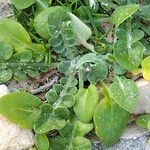
Arctotheca prostrata
Coastal daisy · Capeweed · Creeping bear's ear · Prostrate Cape weed
Description
Source: leafsnapArctotheca prostrata is a plant in the sunflower family native to Cape Province in South Africa. Common names include Prostrate Cape weed and Creeping Bear's-ear. It is listed as an invasive weed in California and Australia.
Care Guide
💧 Water
Creeping bear's ear, a plant native to coastal areas, thrives in consistently moist environments and needs weekly watering. It prefers sandy soils and is tolerant of salty conditions, making it perfect for seaside gardens where freshwater may be brackish.
☀️ Light Full sun
Creeping bear's ear is a sun-loving perennial herbaceous plant native to open habitats, frequently occurring in meadows and grasslands. It prefers full sun, though it can also tolerate partial sun conditions.
🌡️ Temperature 15–32.2°C
Creeping bear's ear is indigenous to habitats where temperatures typically range from 68 to 95 °F (20 to 35 ℃). It favors these mild to warm conditions. Seasonal adjustments may be necessary if temperatures drop significantly.
What are the ideal temperature conditions for Creeping bear's ear?
Creeping bear's ear, botanically known as Arctotheca prostrata, thrives in environments where temperatures generally range from 68 to 95 °F (20 to 35 °C). It prefers moderate to warm conditions and possesses strong cold resistance, minimizing the need for frost protection measures during winter. However, if winter temperatures are expected to fall below -10°C, it's crucial to provide cold protection by covering the plant with soil or straw. To prepare for winter and early spring, watering the plant abundantly before the first freeze in autumn is recommended, ensuring the soil remains moist during colder months.
How does Creeping bear's ear react to low temperatures?
Creeping bear's ear shows remarkable tolerance to cold conditions, performing best when the temperature stays above 20°C. During winter, maintaining the temperature above 0°C is advisable. Should temperatures dip below -10°C, there may not be visible changes during the winter, but a noticeable decrease in sprouting or complete lack of sprouting might occur in spring. To manage this, any parts that have failed to sprout by spring should be removed.
What measures should be taken when Creeping bear's ear experiences high temperatures?
During the summer, it is essential to keep the temperature below 35°C for Creeping bear's ear. Exposure to temperatures above 38°C may cause the leaves to lighten in color, become prone to curling, suffer from sunburn, and in severe cases, lead to the wilting and drying up of the entire plant. To mitigate these issues, trim away the sunburned and dried-up parts. Relocate the plant to a shaded area, especially from the midday and afternoon sun, or use a shade cloth for protection. Watering the plant in the morning and evening will help keep the soil moist and support the plant's health in high temperatures.
💨 Humidity
🪴 Soil 5-7
🌱 Fertilizer
The best time to fertilize a Creeping bear's ear is in early spring, when it is coming out of dormancy and beginning active growth. Fertilization supplies essential nutrients for healthy development. Although Creeping bear's ear has relatively low fertilizer requirements, feeding it annually can improve its survival and encourage better, longer-lasting flowers.
🪴 Pot & Repot
✂️ Pruning
To ensure the thriving growth of creeping bear's ear, prune the plant from early to late spring, paying special attention to removing dead stems and controlling overgrowth. This practice enhances air circulation and promotes robust growth. However, be cautious not to over-prune, as this can impact blooming. For best results, always use clean, sharp tools and adhere to reliable gardening guidelines.
🌿 Propagating
🐛 Diseases & pets
☠️ Toxicity
Characteristics
- Plant Type
- Herb
- Life Cycle
- Perennial, Annual
- Genus
- Arctotheca
- Family
- Asteraceae
- Hardiness Zone
- 8
- Mature Height
- 30 cm
- Mature Spread
- 30 cm to 61 cm
- Leaf Color
- Green, Silver
- Leaf Type
- Evergreen
- Flower Color
- Yellow
- Flower Size
- 4.06 cm to 6.35 cm
- Bloom Time
- All year round
- Planting Time
- Spring, Summer
- Harvest Time
- All year round
- Native Area
- South Africa, Namibia