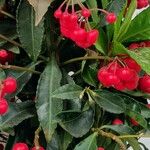
Ardisia crenata
Coralberry · Coralberry-tree · Coralbush · Hen's-eyes · Spiceberry
Description
Source: leafsnapArdisia crenata, commonly known as coralberry or Christmas berry, is an evergreen shrub native to East Asia. Typically reaching up to 1.5 meters in height, this plant features glossy, dark green leaves that are oval-shaped and slightly toothed along the edges. In summer, it produces small clusters of pink or white flowers, which are followed by bright red berries in the fall and winter. Ardisia crenata is a popular ornamental plant, prized for its attractive foliage and colorful berries. It can be grown as a houseplant or outdoors in mild climates with well-draining soil and partial shade. While the plant prefers moist soil, it can tolerate periods of drought once established. Although Ardisia crenata is generally considered safe for humans, its berries are toxic to pets if ingested in large quantities. Additionally, the plant has been known to become invasive in some areas outside its native range. Overall, Ardisia crenata is a beautiful shrub with year-round interest that can add color and texture to any garden or indoor space. However, care should be taken to ensure pets do not consume its toxic berries.
💡 The Christmas berry, known for its decorative appeal and year-round interest, including during the winter, is considered an undesirable plant in the southeastern United States. In this region, it is classified as an invasive species. Because of its tendency to spread, the Christmas berry is typically cultivated as a houseplant.
🌳 Apart from its role as an ornamental, christmas berry is seldom recognized for its diverse functions in ecosystems. It has been observed that the plant can become invasive in non-native areas, often outcompeting native vegetation. Measures to control its spread have led to inventive uses of its biomass, such as converting it to biochar for soil amendment, though this application is still being researched.
Care Guide
💧 Water Every 7 days
The Christmas berry plant thrives best in consistently moist soil and high humidity, reflecting its origins in tropical forests. While it has moderate drought tolerance, it still requires weekly watering to stay healthy. As an evergreen plant, maintaining humidity, especially when grown indoors, helps enhance its leaf coloration and overall vitality.
How should I water my Christmas berry plant?
Your Christmas berry is not picky when it comes to watering. You can use any common watering tool like watering cans, hoses, or even cups. It's important to water the plant by applying the water directly to the soil. Make sure to moisten all areas of the soil equally to provide water to all parts of the root system. Using filtered water is helpful as tap water may contain harmful particles. It's also better to use water that is at or slightly above room temperature, as cold or hot water can shock the Christmas berry. However, the plant generally responds well to any type of water.
What do I need to do if I give my Christmas berry plant too much or too little water?
Outdoor plants, especially newly planted ones or seedlings, can easily suffer from lack of watering. When the tree is small or newly planted, it's important to consistently water it for a few months. This is because once the roots are established, the Christmas berry plant can rely on rain for most of its water needs. On the other hand, if your Christmas berry is in a pot, overwatering becomes a common issue. If you accidentally overwater your plant, there are steps you can take to remedy the situation. First, immediately stop watering the plant to minimize the impact of overwatering. Then, remove the Christmas berry from its pot to inspect its roots. If there is no sign of root rot, you can place the plant back in its container. However, if you do find root rot, trim away any affected roots and consider using a fungicide to prevent further damage. Finally, repot the Christmas berry in soil that drains well. In the case of underwatering, simply water the Christmas berry plant more frequently. Underwatering is easier to fix, as the leaves of the plant will droop, dry out, and fall off, but will bounce back quickly when given sufficient water. Address underwatering promptly by adjusting your watering frequency.
How frequent should I water my Christmas berry plant?
For most outdoor plants, rainfall is usually sufficient for normal growth. However, if your area lacks rainfall, you should consider watering your plants adequately every 2 weeks in the spring and fall. During the summer, more frequent watering is necessary, while in winter, when growth slows down and water needs decrease, you should water sparingly or not at all. If you have a young or newly planted Christmas berry, it's important to water more frequently to help it establish and grow into a drought-tolerant plant. When it comes to potted plants, there are two main approaches to determine watering frequency for your Christmas berry. The first is to follow a set watering schedule, such as once every week or every other week. However, this may not always be effective as it doesn't take into account the specific growing conditions of your plant. Alternatively, you can adjust your watering frequency based on the moisture level of the soil. It's generally recommended to wait until the top two to four inches of soil (about ⅓ to ½ depth of the pot) have completely dried out before watering again. This approach allows you to adapt your watering patterns depending on the season, as the plant's water needs will be higher during summer.
How much water does my Christmas berry plant need?
When watering your Christmas berry plant, you may be surprised to learn that it does not always require a large amount of water. If only a few inches of soil have dried since your last watering, you can promote healthy growth by giving it about five to ten ounces of water each time. You can also determine the amount of water based on the moisture of the soil. Take note of how many inches of soil have dried out between waterings. To ensure your Christmas berry receives sufficient moisture, supply enough water to dampen all layers of dry soil since the last watering. If over half of the soil has become dry, consider giving more water than usual. In such cases, continue watering until excess water drains from the pot's drainage holes. If your Christmas berry is planted in a location with ample outdoor rainfall, it may not need additional watering. When the plant is young or still establishing itself, ensure it receives 1-2 inches of rain per week. As it grows and establishes further, it can rely solely on rainwater. Only during hot weather with no rain for 2-3 weeks should you consider giving a full watering to prevent stress for the Christmas berry.
How do I know if I am watering my Christmas berry plant enough?
The Christmas berry plant is more commonly affected by overwatering, and there are several signs to watch out for in such cases. Typically, an overwatered Christmas berry will have yellowing leaves and may even drop some leaves. Additionally, overwatering can cause the overall structure of the plant to shrink and may lead to root rot. Conversely, if the Christmas berry is underwatered, it will also begin to wilt and its leaves may turn brown or become brittle to the touch. Regardless of whether you observe signs of overwatering or underwatering, it is important to take action to restore the plant's health.
☀️ Light Partial sun
The christmas berry can take in enough light even in very dim conditions, which allows it to grow healthily. Still, a partly sunny location is best, similar to its original habitat. Too much light can scorch the leaves, while too little may stop it from flowering.
What are the sunlight requirements for Christmas berry plants?
Christmas berry plants thrive under varying sunlight conditions but have specific needs. Partial sun, entailing about 3-6 hours of sunlight a day, is suitable for these plants. In contrast, full shade areas receive less than 3 hours of sunlight daily. Observing how sunlight moves through your garden and selecting the right balance of light and shade can significantly contribute to the happiness of your plants. It's crucial to adjust based on the plant's reaction to its current light exposure.
What essentials should I know about Christmas berry plant care?
The Christmas berry plant can grow healthily even with limited light but ideally enjoys a partially sunny environment, similar to its native habitat. Excessive light can lead to leaf scorching, while insufficient light might prevent flowering. For indoor plants, artificial lighting can be a vital solution in places with less natural sunlight. LEDs are recommended due to their ability to mimic natural light spectra. The amount of artificial light required varies depending on the plant's needs, ranging from 10-50W/sq ft based on whether the plant prefers full sun, partial sun, or full shade. The placement of the light source should be 12-36 inches above the plant, and it should stay on for 8-12 hours per day to mimic natural daylight hours.
What are the important symptoms of light deficiency or overexposure in Christmas berry plants?
Christmas berry plants show various symptoms when they suffer from either light deficiency or overexposure. Symptoms of light deficiency include smaller new leaves, leggy or sparse growth, faster leaf drop, slower or halted growth, and lighter-colored or chlorotic (yellowing) leaves. Overexposure symptoms include chlorosis, sunscald presenting as pale or necrotic spots on leaves, leaf curling as a defense against excessive sunlight, wilting due to substantial water loss, and leaf scorching marked by brown, dry edges. These symptoms help gauge whether the plant is receiving the right amount of light.
How can I address light-related issues for my Christmas berry plant?
To address light-related issues in Christmas berry plants, gradual adaptation to the desired light conditions is key. For indoor plants, move them to progressively sunnier spots each week until they meet the 3-6 hours of direct sunlight requirement or use artificial lighting, such as a desk lamp or professional grow lights, for at least 8 hours daily. Outdoor plants should also be gradually moved to sunnier locations to prevent sunburn. For plants in the ground, reducing obstructions (e.g., pruning blocking branches) or transplanting them during their dormant period to a sunnier, well-drained location can be effective. Remember, damaged parts may not recover, but new growth will adapt to the new light conditions.
🌡️ Temperature 15–35°C
The natural temperature range for growth of christmas berry is 15 to 35 ℃ (59 to 95℉). It prefers moderate temperatures and does not tolerate extremes of heat or cold. In winter, protect the plant from temperatures below 10℃ (50℉) by bringing it indoors or using a heating mat.
What is the native growth temperature range for Christmas berry?
The Christmas berry thrives in a native growth environment with temperature requirements between 15 to 35°C (59 to 95°F). It prefers moderate temperatures and requires protection during winter if temperatures drop below 10°C (50°F) by being brought indoors or placed on a heating mat. The plant has some cold tolerance and typically doesn't need additional cold protection measures if the temperature stays above its tolerable growing temperature minimum. If temperatures are expected to fall below this minimum threshold, it is recommended to wrap the plant in plastic film, fabric, or other materials for temporary cold protection, removing these once temperatures rise.
How does Christmas berry respond to low temperatures?
Christmas berry has a moderate tolerance to low temperatures, thriving best when kept above its suitable growth temperature minimum and ideally kept above its tolerable growing temperature minimum during winter. If the temperature falls below its limit growth temperature, the leaves may start to droop, which can lead to recovery in mild cases or wilting and eventual leaf loss in severe cases. In response to low temperatures, it's advised to trim off frost-damaged parts and take preventative measures such as wrapping the plant in materials like non-woven fabric or cloth and constructing a wind barrier to protect it from cold winds.
What should be done if Christmas berry is exposed to high temperatures?
During summer, it's important to keep the Christmas berry below its suitable growth temperature maximum to prevent heat stress. When temperatures exceed its tolerable growing temperature maximum, the plant may show signs of stress, such as lighter leaf color, dry and withered leaf tips, leaf curling, and increased susceptibility to sunburn. To mitigate these issues, trim away sunburned and dried parts, move the plant to a shaded location or use a shade cloth to protect it from the midday and afternoon sun, and water the plant in the morning and evening to maintain soil moisture.
💨 Humidity high (>60%)
This plant needs special care because it loves high humidity levels of 60-80% or more. The best way to achieve this is by placing a humidifier near the plant. Daily misting is also essential! Make sure the room has good ventilation.
🪴 Soil 5-6
🌱 Fertilizer
Fertilize your Christmas berry in early spring to encourage healthy growth. Regular feeding improves overall health, producing vigorous growth, greater resilience to harsh conditions, and enhanced resistance to pests and diseases. Keep a consistent fertilization schedule for your Christmas berry to preserve vibrant, richly colored foliage and a lush appearance.
Why should I put fertilizer on my Christmas berry?
No matter the type of Christmas berry you have, regular fertilization is key to promoting overall plant health. This ensures the proper supply of nutrients for robust growth and increased resistance to harsh conditions, diseases, and pests. Maintaining the foliage's attractiveness is important, so it is essential to establish a tailored fertilization schedule for your Christmas berry. By doing this, your plant will produce vibrant leaves and achieve a luxurious appearance.
When should I fertilize my Christmas berry plant for the best results?
To keep your Christmas berry healthy, it's best to fertilize it for the first time in late winter or early spring. This will give it the nutrients it needs to grow strong once the weather warms up. If you live in a warm climate, it's also helpful to provide another round of fertilizer in early fall. This will give the plant even more nutrients for the following growing season and also make it more resilient to survive the winter without damage. Fertilizing earlier will give the new branches enough time to grow and withstand the cold winter.
When is not a good time to put fertilizer on my Christmas berry?
There are a few times of the year when you should avoid fertilizing your Christmas berry. The first time is during the early and mid-winter months when the plant is dormant and doesn't need any nutrients. It's also not a good idea to fertilize the plant in late spring and throughout the summer as the weather tends to be hotter and drier. These conditions can have a negative impact on the plant if it's fertilized. To prevent any issues, it's best to only fertilize the Christmas berry in early spring and early fall.
What kind of plant food does my Christmas berry plant need?
Nitrogen is typically the most important nutrient for a Christmas berry, but that doesn't mean phosphorus and potassium are unimportant. In fact, your Christmas berry needs a decent amount of all three nutrients for optimal growth. A balanced fertilizer like 10-10-10 can work well, but a more nuanced ratio, such as 10-6-4, tends to be even better. You have the option of using a granular or liquid-based fertilizer when feeding your Christmas berry.
How can I help my Christmas berry plant grow well?
To fertilize your Christmas berry, you have two options: granular fertilizer or liquid fertilizer. If you choose granular fertilizer, all you have to do is sprinkle it on the soil at the right time. The slow-release nature of the granular fertilizer ensures that nutrients are released slowly over time. Before applying the fertilizer, it's best to lightly water your Christmas berry. Alternatively, you can use liquid fertilizer, although this is less common. To do this, mix the fertilizer with water and pour the mixture onto the soil around the base of your Christmas berry. In some cases, it's beneficial to conduct a soil test before fertilizing. This test will help you determine if any pH adjustments are required.
🪴 Pot & Repot 2-3 years
When repotting Christmas berry, select a pot 1–2 inches (2.5–5.1 cm) larger with good drainage. Use a well-draining potting mix. Repot in spring or fall, making sure the root ball sits slightly lower than the rim of the pot. Water thoroughly after repotting and place it in a warm spot with indirect sunlight.
✂️ Pruning
To shape your Christmas berry bush, prune it in late winter or early spring before new growth starts. To prevent the plant from spreading by seed, remove the spent blooms to stop berry production.
🌿 Propagating
🐛 Diseases & pets
☠️ Toxicity
Characteristics
- Plant Type
- Shrub
- Life Cycle
- Perennial
- Genus
- Ardisia
- Family
- Primulaceae
- Hardiness Zone
- 8-10
- Mature Height
- 0.46 m to 1.83 m
- Mature Spread
- 1.22 m to 1.52 m
- Leaf Color
- Green
- Leaf Type
- Evergreen
- Flower Color
- White, Pink
- Flower Size
- 0.51 cm to 0.51 cm
- Bloom Time
- Late spring, Early summer, Mid summer
- Planting Time
- Spring, Autumn
- Harvest Time
- Early spring, Mid summer, Late summer, Fall, Winter
- Native Area
- India, Malaysia, Vietnam, Myanmar, Koppen, Singapore, South Korea, Thailand