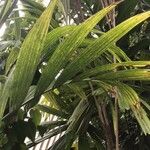
Areca catechu
Indian-nut · Areca palm · Areca-nut · Areca-nut palm · Catechu
Description
Source: leafsnapAreca catechu is a species of palm which grows in much of the tropical Pacific, Asia, and parts of east Africa. The palm is believed to have originated in the Philippines, but is widespread in cultivation and is considered naturalized in southern China (Guangxi, Hainan, Yunnan), Taiwan, India, Bangladesh, the Maldives, Sri Lanka, Cambodia, Laos, Thailand, Vietnam, Malaysia, Indonesia, New Guinea, many of the islands in the Pacific Ocean, and also in the West Indies.Common names in English include areca palm, areca nut palm, betel palm, betel nut palm, Indian nut, Pinang palm and catechu. In English this palm is called the betel tree because its fruit, the areca nut, is often chewed along with the betel leaf, a leaf from a vine of the family Piperaceae.
🌳 The husks of areca palm nuts, often regarded as agricultural waste, are reused as a valuable material for bio-filtration. They are employed in water treatment systems to remove contaminants, thereby playing an unexpected role in addressing environmental pollution. Their fibrous structure lets them function effectively as a natural filter medium.
Care Guide
💧 Water Every 2 weeks
The Areca palm flourishes in humid, tropical environments with consistent moisture. While it prefers stable humidity, it also has a moderate tolerance for drought. To maintain even soil moisture, water the palm every two weeks, but be careful to avoid waterlogging. For best results, grow it indoors in well-draining containers to prevent root rot.
How should I water my Areca palm?
Watering your Areca palm is easy, as it doesn't require any specific watering tools. You can use a watering can, hose, or even a cup. Just make sure to water the soil directly and evenly, so all parts of the root system receive the moisture they need. Filtered water is recommended, as tap water may contain harmful particles. It's also best to use water that is at or slightly above room temperature to avoid shocking the palm. However, the palm typically responds well to any type of water you give it.
What should I do if I give my Areca palm too much water or not enough water?
Outdoor plants, especially newly planted ones or seedlings, are prone to lack of watering. It is important to water them consistently for a few months until the roots are established and can rely on rain. When Areca palms are in pots, overwatering is more likely. If you accidentally overwater your Areca palm, immediately stop watering it to minimize the effect. Remove the palm from the pot and inspect its roots for signs of rot. If there is no root rot, you can return the palm to its pot. If there is root rot, trim affected roots and apply fungicide. Repot the palm in well-draining soil. For underwatered palms, simply water them more frequently. Underwatering is easily fixed, as the drooping and drying leaves will return to fullness with sufficient watering. Correct the watering frequency as soon as you notice underwatering.
How frequently should I water my Areca palm?
Most outdoor plants can rely on rainfall for their water needs. However, if your area doesn't receive enough rain, you should water your plants every 2 weeks in the spring and fall, and more frequently in the summer. During the slower growth period in winter, you may not need to water at all. Young or newly planted Areca palms require more frequent watering to help them establish and grow. When it comes to potted plants, there are two main ways to decide how often to water your Areca palm. The first is to follow a set watering schedule, such as once a week or once every other week. However, this may not be accurate for your specific plant's environment. Another method is to base watering frequency on soil moisture. It's best to wait until the top two to four inches of soil, about one-third to half the depth of the pot, have completely dried out before watering again. This approach allows you to adjust watering based on the season, as the plant's water needs are highest in summer.
How much water does my Areca palm require?
When watering your Areca palm, you'll find that it doesn't always require a lot of water. If only a few inches of soil have dried since the last watering, giving it about five to ten ounces of water will support healthy growth. You can also judge the amount of water based on how dry the soil is. If more than half of the soil has dried out, it may need more water. In these cases, continue watering until you see water draining from the pot's holes. If your Areca palm is outside and gets enough rain, it may not need extra watering. When it's young or establishing, it should receive 1-2 inches of rain per week. As it grows, it can rely on rainwater, but give it a thorough watering if there's no rain and the weather is hot for 2-3 weeks to prevent stress.
How can I know if I'm giving enough water to my Areca palm?
The Areca palm commonly suffers from overwatering, which can be identified by yellowing leaves, leaf drop, and shriveled plant structure. Overwatering can also lead to root rot. Conversely, an underwatered Areca palm will wilt and develop brown or brittle leaves. If you observe signs of either overwatering or underwatering, it is important to take action and restore your Areca palm's health.
☀️ Light Full sun
The areca palm does best with plentiful light but is hardy enough to tolerate areas with only moderate sun. It originates from regions with strong sunlight, which corresponds to its need for comparable conditions to thrive. Too much or too little light can impede its growth and lessen its natural vibrancy and lushness.
What are the sunlight requirements for Areca palm?
Areca palm requires full sun, which is above 6 hours of sunlight daily, but can also tolerate partial sun, approximately 3-6 hours of sunlight. It is essential to observe the movement of sunlight through your garden to find the ideal spot that offers a good balance of light and shade. This balance is crucial for the happiness and health of your plants. The natural habitat of Areca palm, with ample sunlight, suggests its need for a similar environment to thrive. However, exposure to too much or too little light can hinder its growth, affecting its vibrancy and lushness.
How can artificial lighting benefit indoor Areca palms?
Indoor Areca palms benefit significantly from adequate lighting, especially when natural sunlight is lacking, such as during winter or in less sunny locations. Artificial lighting is a crucial solution, providing the necessary light spectrum for optimal growth. It's advisable to use LED lights for indoor plants because they can be adjusted to offer specific wavelengths needed by the plants. The amount of artificial light required varies; full sun plants need 30-50W/sq ft, partial sun plants need 20-30W/sq ft, and full shade plants need 10-20W/sq ft. The light source should be placed 12-36 inches above the plant and kept on for 8-12 hours per day to mimic natural daylight.
What are symptoms of light deficiency in Areca palms?
Symptoms of light deficiency in Areca palms include smaller new leaves, leggy or sparse growth, faster leaf drop, slower or no new growth, lighter-colored new leaves, chlorosis (leaves turning yellow), sunscald, leaf curling, wilting, and leaf scorching. These symptoms indicate that the Areca palm is not receiving sufficient sunlight, leading to various growth and health issues. It's crucial to address these symptoms by adjusting the plant's exposure to light.
What solutions are available for Areca palms with insufficient sunlight?
For Areca palms facing insufficient sunlight, gradual adaptation to more sunlight is key. Indoors, move the plant to a sunnier spot progressively until it receives at least 6 hours of direct sunlight, utilizing a south-facing window. If the plant is large or not easily movable, consider supplemental artificial lighting for at least 8 hours daily. Outdoors, adopt a similar gradual relocation method to prevent sunburn. Reducing obstructions like trimming tree branches can also help. For smaller plants, consider transplanting during their dormant period to a location with better sunlight and drainage. It's important to note that while parts of the plant affected by low light may not recover, new growth should be healthy once the light exposure is improved.
🌡️ Temperature 20–37.8°C
Areca palm is native to regions where temperatures range from 68 to 100 °F (20 to 38 ℃). Originally adapted to thrive in environments that stay within that span, areca palm favors mild, warm temperatures. In colder seasons, adjusting indoor heating is recommended to keep it within its comfort range.
What is the optimal temperature range for Areca palm?
The Areca palm is native to regions where temperatures range between 68 to 100 °F (20 to 38 °C), flourishing in environments that maintain this warm temperature range. It's crucial to ensure that, especially during colder seasons, indoor heating adjustments are made to keep the temperature within this comfort zone for the plant. The Areca palm is particularly sensitive to cold, so it is advised to bring any outdoor plants indoors during autumn to a location with plenty of light but away from direct heat sources. Keeping temperatures above the minimum suitable growth temperature during winter aids in the plant's health and growth.
How does low temperature affect Areca palm and what are the solutions?
Low temperatures are detrimental to the Areca palm, as it thrives best in warmth, specifically when the temperature remains above the minimum suitable growth temperature. Exposure to temperatures below the tolerable growth minimum can lead to lightening of the leaves, which may subsequently turn brown or black after frost damage, showcasing symptoms like wilting and drooping. To counteract frost damage, affected parts should be trimmed off, and the plant moved indoors to a warmer setting. Placing it near a south-facing window ensures ample sunlight, but it's important to keep the plant away from heaters or air conditioning vents to avoid air dryness.
What are the implications of high temperature on Areca palm and how can they be mitigated?
During the hotter months, it's important to maintain the Areca palm's temperature below the maximum suitable growth temperature. Exceeding the tolerable high temperature can cause the leaves to lighten and increase vulnerability to sunburn. To manage this, trim away the sun-damaged parts and relocate the plant to a shaded area, particularly away from the harsh midday and afternoon sun. Watering the plant in the morning and evening helps keep the soil adequately moist, further mitigating heat stress.
💨 Humidity
🪴 Soil 6-7
🌱 Fertilizer
Use organic fertilizers (e.g., fish emulsion, compost) instead of chemical fertilizers for the Areca palm. Give young plants higher amounts of nitrogen and phosphorus in spring. Mix compost or fertilizer into the soil either before or after planting. For mature plants, apply a balanced fertilizer or one specific to the deficiency in spring. Nutrient deficiency results in small leaves, short branches, yellow or bronze leaves, acidic fruits, premature fruit fall, and splitting.
Why should I add fertilizer to my Areca palm?
If the soil in your area is rich, you may not need to use fertilizer. However, if the soil lacks nutrients, an Areca palm will struggle to grow leaves, flowers, and fruits properly. To determine the nutrient levels in the soil, a soil test is the best method. Nutrient deficiency in the Areca palm can result in small leaves, short branches, yellow or bronze leaves, and less tasty fruits due to increased acidity. Certain nutrient deficiencies may also cause early fruit drop or splitting.
When should I fertilize my Areca palm?
For young Areca palm, it is recommended to give them more nitrogen and phosphorus fertilizer to help their leaves and roots grow strong for future growth. The optimal time to apply fertilizer is during the spring of their first growing season. It is also a good idea to mix in compost or another fertilizer into the soil before or right after planting. For mature plants, fertilize them every few years as needed during the spring and summer with a balanced fertilizer that addresses any specific soil deficiencies in your area. Avoid fertilizing the Areca palm in the autumn or winter months.
When is the wrong time to fertilize my Areca palm?
To ensure the health of your Areca palm, it is important to avoid fertilizing it after pruning, when it is dealing with disease or insects, or when it is already stressed. While fertilizer can address soil nutrient deficiencies, it cannot resolve other underlying problems that may affect the palm. It is crucial to accurately diagnose the issue and refrain from adding fertilizer if another factor is actually responsible for the problem. Additionally, it is best to avoid fertilizing the Areca palm during the winter or during excessively hot and dry periods in the summer.
What kind of fertilizer does my Areca palm require?
Areca palm is typically found in tropical areas with lots of decaying organic matter. These plants can benefit from fertilizer to meet their nutrient needs. For fruit production, it is recommended to use a high-phosphorus organic fertilizer, such as mushroom compost, bone meal, or poultry manure, to promote the development of tasty and well-shaped fruits. When purchasing fertilizer, check the label for the NPK ratio, which indicates the levels of nitrogen, phosphorus, and potassium. Nitrogen deficiency is common in soil, but a soil test is the best way to determine which nutrients are lacking and need to be supplemented.
How should I fertilize my Areca palm?
When choosing a fertilizer, it is important to follow any instructions provided. It is better to use too little fertilizer rather than too much, so it is recommended to be conservative when applying fertilizers. This is particularly true for chemical fertilizers, as they are typically more concentrated compared to organic fertilizers. If using a liquid fertilizer, dilute it with water before using it to water the Areca palm. For granular or dry fertilizers, spread them around the base of the plant, making sure to avoid direct contact with any part of the plant. It is commonly recommended to use fertilizers once every 2-3 weeks during the growing season. For organic fertilizers, they can either be mixed into the soil before planting or spread over the top layer of soil for newly planted or mature plants.
🪴 Pot & Repot Every 12 months
✂️ Pruning
The Areca palm benefits greatly from pruning in early spring. This process removes dead fronds and promotes healthy growth. However, it's important not to over-prune, as this can stress the plant. Pruning also improves light and air circulation, which is beneficial for the palm. Additionally, conducting regular inspections for pests and diseases is crucial to maintaining the plant's vitality.
🌿 Propagating
🐛 Diseases & pets
☠️ Toxicity
Characteristics
- Plant Type
- Tree
- Life Cycle
- Perennial
- Genus
- Areca
- Family
- Arecaceae
- Hardiness Zone
- 11-12
- Mature Height
- 7.62 m to 18.29 m
- Mature Spread
- 2.13 m to 3.96 m
- Leaf Color
- Green
- Leaf Type
- Evergreen
- Flower Color
- Yellow
- Flower Size
- 2.54 cm
- Bloom Time
- Mid summer
- Planting Time
- Spring, Autumn
- Harvest Time
- All year round