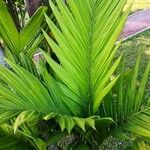
Areca triandra
Australian areca palm · Bungua · Wild areca palm · Triandra palm
Description
Source: leafsnapAreca triandra, commonly known as the Betel Nut Palm or Three-sided Palm, is a tropical plant species belonging to the Arecaceae family. It derives its names from the unique triangular shape of its stems. Native to Southeast Asia, this plant can grow up to 20 meters tall in its natural habitat. The Areca triandra features a slender trunk that can reach up to 15 cm in diameter and produces large, feathery leaves measuring about 2-3 meters in length. These leaves are pinnate, meaning they consist of multiple leaflets arranged on either side of a central stem. This palm tree yields small yellow flowers that grow on long stalks. These flowers eventually develop into small, orange or red fruits known as betel nuts. In many parts of Asia, these nuts are commonly chewed for their mild stimulant effects. Areca triandra thrives in warm temperatures and high humidity levels but can tolerate some drought conditions once established. It grows best in well-draining soil with regular watering during the growing season. Overall, Areca triandra is an attractive palm tree species with unique triangular stems and large, feathery leaves, making it an excellent addition to tropical gardens or indoor spaces with ample light.
Care Guide
💧 Water Every 7 days
The wild areca palm flourishes in humid environments and should be watered every 1 to 2 weeks. As an evergreen plant, it keeps its leaves throughout the year and needs consistent moisture to sustain its growth.
What is the most effective way to water my Wild areca palm?
When keeping your Wild areca palm indoors, the best way to water it is by pouring water directly onto the top layer of soil in the container. It's important to use rainwater or distilled water at room temperature. To check if your Wild areca palm needs water, simply poke your finger into the soil. If the top few inches of soil are dry, water it enough to moisten those layers and allow excess water to drain from the bottom of the container. If unsure, it's better to underwater the palm as overwatering can lead to root rot. When growing the Wild areca palm outdoors, rainfall alone may be sufficient, but if it doesn't rain at least once a week during the growing season, you may need to provide additional water. Again, rainwater or distilled water is best for both indoor and outdoor growth.
What should I do if I give too much or too little water to a Wild areca palm?
Here are some signs that indicate plants are not getting enough water: brown tips on the plant, wilted and drooping leaves that appear lifeless, and the potential for leaves to turn brown, crispy, and dry out severely. If you notice these signs, water the plant as soon as possible. Alternatively, overwatering can lead to root rot. If this occurs, remove any damaged roots from the soil, especially if they are mushy, fragile, and black. It is important to remove a larger part of the root to address the issue. Overwatering can also cause leaves to turn brown and fall off early. To help the plant recover, drain excess water and wait for the soil to dry before watering again. If you notice signs of root rot, discard the soil in the pot. Clean everything thoroughly and place pebbles in the pot to improve drainage. If you observe tan rings or reddish-brown spots on the leaves, discard any excess water at the base of the pot. Additionally, ensure the plant is in a well-ventilated location to promote faster soil drying and prevent future rotting.
What should I do if I give my Wild areca palm too much or too little water?
When watering the Wild areca palm, the main issue to watch out for is overwatering. There are clear signs to indicate this problem. If the palm receives too much water, its leaves will turn brown and droop. The stems may also become mushy and emit a foul odor. Overwatering can also lead to root rot, which can be fatal if not addressed. If you catch overwatering early, you can resolve it by reducing the watering rate or adding sand to improve soil drainage. In more severe cases, you may need to remove the palm from its container, remove any rotten roots, and repot it. If you grow the palm outdoors and it consistently receives too much water, you should consider transplanting it to a location with looser soils. On the other hand, if the palm is underwatered, its leaves will droop and turn yellow. Additionally, it will exhibit slower growth. In this case, you need to increase the frequency of watering.
How many times a week should I water my Wild areca palm?
To properly care for your Wild areca palm, you will typically need to water it once a week during the growing season (spring, summer, and early fall). The specific conditions in your environment could affect how quickly the soil in the plant's container dries out, so it's important to monitor the soil for moisture to determine when to water instead of strictly following a weekly schedule. Sometimes, you may need to water more than once a week or wait up to ten days between waterings. The same rules apply if you have the palm outdoors, but rainfall can impact your watering schedule. If it rains about an inch in a week, you shouldn't add additional water to avoid overwatering. During winter, when the palm isn't actively growing as much, you should reduce watering frequency. Allow the soil to dry out more between waterings, which typically means watering once every other week or every three to four weeks.
What's the best way to water my indoor Wild areca palm plant?
Indoor gardeners who choose to grow Wild areca palm need to be aware of the specific needs of this plant and make adjustments to their growing environment accordingly. One main concern with growing Wild areca palm indoors is that the indoor space may not provide the desired level of humidity. To address this, a quick solution is to use a humidifier in the room where the plant is located. Alternatively, placing the plant in a bathroom, which tends to be more humid, is also an option as long as there is sufficient light. It's important to keep an eye on the impact of air conditioners and heating units in the indoor space, as these can cause the soil to dry out faster, necessitating more frequent watering than usual. If you prefer to grow your Wild areca palm outdoors, it is important to ensure that your region provides the necessary warmth and humidity for this plant. Additionally, you should take into account the natural rainfall in your area, as weekly rain may be sufficient for the plant's survival.
☀️ Light Partial sun
The wild areca palm is native to habitats such as forest understories and rocky areas, where it grows under natural shade. It prefers partial sun but can adapt to full sun or full shade, demonstrating its versatility and hardiness.
What are the sunlight requirements for plants?
Plants have different sunlight requirements based on their type. Partial sun plants need about 3-6 hours of sunlight daily, while those requiring full sun need more than 6 hours of direct sunlight each day. It's vital to observe the movement of sunlight through your garden to ensure plants get a balanced light exposure, aiding their growth and health.
What is the native environment of the wild areca palm, and what are its sunlight preferences?
The wild areca palm originates from environments like forest understories or rocky areas, where it experiences natural shade. Its preferred sunlight condition is partial sun, but it can also tolerate full shade. This makes the wild areca palm a versatile perennial herbaceous plant since it can adapt to a variety of lighting conditions.
How can artificial lighting benefit indoor plants, and what are the specific requirements?
Indoor plants require adequate lighting to thrive, especially when natural sunlight is insufficient. Artificial lighting, such as LED lights tailored to provide specific wavelengths, can significantly promote healthier plant growth. Full sun plants need 30-50W/sq ft of artificial light, partial sun plants require 20-30W/sq ft, and full shade plants need 10-20W/sq ft. It's important to place the light source 12-36 inches above the plant and mimic natural daylight hours, ensuring most plants receive 8-12 hours of light per day to thrive.
What are the symptoms of light deficiency in the wild areca palm when grown indoors?
When grown indoors with insufficient light, the wild areca palm may exhibit symptoms such as smaller new leaves, leggy or sparse growth, faster leaf drop, slower or no new growth, and paler new leaves. These signs indicate that the plant is not receiving enough sunlight, affecting its overall health and development.
What are the symptoms of excessive sunlight exposure in plants?
Excessive sunlight can cause a range of symptoms in plants, including chlorosis, sunscald, leaf curling, wilting, and leaf scorching. These symptoms manifest as discolored, damaged, or dried parts of the plant, indicating that it is receiving more sunlight than it can safely handle, which negatively impacts its health.
🌡️ Temperature 20–37.8°C
Wild areca palm comes from tropical areas where the climate is generally warm and humid. Consequently, it is adapted to high temperatures and humidity. It dislikes sudden temperature shifts and prefers a consistent thermal environment, so avoiding indoor temperature fluctuations is important. It typically cannot tolerate cold and needs relatively high temperatures to grow; if the temperature falls too low, the plant may stop growing or even die.
💨 Humidity
🪴 Soil 6-7
🌱 Fertilizer
Fertilize your Wild areca palm in early spring to encourage healthy growth. Regular feeding improves overall health, producing vigorous growth, better tolerance of harsh conditions, and greater resistance to pests and diseases. Stick to a consistent fertilization schedule for your Wild areca palm to keep its foliage vibrant, richly colored, and lush in appearance.
🪴 Pot & Repot
✂️ Pruning
Pruning wild areca palms in early spring offers several benefits. By removing dead fronds and lower leaves, you can improve airflow and light penetration, which helps reduce the risk of disease and prevents overcrowding. For the best results, use sterilized tools and make cuts just above the leaf bases to promote optimal health and enhance the plant's appearance.
🌿 Propagating
🐛 Diseases & pets
☠️ Toxicity
Characteristics
- Plant Type
- Palm, Tree
- Life Cycle
- Perennial
- Genus
- Areca
- Family
- Arecaceae
- Hardiness Zone
- 10-11
- Mature Height
- 3.05 m to 6.1 m
- Mature Spread
- 2.13 m to 3.05 m
- Leaf Color
- Green
- Leaf Type
- Evergreen
- Flower Color
- Yellow
- Flower Size
- 0.51 cm to 1.02 cm
- Bloom Time
- All year round
- Planting Time
- Spring, Summer, Autumn
- Harvest Time
- All year round
- Native Area
- India, Malaysia, Indonesia, Cambodia, Vietnam, Myanmar, Bangladesh, Laos, Thailand, China