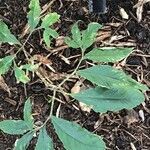
Arisaema serratum
Japanese arisaema · Variegate jack-in-the-pulpit · Japanese cobra lily · Jack-in-the-pulpit
Description
Source: leafsnapArisaema serratum is a species of flowering plant in the arum family (Araceae). It is native Japan, where it is found from the Kansai region north to the island of Hokkaido. Its natural habitat is damp forests.Arisaema serratum is a perennial. It produces two leaves, with 7-13 leaflets each. The color of the flowering bract is variable, being either purple or green. It blooms from May to June.It is similar to Arisaema mayebarae, which is restricted to Kyushu (an island where Arisaema serratum is not present). Arisaema serratum can be distinguished by its shorter spathe blade, which declines over the tip of the mouth (as opposed to being held at a horizontal angle).
Care Guide
💧 Water Every week
The Chinese Dragon Lily originates from moist woodlands and thrives best with consistent moisture and evenly damp soil. Once established, it displays moderate drought tolerance. For optimal health, it's ideal to water it weekly, which aligns its growth cycle with seasonal rainfall patterns during its active growth phases.
☀️ Light Partial sun
Chinese Dragon Lily grows best in locations with limited light, similar to the understory of its native forests. It tolerates lower light conditions, but reduced light can slow its growth and cause the foliage to become pale. Excessive sunlight can burn its leaves and hinder its overall development.
What are the sunlight requirements for Chinese Dragon Lily?
The Chinese Dragon Lily requires partial sun, meaning about 3-6 hours of sunlight, or can survive in full shade with less than 3 hours of sunlight. It's crucial to observe your garden's sun and shade patterns to find the ideal spot for your plants. This plant thrives under limited sunlight, reflecting its native forest understory habitat. However, less light can slow growth and cause pale foliage, while too much can scorch the leaves and hinder development.
How can artificial lighting support Chinese Dragon Lily indoor growth?
For indoor Chinese Dragon Lily plants, adequate lighting is vital, especially when natural sunlight is insufficient, such as during winter or in less sunny spaces. Artificial lights, like LEDs that can be customized to provide specific wavelengths, are beneficial. Full sun plants require 30-50W/sq ft of artificial light, partial sun plants need 20-30W/sq ft, and full shade plants require 10-20W/sq ft. Positioning the light source 12-36 inches from the plant can mimic natural sunlight, and aiming for 8-12 hours of light per day will support the plant's growth.
What are common light deficiency symptoms in Chinese Dragon Lily?
Light deficiency in Chinese Dragon Lily can manifest as smaller new leaves, leggy or sparse growth, faster leaf drop, slower or halted new growth, lighter-colored or irregularly patterned new leaves, and symptoms of overexposure like chlorosis, sunscald, leaf curling, wilting, and leaf scorching. These signs indicate the plant's struggle with inadequate sunlight, affecting its growth and overall health.
What solutions can help the Chinese Dragon Lily achieve optimal growth?
Achieving optimal growth in Chinese Dragon Lily involves gradually acclimatizing it to receive 3-6 hours of direct sunlight by moving it to sunnier spots each week, both indoors and outdoors. Artificial lighting can supplement sunlight indoors, where moving the plant isn't feasible. Outdoors, gradually moving plants to optimal sunlight spots and reducing light obstructions through methods like pruning can help. For plants affected by insufficient sunlight, focusing on enabling healthy new growth after improving light exposure is key, recognizing that parts of the plant already damaged may not recover.
🌡️ Temperature 5–32.2°C
Chinese Dragon Lily performs best in temperatures ranging from 41 to 90 °F (5 to 32 ℃). Naturally adapted to changing climatic conditions, it tolerates cool winter temperatures but prefers warmth in summer. Making timely seasonal adjustments greatly helps it thrive.
What is the ideal temperature range for Chinese Dragon Lily?
The Chinese Dragon Lily thrives in temperatures between 41 to 90 °F (5 to 32 °C). It is adapted to fluctuating climatic conditions, tolerating low winter temperatures while enjoying the warmth in summer. Timely adjustments to the care provided as per the season are crucial for its thriving. Despite its strong cold resistance, in regions where winter temperatures are expected to plummet below -30°C, it's important to implement cold protection measures, such as covering the plant with soil or straw and watering it abundantly before the first freeze in autumn to keep the soil moist. This preparation helps in preventing drought and water scarcity during the winter and early spring months.
How does the Chinese Dragon Lily respond to low temperatures?
The Chinese Dragon Lily is cold-tolerant and fares best when the temperature remains above 5°C. Throughout the winter, ensuring the temperature stays above -25°C is advisable. If temperatures drop below -30°C, there might not be noticeable damage during the winter, but the spring could see a reduction in sprouting, or in some cases, no sprouting at all. To handle such situations, in spring, it's recommended to remove any parts of the plant that have failed to sprout, aiding in its recovery and future growth.
How does the Chinese Dragon Lily react to high temperatures?
During the summer, it's ideal to keep the Chinese Dragon Lily's environment below 32°C to prevent heat stress. Temperatures exceeding 35°C can cause the leaves to lighten in color, become prone to curling, and make the plant susceptible to sunburn. In severe cases, the plant may wilt and dry up completely. To mitigate damage from high temperatures, trim away any sunburned or dried parts of the plant. Relocating the plant to a shaded area during the midday and afternoon sun or using a shade cloth can protect it. Additionally, watering the plant in the morning and evening helps keep the soil adequately moist, supporting plant health under high temperature conditions.
💨 Humidity
🪴 Soil 5-7
🌱 Fertilizer
The best time to fertilize a Chinese Dragon Lily is in early spring, as it comes out of dormancy and begins active growth. Fertilization supplies essential nutrients needed for healthy development. Although the Chinese Dragon Lily has relatively low fertilizer requirements, applying fertilizer annually can improve its survival and encourage better, longer-lasting flowers.
🪴 Pot & Repot
✂️ Pruning
The Chinese Dragon Lily is known for its distinctive foliage and flowers. It requires minimal pruning, primarily from early to late spring. To encourage growth and improve air circulation, remove any dead leaves, taking care not to damage the underground tuber. Regular pruning helps enhance the plant's appearance, prevent disease, and improve both its lifespan and the quality of its blooms.
🌿 Propagating
🐛 Diseases & pets
☠️ Toxicity
Characteristics
- Plant Type
- Herb
- Life Cycle
- Perennial
- Genus
- Arisaema
- Family
- Araceae
- Hardiness Zone
- 4-8
- Mature Height
- 0.76 m to 1.22 m
- Mature Spread
- 30 cm to 46 cm
- Leaf Color
- Green, Dark Green
- Leaf Type
- Deciduous
- Flower Color
- Purple, Green
- Flower Size
- 15.24 cm
- Bloom Time
- Mid spring, Late spring
- Planting Time
- Spring
- Harvest Time
- Late summer, Early fall, Mid fall
- Native Area
- Russia, Japan, Koppen, South Korea, China